
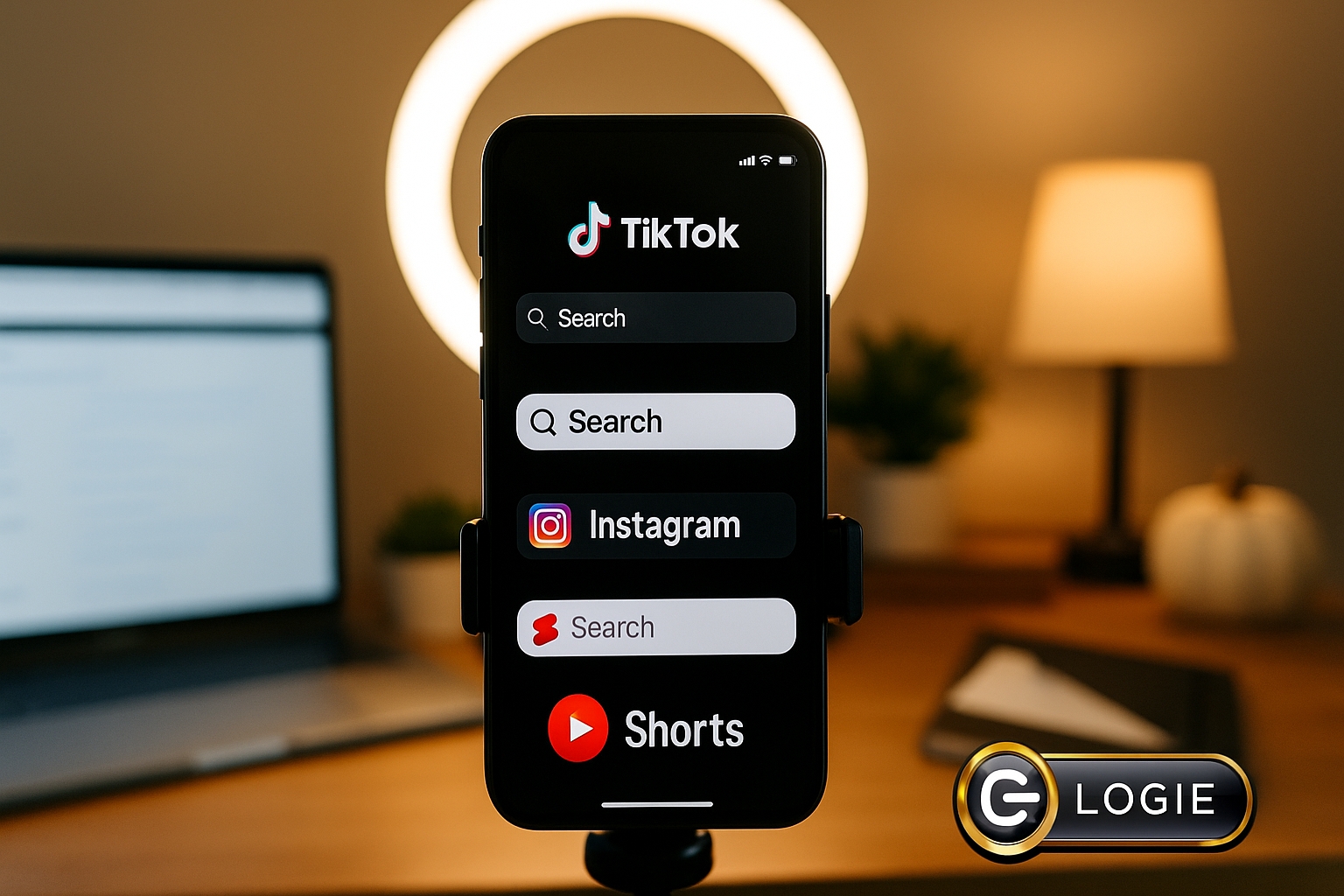
If you still think of TikTok, Reels, and YouTube Shorts as “just for viral videos,” you’re already behind.
For a big part of Gen Z and, increasingly, everyone else, short-form video platforms are where they search first for recipes, product reviews, travel tips, tech setups, and, yes, what to buy next.
Several recent studies show that over 40% of Americans use TikTok as a search engine, and more than half of Gen Z say they sometimes prefer TikTok over Google for certain types of information.

At the same time, marketers keep shifting budgets into short-form. Around a third say short videos deliver the highest ROI, and close to half now include short-form content as a core part of their e-commerce strategy.
So the game has changed: short-form discovery is now a form of SEO, not instead of Google, but alongside it. If you’re a creator or brand heading into 2026, you can’t afford to treat TikTok/Reels/Shorts as pure “vibes” anymore. They’re search surfaces. And you either show up there, or someone else will.
Let’s break down what that actually means.
1. Why Reels, Shorts & TikTok Are the New SEO
Traditional SEO was simple in theory. When people type a query into Google, you optimize pages with keywords, meta tags, backlinks, and hope you rank.
Now, discovery is fractured:
- People search on TikTok for “best carry-on suitcase for Europe,”
- On Instagram Reels for “easy dinner recipes,”
- On YouTube Shorts for “how to clean white sneakers fast.”
They’re not “browsing” randomly; they’re actively searching. Platforms know this and have quietly turned their feeds into hybrid search-and-recommendation engines.

A few critical shifts:
- TikTok SEO: The platform now behaves like a vertical search engine, analyzing keywords in captions, on-screen text, audio, and engagement patterns to decide what to show for a query.
- Instagram search: The search bar now surfaces posts, Reels, and accounts based on keywords, not just hashtags or usernames. Think “mini Google inside Instagram.”
- YouTube Shorts: YouTube is prioritizing viewer satisfaction, retention, watch time, and engagement, and Shorts now feed into overall channel discoverability.
This isn’t “social media vs SEO” anymore. It’s “search everywhere optimization” you’re optimizing for discovery wherever your audience is already searching, not just on Google.
2. How Short-Form Search Works on Each Platform
If you want to rank in 2026, you need to know what signals each platform cares about.

“For real… when I’m looking for something now, I don’t even think about Google. I just go straight to TikTok or Reels because I want to see a real person showing me the answer in 10 seconds. That’s how people search now, and creators who get that are already ahead.”
Debby, Social Media Manager at Logie.ai
2.1 TikTok Search & SEO
TikTok’s search algorithm now looks at multiple layers, not just hashtags:
Keywords:
- Captions
- On-screen text
- Spoken words
Engagement signals:
- Watch time & completion rate.
- Replays
- Shares, comments, favorites
Relevance signals:
- How often similar users engaged with similar content
- Topical consistency of your account
If you do a video about “air fryer chicken wings,” and you say it, write it, and your audience actually watches the whole clip and saves it, TikTok learns:
“Oh. This person is good for ‘air fryer chicken wings’ and similar topics.”
What this means for you:
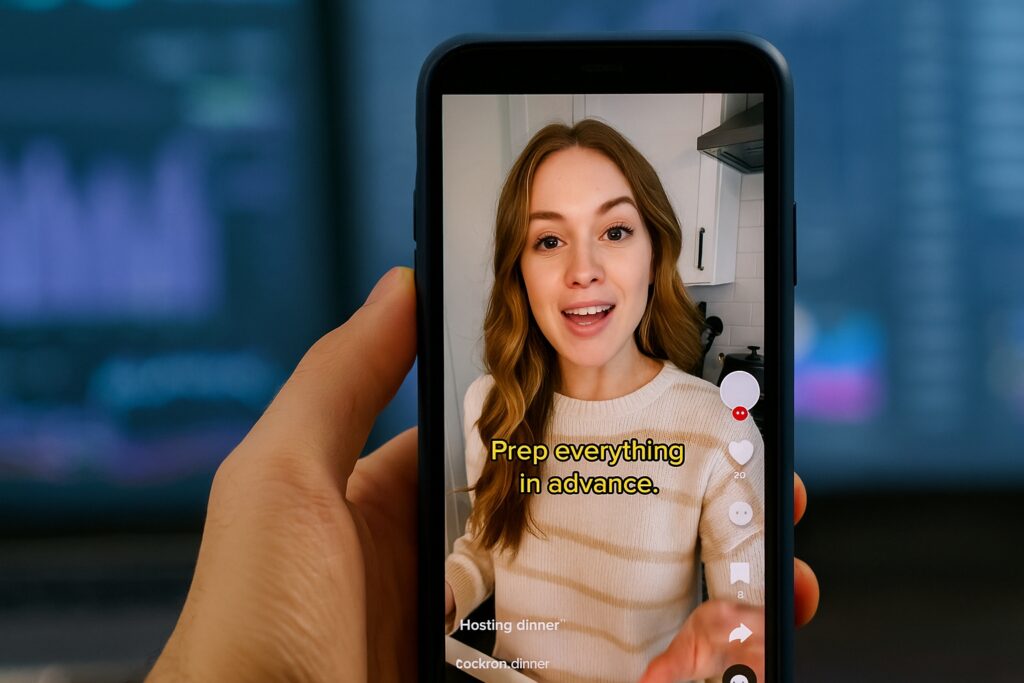
- Say your main keyword in the first 3–5 seconds of audio.
- Put that keyword and close variants in your caption and on-screen text.
- Stick to a clear theme per video; don’t cram six ideas into 20 seconds.
- Satisfy search intent: if someone types “how to clean suede shoes,” and your video spends 10 seconds on your dog and 2 seconds on shoes, you will not rank, no matter how funny it is.
2.2 Instagram Reels Search & SEO
Instagram has been explicit: search now surfaces content based on keywords, not just usernames and hashtags.
Important ranking factors:
- Profile & bio keywords
- Caption keywords
- Hashtags still matter, but less spammy, more relevant
- Engagement saves, and shares are powerful signals
- Topical consistency across your grid & Reels
If your bio says “Plant-based recipes | Easy vegan dinners”, your name field says “Jess Vegan Cooking”, your captions mention “vegan pasta,” and your Reels are all in that niche, you’re far more likely to show up when someone searches “easy vegan dinner” or “vegan pasta recipe.”
2.3 YouTube Shorts Search & Discovery
YouTube’s overall algorithm in 2025–26 focuses heavily on watch time, retention, and satisfaction. Shorts are no exception; retention is king.
Shorts ranking factors:
- Average view duration & percentage watched
- Replays/loops
- CTR from the Shorts feed or search results
- Engagement: likes, comments, shares, subs
- Relevance to user history & your channel niche
- Title & description keywords still matter, even for Shorts
If your 30-second Short gets 80–90% average watch time and people replay it, YouTube will push it far harder than a 2-minute video with poor retention, even if the longer video is “more informative.”
Shorts are the “top of funnel SEO” for YouTube. They’re how new people find you when they’re not ready to commit to a 12-minute deep dive yet. Treat them like searchable trailers for your deeper content.
3. How to Do “Short-Form SEO” in 2026
Here’s how to treat every Reel, Short, and TikTok as a search asset, not just a random post.
3.1 Start with Search Intent, Not Just Hooks
Before you film, answer:
- What would someone type into a search to find this?
- Are they trying to learn, compare, decide, or just get inspired?
Examples of search-style prompts your content can answer:
- “Best budget wireless mic for creators”
- “How to style a blazer for work and weekend.”
- “TikTok SEO for beginners”
- “Quick 10-minute leg workout at home”
This is your primary keyword phrase. Build everything around that.
3.2 Use Keywords in 3 Layers
On TikTok, Reels, and Shorts, think in layers:
- Audio / spoken words
- Say the primary phrase early:
- “Here’s how to style one blazer five different ways…”
The platforms pick this up via speech recognition.
- Visual text on screen
- Put the keyword or phrase on screen in the first few seconds.
- Keep it readable: high contrast, not buried under clutter.
- Captions/titles/descriptions
Write like a human, but with search in mind:
- ❌ “Blazer chaos 😂😂😂”
- ✅ “How to Style One Blazer 5 Ways | Work to Weekend Outfit Ideas.”
Good captions balance keywords + clarity + personality.
3.3 Hashtags That Help, Not Hurt
The era of 30 random hashtags is over.
Use 3–8 highly relevant hashtags per post.
Mix:
- 1–2 broad: #tiktokseo #fashiontips
- 2–3 niche: #petitefashion #smallcreatorsquad
- 1–2 branded: #YourBrandName
Hashtags still help platforms understand context, but they’re one signal among many, not the whole SEO strategy.
3.4 Design for Retention, Not Just Clicks
Short-form SEO lives or dies on watch-through and engagement.
Some practical retention tactics:
- Start in the action. Cut the “Hey guys…” and get to the point.
- Use pattern interrupts: angle changes, zooms, cuts, text emphasis.
- Promise a payoff: “Watch until the end to see the mistake.” But then actually deliver it.
- Avoid over-editing to the point of chaos. Fast ≠ good if the viewer is confused.
Both TikTok and YouTube explicitly prioritize watch duration and completion rate when ranking content.

3.5 Post for the Library, Not Just the Moment
One mistake I see a lot: creators only think in “today’s post,” not in searchable libraries.
Ask yourself:
- If someone discovers me in 3 months via one TikTok, will my grid look like a messy experiment or a clear, bingeable theme?
- Will my Reels tab instantly tell them what I’m good at?
- Does my Shorts feed feel cohesive enough to binge when YouTube recommends my channel?
Algorithms love consistency of topic. So do humans.
4. Common Mistakes That Kill Short-Form SEO and How to Fix Them
This is where people go wrong.
Mistake 1: Chasing Only Viral Trends
Trends are fun. But if all your videos are built around audio memes, trending dances, or random sounds, the algorithm may push you for a day and then forget you.
Mix trend-based content with evergreen, search-driven videos that answer specific questions. Those are the ones that quietly pull views for months.
Mistake 2: Zero Keyword Strategy
No keywords in the caption, nothing on screen, and the only spoken words are reaction noises. Great for entertainment, terrible for search.
For at least half your content, make sure there’s a clear “This is what this video is about” phrase. Say it, write it, and align everything to it.
Mistake 3: Overstuffed, Spammy Captions
On the flip side, some creators copy-paste keyword blocks or stuff 20 variations into a caption. It reads badly and signals “trying to game the system.”
One primary phrase, a few supporting phrases, written like an actual human. Think “YouTube title + mini blog sentence.”
Mistake 4: Ignoring Analytics
Short-form SEO isn’t a one-time setup. You actually need to look at:
- Average watch time
- Drop-off points
- Which topics bring more saves/shares
- What search terms are leading people to you, where available
When studies show that video is driving higher lead gen and purchase intention than many other formats, it’s worth treating this as data work, not guesswork.
5. How This Fits Into Your Bigger Strategy
Here’s where it gets interesting for creators and brands that actually need conversions, not just views.
Short-form search SEO works best when it plugs into a larger funnel:
- TikTok/Reels/Shorts = Discovery + Trust
- Long-form YouTube / Lives / Blogs / Storefronts = Depth + Conversion
- Email / SMS / Communities = Retention + Repeat Sales
Some practical ways to connect it:
- Use Shorts/Reels to answer narrow questions, then direct to a full video or blog for the in-depth answer.
- Use TikTok/Reels to showcase the “aha moment,” then drive people to your Amazon storefront or affiliate links in bio.
- Align your video topics with your product categories or services, not random content that never connects back to what you sell.
With short-form videos now strongly influencing purchase decisions and brand discovery, treating them like random content is just leaving money on the table.
In 2026, your “SEO strategy” without short-form is incomplete. You can’t just rank on Google and hope your audience, who spends an hour a day on vertical video, magically flips back to search.
6. Ranking in 2026 and Beyond
The bigger story isn’t just “TikTok SEO” or “Reels SEO.” It’s that:
- Search is now happening across platforms, not in one box.
- AI and social search are converging users’ search in TikTok, Instagram, YouTube, and ChatGPT, depending on what feels fastest and most useful.
For creators and brands, the practical takeaway is simple:
Treat every Reel, Short, and TikTok as a searchable asset, not a throwaway post.
If you:
- Start with search intent,
- Layer your keywords into audio, captions, and visuals,
- Design for retention,
- Watch your analytics, and
- Tie everything back to a clear offer or story…
…you’re not just “posting more.” You’re building a searchable library of proof that you’re the right person or brand to show when your ideal viewer types in what they need.
And in 2026, that’s what ranking will mean.