

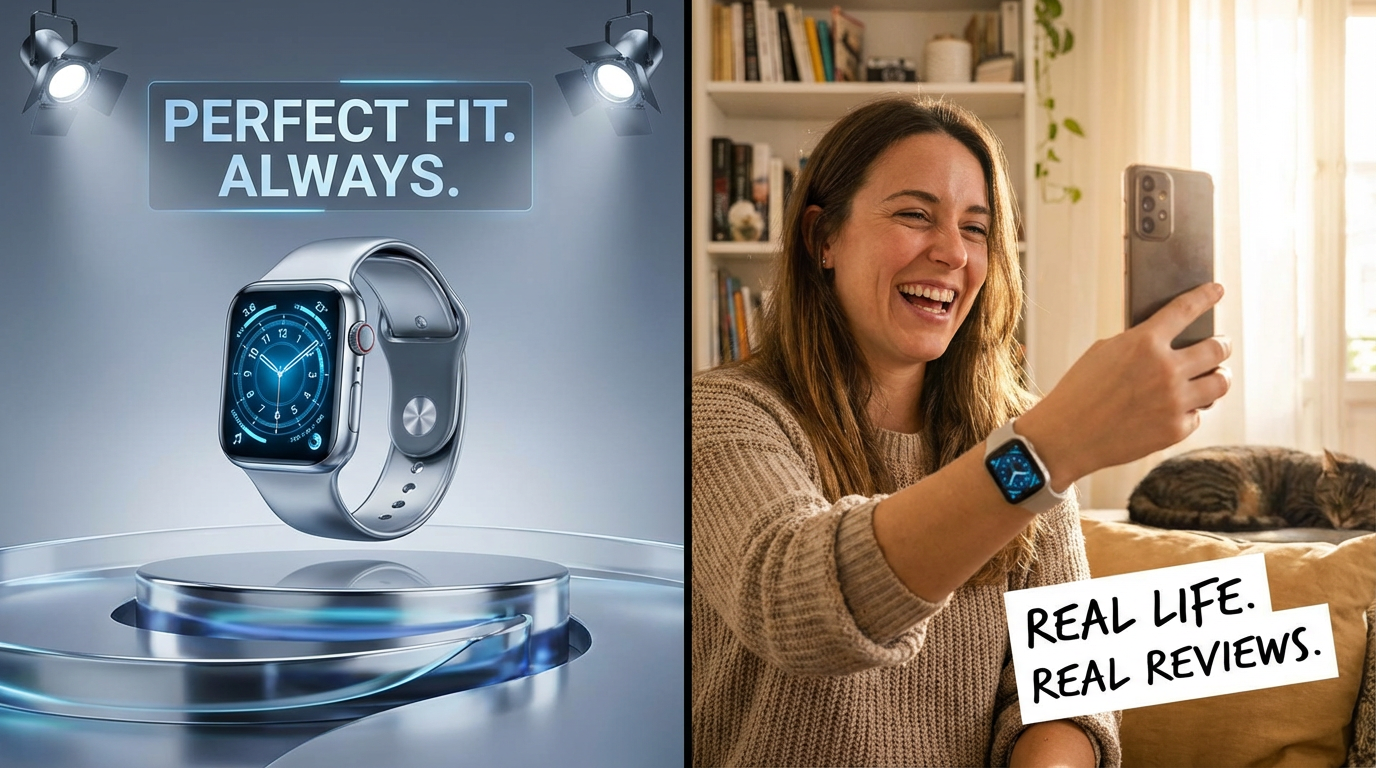
As social commerce moves into 2026, one truth is becoming increasingly complex for platforms, brands, and creators to ignore: influence no longer comes from polish, scale, or even perceived expertise alone; it comes from trust, and trust is now earned through visible honesty rather than manufactured perfection.
The past decade rewarded creators who could present products attractively and consistently; the next will reward those willing to expose limitations, uncertainty, and context in public.
This shift is structural. The convergence of algorithmic scrutiny, consumer skepticism, regulatory pressure, and platform fatigue has made authenticity not just a branding preference but an operational necessity for anyone earning through social commerce.

Why Are Consumers Rejecting “Perfect” Reviews Now?
The modern social commerce audience is more informed and more experienced. Today’s shoppers have lived through years of exaggerated testimonials, suspicious five-star ratings, influencer scandals, and product launches that failed to live up to viral hype.
This exposure has recalibrated expectations. Consumers no longer ask “Is this product good?” They ask, “Is this person telling me the whole truth?”
A 2023 Nielsen Trust in Advertising report showed that 89% of consumers trust recommendations from people they know, and trust drops sharply when content appears overly promotional or scripted.
Meanwhile, PwC’s Global Consumer Insights Survey found that over 70% of shoppers actively research authenticity signals, such as balanced reviews, negative mentions, and disclosure transparency, before purchasing.

In social commerce environments like TikTok Shop and Amazon Influencer video placements, this translates into a clear performance gap: content that acknowledges imperfections retains attention longer, generates more comments, and drives higher downstream conversions than content that feels optimized solely for approval.
Within the Logie creator community, this pattern has surfaced repeatedly. Creators who openly discuss why a product may not work for everyone, or who contextualize use cases rather than pushing universal claims, report higher trust retention and more repeat engagement over time, even when individual videos do not go viral.
What Does “Authenticity” Mean in 2026?
Authenticity is often misunderstood as casual tone or unpolished visuals, but in social commerce, authenticity is fundamentally about alignment between lived experience, communication, and incentive structure.
An authentic creator in 2026 is someone who explains partnerships clearly, contextualizes their influence, and does not distort reality to satisfy a brand brief.
This distinction is crucial.
Altovise Pelzer articulated this shift succinctly during a Logie webinar on influencer integrity:
“IF IT’S NOT SOMETHING YOU’RE USING, DON’T MAKE IT SEEM LIKE IT IS. LIKE, GIVE PEOPLE THE HONESTY. WHAT DOES IT TASTE LIKE? WHAT DOES IT SMELL LIKE? BUT YOU DON’T HAVE TO SAY THAT YOU’RE USING IT IF YOU’RE NOT.” Altovise Pelzer
What Altovise is pointing to is not a rejection of monetization, but a rejection of misrepresentation.
Audiences are no longer offended by sponsorships; they are offended by ambiguity. The expectation is not that creators love everything; they expect creators to explain why something fits their life, where it falls short, and who it is truly for.

How Fake Reviews Eroded the Social Commerce Ecosystem
The backlash against fake reviews did not happen overnight. On Amazon alone, studies by Fakespot and The Markup have estimated that 30–40% of reviews in specific categories show signs of manipulation, prompting Amazon to remove millions of reviews annually and pursue legal action against review brokers.
TikTok Shop experienced a similar reckoning in 2024–2025, when viral product cycles collapsed after users discovered identical scripts, reused footage, and undisclosed incentives across dozens of creator accounts.
Engagement did not merely dip; it inverted. Videos calling out misleading claims often outperformed the original promotions, signaling a more profound cultural shift toward skepticism.
For creators, the implication is clear: association with exaggerated or misleading content now carries reputational risk that compounds over time.
Algorithms increasingly reward signals of trust, watch time, saves, and meaningful comments over superficial metrics, meaning that dishonest content does not just damage audience relationships, it actively underperforms.
Why Honest Content Performs Better
One of the most misunderstood truths in social commerce is that criticism does not reduce conversions when it is framed with clarity and relevance. In fact, it often increases them.
Research shows that content explicitly mentioning product limitations sees up to 42% higher conversion rates than content presenting exclusively positive narratives.
This aligns with academic research from the Journal of Marketing Research, which found that two-sided reviews are perceived as more credible and persuasive than one-sided endorsements.

The reason is psychological. When a creator openly addresses flaws, they lower the audience’s cognitive defenses.
Viewers stop scanning for deception and start evaluating fit. This shifts the purchasing decision from emotional impulse to informed confidence, a far stronger predictor of long-term satisfaction and brand loyalty.
What Does Radical Honesty Look Like in Practice?
Showing the Process, Not Just the Outcome
Creators who film first-use experiences, side-by-side comparisons, or extended wear tests invite audiences into the decision-making process rather than presenting a conclusion.
This approach mirrors how people actually shop in real life by testing, questioning, and adjusting expectations.
Contextual endorsements outperform generic praise because they anchor recommendations in lived experience.
Saying “this works well for small apartments but struggles in larger spaces” is more valuable than saying “this is amazing.”
Transparent Sponsorship Disclosure Without Narrative Control
Disclosure alone is not enough. Creators who explain what a partnership includes and what it does not signal autonomy.
This transparency reassures audiences that opinions were not purchased wholesale, even when compensation exists.
What Brands and Platforms Must Change to Keep Up
Brands that still attempt to control influencer narratives tightly are increasingly misaligned with consumer expectations.
The most forward-thinking companies are shifting from message enforcement to trust enablement, allowing creators to speak freely while measuring success through engagement quality rather than sentiment uniformity.
Platforms, meanwhile, are investing heavily in detection systems to identify suspicious review patterns, coordinated posting behavior, and undisclosed incentives.
TikTok, Amazon, and Meta have all expanded enforcement teams and automated review systems since 2024, signaling that authenticity is becoming a compliance issue, not just a cultural one.
For brands, rewarding creators based on engagement depth, retention, and post-purchase satisfaction, rather than raw sales volume alone, is quickly becoming best practice.
How Creators Can Build Authenticity Without Sacrificing Growth
Authenticity in 2026 is intentional. Creators who want to remain competitive must actively design workflows that prioritize honesty without eroding efficiency.
This starts by identifying skepticism upfront, filming honest reactions instead of scripted ones, and reframing negative feedback as audience education rather than brand failure.
It also means treating trust as a long-term asset because once lost, it is algorithmically and socially difficult to recover.
The Future of Influence Is Trust-Weighted
As social commerce matures, influence will increasingly be trust-weighted rather than reach-weighted.
The creators who succeed will not be those who say the right things, but those whose audiences believe them even when the message is imperfect.
The age of fake reviews is not ending because platforms demand it, but because consumers no longer tolerate it. In 2026, authenticity is not a tone. It is infrastructure.