
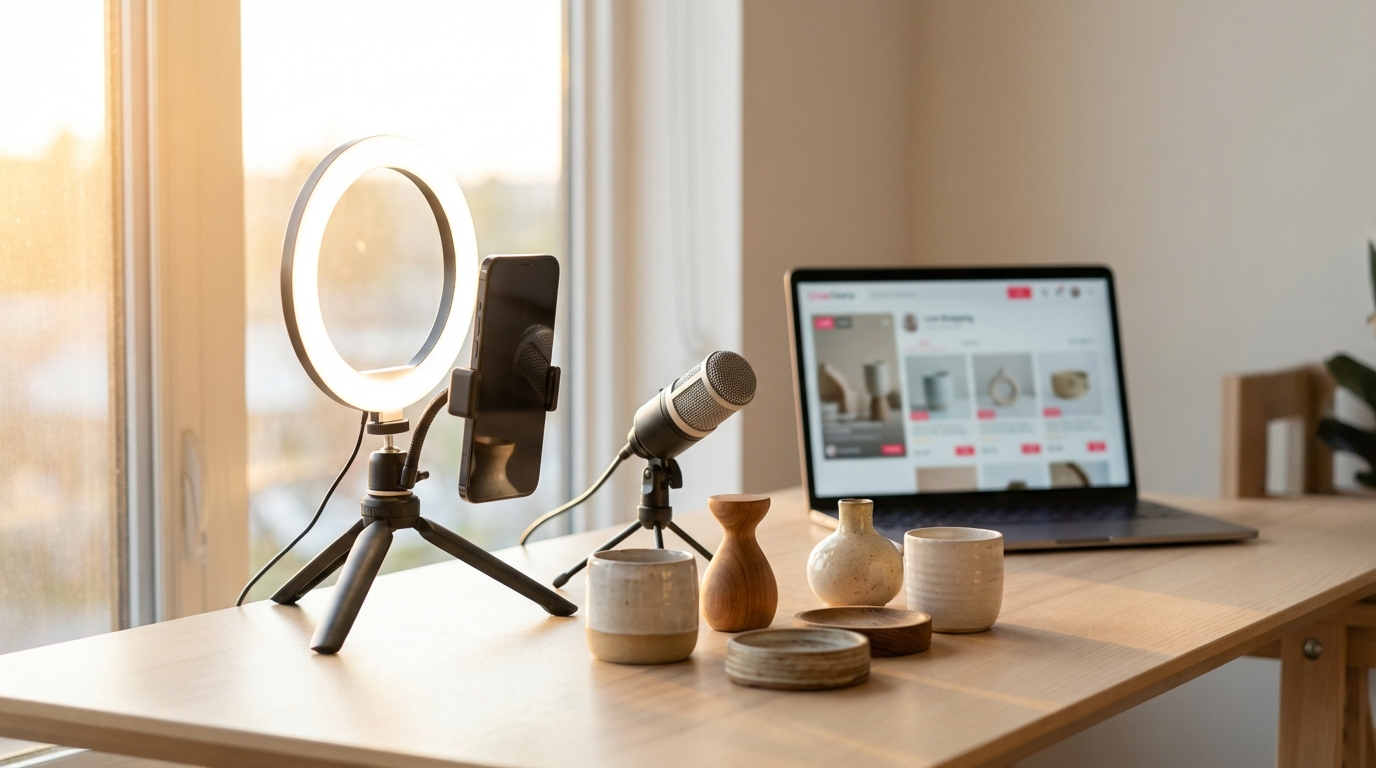
Most creators treat an Amazon livestream like a live performance. You plan. You set the carousel. You go live. You finish.
Then you move on, because that’s how social platforms train you to think: content has a short half-life, and yesterday’s post is already buried.
Amazon Live behaves differently.

Not because creators are magically better there. Not because the audience is more loyal. It’s structural.
Amazon is a store first, and a media platform second. When you go live, you aren’t only “posting.”
You’re creating shoppable media that Amazon can reuse anywhere it helps a customer make a decision.
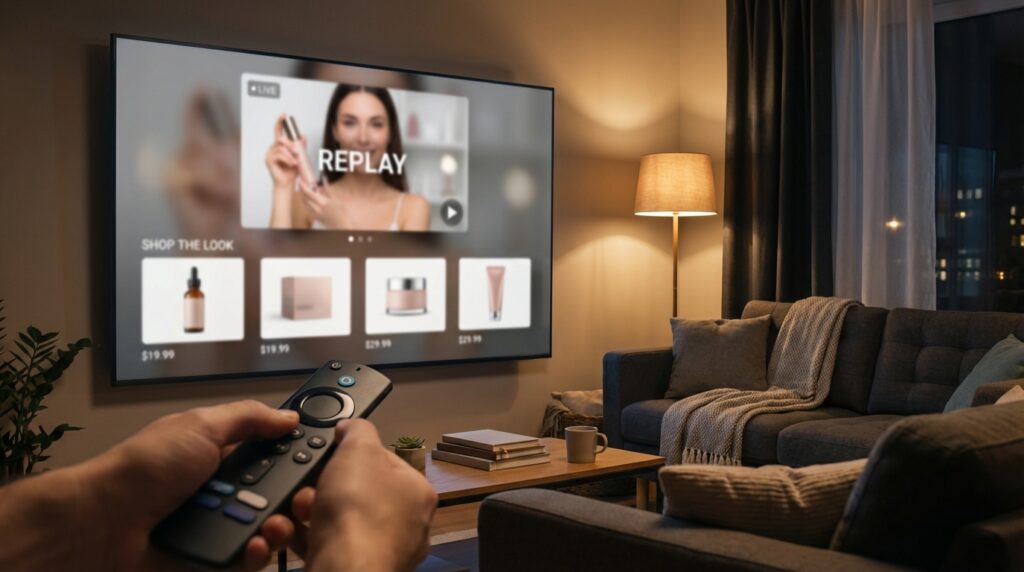
Amazon’s own advertising documentation is unusually direct about this: Amazon Live content can be integrated into brand stores, Amazon.com/live (web and mobile), and even the Amazon Live FAST channel on Prime Video and Fire TV.
That one sentence changes the entire strategy.
Because if Amazon can place your video across multiple shopping surfaces, it doesn’t need your livestream to be “new” to be useful. It just needs to match what a shopper is doing right now.
And that is where the “old livestreams still sell” story begins.
The moment creators realize the back catalog is alive
The weirdest part is that creators often don’t discover this through a dashboard deep-dive or an announcement.
They discover it by accident. Someone sees a purchase tied to an old stream, and it doesn’t make sense at first.
That’s why Ileane Smith’s reaction hits.
“I HAVEN’T BEEN IN THE AMAZON LIVE APP IN A LONG TIME, BUT APPARENTLY SOMEONE HAS BEEN BUYING OFF MY OLD LIVES, SEE? … I WOULD HAVE NEVER THOUGHT THAT! BUT I SAW SOMEONE PURCHASE SOMETHING FROM ONE OF MY… FROM MY LIVESTREAM, WHICH WAS FROM 2 MONTHS AGO.”
Two months is an eternity on TikTok. On Amazon, it can be a rounding error.
This is the part many creators miss: Amazon doesn’t treat livestreams like “posts.” It treats them like content attached to shopping intent. If the intent is still there, the content still has a job.
Why old livestreams can keep selling on Amazon
It helps to stop thinking of Amazon Live as “a show” and start thinking of it as “a shoppable product video that happened to be recorded live.”
Amazon Live is designed around product association. The carousel isn’t just a convenience feature; it’s metadata.
It tells Amazon, this stream is about these products. That’s why Amazon Live guides and creator resources emphasize that livestreams are shoppable and tied to products, and why seller and marketing guides describe Live streams showing up on Amazon’s Live homepage and product detail pages.
Once a stream is connected to products, Amazon has a reason to resurface it when those products (or related products) are being browsed.
This is where placement becomes everything.
Placement is the reason the “long tail” exists
A livestream can be discovered in more places than creators realize, including placements that don’t feel “social” at all.
Amazon explicitly describes Live content being distributed across multiple touchpoints, including Amazon.com/live and broader media surfaces like the Amazon Live FAST channel on Prime Video and Fire TV.
So the stream isn’t only competing with other creators. It’s competing with nothing. Sometimes it’s simply the next most relevant video attached to a shopping moment.

And yes, some placements have time sensitivity.
One practical detail that matters (and that most creators never learn until it bites them) is how long replays may persist on product pages relative to “newer” streams.
Social Media Examiner notes that on a product page’s “Livestreams related to this product” section, the livestream shows while live, and the replay may remain available until another livestream starts that features the same product, because the latest stream is prioritized.
That sounds like “bad news,” but it’s actually clarifying. It tells you the lever: product overlap and recency affect which video gets the top spot.
If you feature the same ASINs everyone else is featuring, you are in a replacement game. If you feature a smarter mix of core items + supporting items + variations, you can reduce how easily you get displaced.
That’s strategy, not luck.
Amazon is training shoppers to buy with video
Amazon has been pushing video harder over time. Not just Live, but video as a conversion layer.
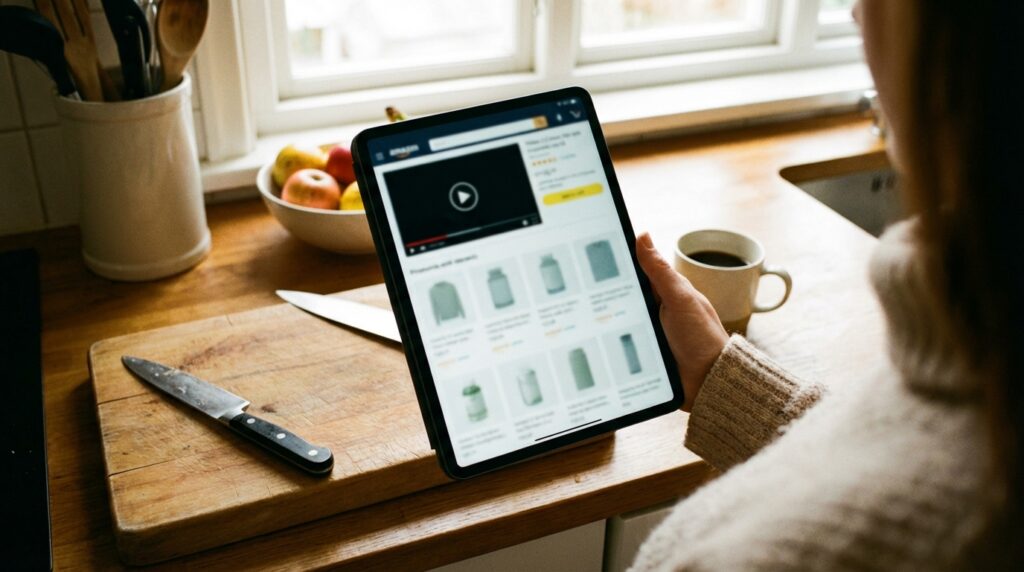
Sellers have observed product videos playing in search and on product experiences, and Amazon’s own creator hubs and guidelines exist because video is now part of the commerce surface, not a side feature.
When shoppers learn that video answers questions faster than bullet points, they start shopping with video. They watch demonstrations. They check sizing. They look for proof. They want to see how a product behaves in a real hand, not in a studio photo.
Live streams, especially the evergreen ones, are basically on-demand demos. That’s why they can keep converting.
The long tail isn’t automatic. You have to earn it.
Some streams die after the live moment. Others keep paying quietly.
The difference is usually not charisma. Its structure.
Evergreen streams have a different vibe
Evergreen streams don’t depend on urgency. They solve a repeatable problem.
- Kitchen organization.
- Back-to-school basics.
- Home office upgrades.
- Skincare routines.
- Travel essentials.
- Meal prep tools.
Things people buy every week, not just during an event.
When your stream matches a recurring shopping mission, it has recurring value.
That’s why the “old stream still selling” phenomenon tends to cluster around practical categories and repeat needs.
Product association is everything
Amazon surfaces content based on what it can understand.
If your carousel is messy, your stream becomes harder to place.
If your carousel is deliberate, you’re giving Amazon clear hooks: “this video belongs near these products.”
And because Amazon Live is shoppable by design with products in a clickable carousel, your stream isn’t just content; it’s a shopping interface.
That’s why a stream can work like a “sales assistant” long after you’re gone. It’s literally built to keep presenting products in a purchase-ready way.
What creators should do differently starting today?
If you accept that Amazon Live has a shelf life, you stop optimizing only for “live performance” and start optimizing for “library value.”

That doesn’t mean turning every life into a lecture. It means you treat each stream like it will be replayed to a stranger six months from now who has zero context and one goal: decide what to buy.
So you do a few things differently.
You name and describe streams like search exists
Even if Amazon isn’t “YouTube search,” it still clusters content around products, categories, and shopper behavior.
So your stream title and what you say in the first minutes matter. Not for vanity. For discoverability and relevance.
A stream titled “Come hang out!” is friendly. It’s also invisible.
A stream titled “Small kitchen essentials that actually save space” is friendly and useful.
You build streams around repeat problems, not random hauls
A random haul can do well live. It rarely ages well.
A stream built around a repeat problem becomes an evergreen entry point. When shoppers return to that problem, your stream has a reason to come back into rotation.
You revisit your back catalog with intent
Creators don’t like this part because it feels unsexy. But it pays.
Look at your older streams and ask:
- Which ones still match what people buy year-round?
- Which ones feature products that are still in stock and still relevant?
- Which ones have clean product associations?
Then you re-surface those streams strategically.
You don’t have to spam them. You can highlight “oldies that still hit” in a newsletter, a community post, or a simple weekly rotation.
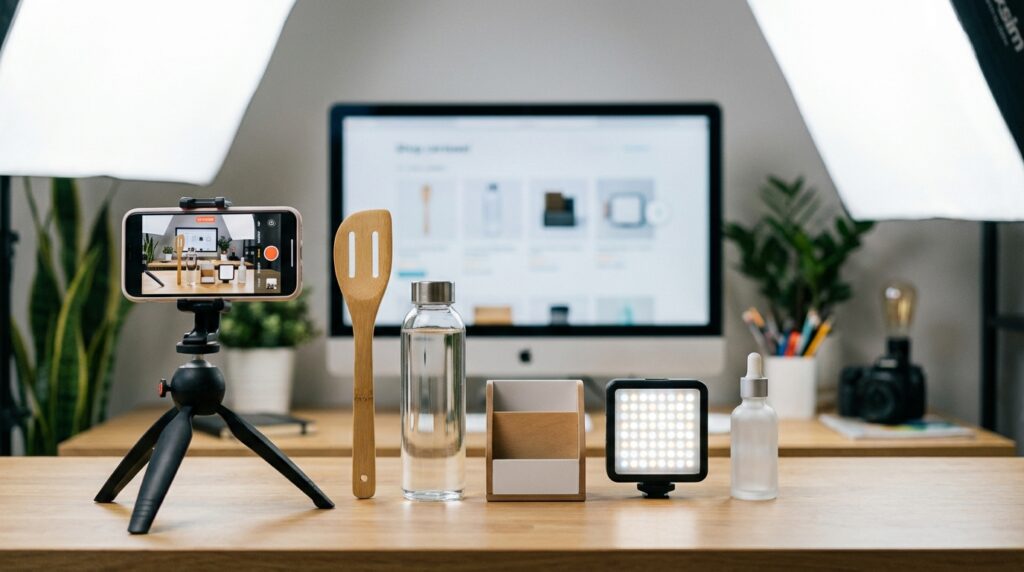
Your own draft already points to this. It’s not about nostalgia. It’s about letting new audiences discover what’s already working.
You extend streams with “adjacent assets” (Idea Lists are the simplest version)
If a stream is evergreen, it deserves supporting structure.
That’s where Idea Lists come in. They’re a way to package the same shopping logic in a different format. A shopper might not watch a full replay today. But they might save a list. Or click a product. Or come back later.
A good creator ecosystem is not “one life.” It’s a small web of content that points back to itself.
What brands should understand about all this
Brands often treat Live like a campaign: schedule the stream, measure the spike, move on.
That is a short-term view.
If Live content persists across Amazon surfaces, then a good stream behaves less like an ad and more like a durable product demo. That changes how brands should brief, sponsor, and measure live shopping.
Amazon’s own advertising materials position Live as a way to drive consideration by educating and interacting with customers in shoppable livestreams, and to integrate Live content into broader strategies across touchpoints.
So brands should ask:
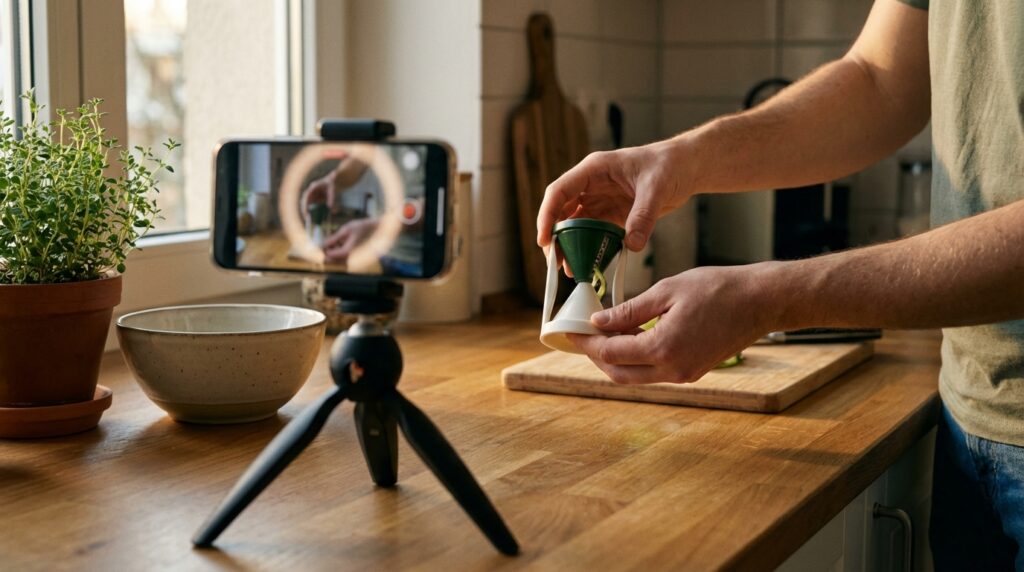
- Does this stream answer the real objections shoppers have on the product page?
- Does it demonstrate the product clearly (setup, size, outcome, comparison)?
- Is the product association clean so Amazon can place it where it matters?
- Can this stream still make sense in 90 days?
Brands that brief creators to produce “evergreen demos” get more than a live spike. They get durable retail media.
The “long tail” rewards discipline
You don’t get evergreen earnings from being loud. You get them from being useful.
That’s why this strategy feels almost unfair. A creator can go live with average energy, but strong structure, and still earn long after the stream ends. While another creator goes live with huge energy and gets nothing after the moment passes.
Amazon’s platform is not rewarding hype. It’s rewarding relevance.
If your stream helps a shopper decide, it keeps a job.
So the next time you go live, imagine a stranger finding your replay on a product page at 11:47 p.m., comparing options, trying to decide. They don’t care how your day went. They care whether the product works.
Give them that.
Then let Amazon do what Amazon does: keep surfacing content that helps people buy.