

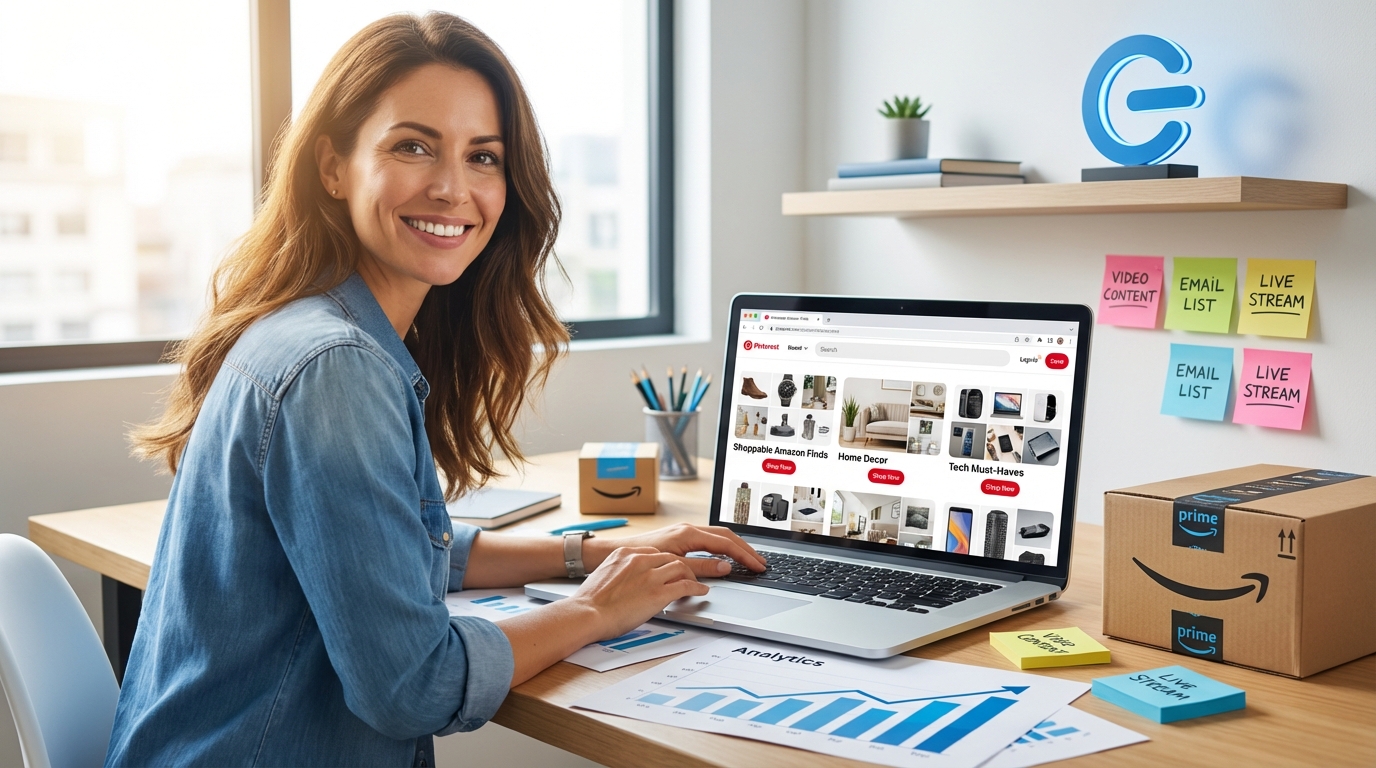
For years, when people talked about earning through Amazon using social media, the same platforms always came up: Instagram, TikTok, and YouTube.
Those became the default channels for influencers sharing product links, building storefronts, and driving affiliate revenue.
But a quieter shift has been happening.

Pinterest is becoming a meaningful part of the Amazon ecosystem for creators and affiliates. through how Amazon’s systems actually work in practice.
This matters because Pinterest is a visual search engine where people plan purchases, compare ideas, and save inspiration. People don’t just scroll, they search with intent.
And where there is intent, there is commerce.
For creators and brands, this creates a natural pairing: discovery on Pinterest, conversion on Amazon.
Pinterest’s Arrival in Amazon’s Influencer Ecosystem
Amazon has not announced a formal technical integration with Pinterest, as it has with some commerce platforms. There is no native Amazon checkout inside Pinterest, and no public API partnership.
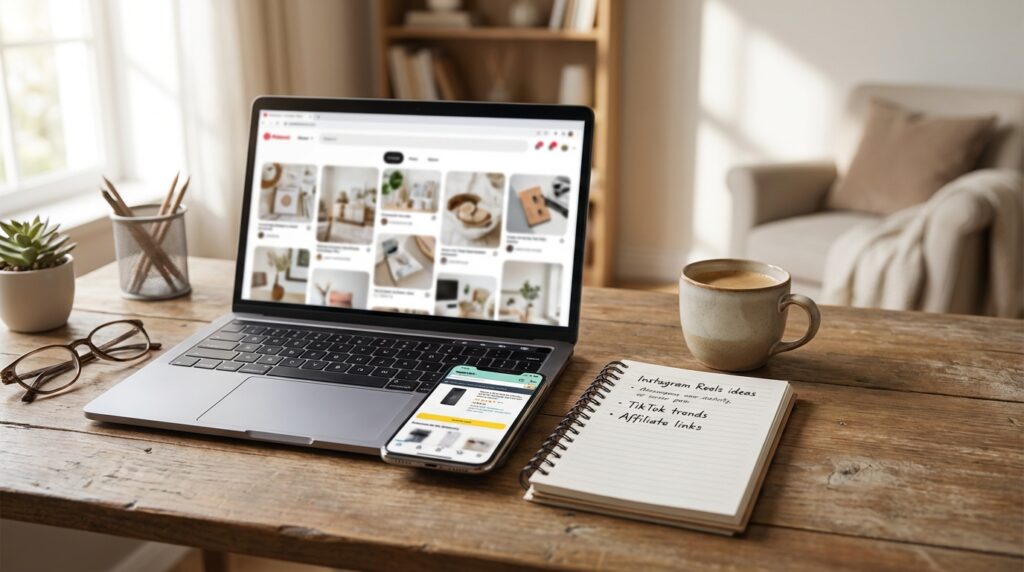
But in practice, Pinterest is increasingly part of the Amazon influencer and affiliate ecosystem.
Here’s what is happening:
- Amazon affiliate links shared on Pinterest are tracked and credited
- Influencer storefront links work when shared on Pinterest
- Off-Amazon discovery traffic is increasingly valuable to Amazon
- Creators report Pinterest being considered in Influencer Program approvals
In other words, Pinterest is functionally accepted as a traffic source.
Ileane Smith Says:
“Currently, when you sign up for the Amazon Influencer Program, guess what they added? Pinterest. Pinterest is now… I don’t know when they made this change… but just recently, they added Pinterest.”
Pinterest is now a legitimate pathway into Amazon’s monetization ecosystem.
Amazon benefits when shoppers arrive with intent. Pinterest specializes in intent.
Why Pinterest Matters for Social Commerce
Pinterest works differently from social feeds.
People don’t open Pinterest to see what friends are doing. They open it to solve problems and plan purchases.
Common searches include:

- “Small kitchen organization ideas”
- “Best gifts for new moms”
- “Home office setup ideas”
- “Travel must-haves under $50”
- “Dorm room essentials”
These are buying signals.
Pinterest itself describes the platform as a place where users discover, plan, and shop. That mindset shortens the journey from inspiration to purchase.
For Amazon-focused commerce, the funnel is simple:
Pinterest search → discovery → click → Amazon page → purchase
That’s valuable for both creators earning commissions and brands selling products.
FOR CREATORS: How to Monetize Pinterest with Amazon
Can You Really Make Money on Pinterest with Amazon?
Yes.
Pinterest works for Amazon monetization because content lasts longer. A strong pin can drive traffic for months or even years.
Unlike Instagram or TikTok posts that fade quickly, Pinterest content resurfaces through search.
Creators monetize using:
- Amazon Associates links
- Amazon Influencer storefront links
- Curated collections
- Seasonal gift guides
This suits creators who prefer steady, compounding income over chasing virality.
How to Get Started
Step 1: Optimize Your Profile
Treat Pinterest like a search-friendly storefront:
- Use niche keywords in your bio
- Be clear about your content focus
- Use a business account for analytics
Step 2: Join Amazon’s Programs
Most creators use:
Amazon Associates for affiliate links
Amazon Influencer Program for storefronts
You can use both.
Step 3: Create Shoppable Pins
High-performing formats include:

- “Amazon finds under $25.”
- Gift guides
- Problem-solution pins
- Before-and-after setups
- Product comparisons
Context sells better than promotion.
Step 4: Use Trackable Links
Trackable links help you:
- See what convert
- Refine your strategy
- Understand your audience
They also help with international traffic.
What Converts Best
Pinterest rewards useful, searchable content.
Examples:
- “Best Amazon kitchen tools for small spaces”
- “Travel essentials for long flights”
- “Minimalist bedroom Amazon finds”
- “Home office upgrades for productivity”
Think problem-first, not product-first.
Realistic Expectations
Pinterest is a slow-burn platform.
Expect:
- Slow early traction
- 60–90 day ramp-up
- Compounding results over time
But once pins rank, they can drive traffic for months.
FOR BRANDS: Using Pinterest to Drive Amazon Sales
Why Brands Should Care
Pinterest sits at the top of the buying funnel.
Users go there to:
- Research purchases
- Compare options
- Plan seasonal buys
- Save future ideas
This means Pinterest influences decisions before shoppers even land on Amazon.
How to Work with Creators
Pinterest requires different briefs than TikTok or Instagram.

Provide:
- SEO keywords
- Seasonal themes
- Visual guidance
- Use-case ideas
Pinterest content should feel helpful, not like ads.
Metrics That Matter
Track:
- Outbound clicks
- Saves (strong intent signal)
- Long-term performance
- Assisted conversions
Pinterest often supports multi-touch journeys. A user may save today and buy weeks later.
Shared Strategy for Creators and Brands
Workflow and Automation
Consistency beats bursts.
Helpful practices:
- Batch pin creation
- Schedule content
- Repurpose existing visuals
Automation helps, but shouldn’t look spammy.
Common Mistakes to Avoid
- Ignoring SEO in titles/descriptions
- Random, unfocused boards
- Weak visuals
- No affiliate disclosure
- Expecting instant results
Pinterest rewards patience.

The Future of Pinterest + Amazon
Shopping is shifting toward discovery-led commerce.
People want:
- Inspiration
- Curation
- Ideas before decisions
Pinterest delivers that. Amazon converts it.
As Amazon values off-platform discovery more, Pinterest becomes a natural partner in the funnel.
Early adopters build authority before competition grows.
Conclusion
Pinterest is still underused in Amazon-focused commerce. That makes it an opportunity.
Creators can build a steady affiliate income.
Brands can influence decisions earlier.
Both benefit from evergreen discovery.
Try this:
- Build 5 focused boards
- Publish 50–100 optimized pins
- Track for 90 days
Pinterest is a discovery engine that pairs naturally with Amazon.
Those who treat it strategically will win.