

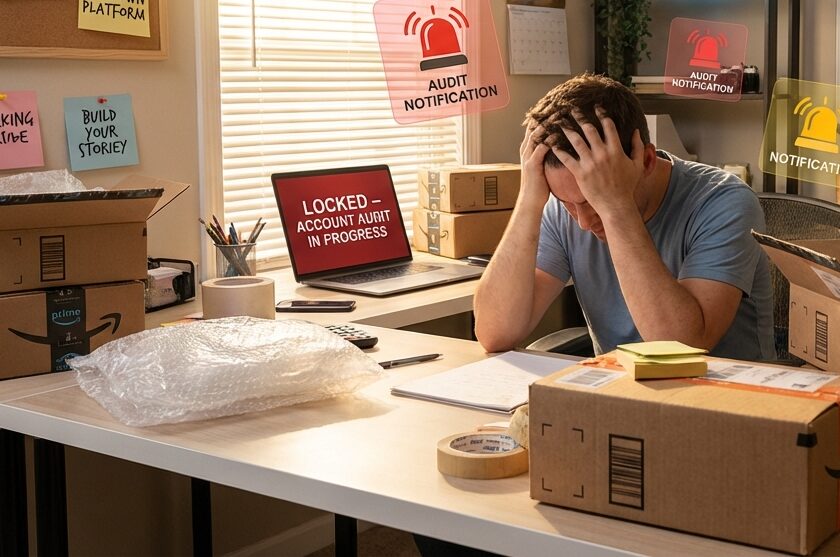
The Quick Strategy: What Creators Need to Know in 2026
Amazon Influencer audits, shadowbans, and sudden revenue drops are no longer edge cases, they’re part of the platform’s normal enforcement cycle.
- Even veteran creators are being flagged with little explanation.
- Common audit triggers include copyright missteps, non-compliant video formats, product over-tagging, and rapid content uploads.
- When locked out, fast documentation, calm appeals, and income diversification are essential.
- Long-term survival in 2026 depends on proactive compliance and building beyond Amazon alone.
Are You at Risk? The New Reality of Amazon Influencer Enforcement
In 2026, the Amazon Influencer Program isn’t just an opportunity, it’s a high-wire act.
Creators across all tiers report sudden audits, unexplained shadowbans, and dramatic commission drops. Enforcement is increasingly driven by AI-led review systems that can flag accounts instantly, sometimes after years of compliant activity.

Appeals are often slow, automated, and vague. Human intervention is limited, and outcomes can take months. If your income relies on shoppable videos or UGC product content, risk management is no longer optional it’s foundational.
Locked, Shadowbanned, or Shut Down- The Hidden Triggers
The stories surfacing across the community underscore how opaque Amazon’s enforcement has become. Michael Hootner’s widely-shared experience is chillingly familiar:
“I got my account locked twice. The first time, it took nine months. The second time, same thing, no explanation. They said it was an audit, 600 or 800 videos the second time. This is my third chance. They said three strikes and you’re out.”
Michael Hootner
If heavy hitters are vulnerable, so is everyone. Dozens of veteran and new creators have reported sudden demotions or deactivations, sometimes straight after an account audit. “Audit” may mean a manual review – but increasingly, it means a machine learning process driven by black box rules, catching everything from accidental copyright infringement to unorthodox video pacing.
What Actually Triggers an Audit?
While Amazon does not publish detailed enforcement thresholds, consistent patterns continue to surface across audit cases:
Copyright or Trademark Use
Amazon’s automated sweeps can flag even unintentional use of copyrighted or trademarked material. This includes background music, visible brand logos, packaging graphics, or unlicensed images appearing anywhere in creator content , even briefly. These signals often trigger automated reviews before any manual assessment occurs.
Non-Compliant Content Formats
Videos that stretch beyond recommended lengths, lean heavily on general advice, or provide lifestyle tips without clearly demonstrating the product itself are increasingly scrutinized. Content must remain product-focused, with clear and direct usage shown.
Product Over-Tagging
Tagging multiple or loosely related products, especially those not clearly visible or demonstrated in the video has emerged as a quiet but common trigger. Amazon expects a tight match between what’s shown and what’s tagged.
Rapid Upload Bursts
Uploading large volumes of videos within short timeframes can signal inauthentic or automated behavior, even when all content is original. Spacing uploads more naturally helps reduce unnecessary scrutiny.
Tagging multiple or loosely related products, especially ones not clearly shown, has emerged as a quiet but common trigger.
Compliance Checklist- Avoid Triggers & Stay Audit-Safe
Use this as a quick reference to keep your Amazon Influencer account in good standing:
Content & Copyright
- Only use music, images, and video clips you own or have a license for
- Avoid logos or brand imagery unless approved
- Clearly demonstrate products in your videos
Video Format & Posting
- Stick to Amazon’s recommended video lengths
- Avoid repetitive scripts, pacing, or templates across multiple videos
- Space out uploads, avoid mass posting in a short window
Language & Claims
- Use factual, neutral language, avoid “best,” “must-have,” or guarantees
- Include proper FTC disclosure for affiliate content
- Tie tips, hacks, or advice directly to the featured product
General Best Practices
- Keep records of brand approvals, contracts, and original content
- Track your video performance for sudden drops (early warning for audits)
- Diversify your content across other platforms to reduce reliance on Amazon
Warning Signs You’re Being Shadowbanned
Even if your account isn’t officially locked, Amazon may quietly limit reach. Watch for these red flags:
- Sudden drop in impressions on new videos
- Revenue decreases without explanation
- Disappearance from product carousels or search
- No engagement from previously active audience
What to do if you see these signs:
- Document everything and review recent uploads for compliance issues
- Test repurposing content on other channels to maintain revenue
- Reach out to your network or agency contacts for advice and escalation
- Refresh your understanding of Amazon’s policy updates
The Audit Response: Immediate Steps to Take
If enforcement hits, your response matters.
- Document everything: original footage, licenses, contracts, timestamps, and approval emails
- Appeal calmly and factually: focus on compliance history and value delivered, not emotion
- Leverage your network: agencies, platform partners, or creator communities can sometimes help escalate cases
Preparation shortens recovery time and increases your chances of reinstatement.
Morale & Recovery: Starting Fresh and Staying Afloat During Lockouts
Sudden audits don’t just affect income, they disrupt confidence, momentum, and mental health. One of the most overlooked consequences of a lockout is the psychological toll: burnout, loss of community trust, and sudden revenue gaps are common, even for experienced creators.
While appeals are pending and accounts are under review, focus on actions that stabilize both income and morale:
- Platform diversification: Repurpose your top-performing product videos for channels like Pinterest or Instagram Shopping. Alternative influencer and affiliate platforms can help your content reach new audiences while Amazon access is limited.
- Refresh compliance knowledge: Revisit the latest Amazon policies regularly. Algorithmic rules evolve fast, and audit triggers shift just as quickly. Staying updated reduces repeat risk once access is restored.
- Collaborate with other creators: Community alliances offer more than exposure, they provide cross-promotion, shared insights during appeals, and morale-boosting accountability when momentum dips.
Diversification isn’t optional anymore, it’s a stabilizer. Treat recovery periods not as downtime, but as a strategic reset that strengthens your creator business long-term.
Building a Long-Term, Audit-Resilient Creator Business
The future of creator commerce doesn’t belong to the biggest accounts or even the fastest-growing ones, but to the most resilient. Amazon remains a powerful platform, but unpredictable enforcement, audits, shadowbans, and revenue volatility are now structural realities, not edge cases.
Thriving in 2026 means treating risk management as foundational. That includes expecting audits as part of the creator lifecycle, staying conservatively compliant as policies evolve, and building income streams that don’t depend on a single algorithm or platform.
Surviving and thriving requires multichannel reach, proactive compliance, and revenue resilience beyond any one ecosystem. Stay equipped. Stay compliant. Stay diversified. And remember: every setback is an opportunity to future-proof your creator business for the next algorithmic wave.