

Valentine’s Day used to be a “nice-to-have” seasonal moment for creators. A few themed posts. Maybe a gift guide. Some pink visuals and heart emojis.
That era is over.
Today, Valentine’s influencer marketing sits in a high-intent, high-emotion, high-spend window where audiences are actively looking for ideas and ready to buy. It’s not passive scrolling season, it’s decision-making season.

And when purchase intent meets trusted recommendations, creators become a direct part of the commerce funnel. That’s where creator ROI stops being theoretical and starts being measurable.
But here’s the uncomfortable truth: Most Valentine’s campaign ideas still fail because they’re built for aesthetics, not outcomes.
Valentine’s Is a Social Commerce Moment
Valentine’s buying behavior is predictable. People delay decisions. They second-guess. They look for reassurance. Then they panic-buy closer to the date.
This is why Valentine’s influencer marketing works so well. Creators step in as curators and decision-simplifiers. Not just promoters.
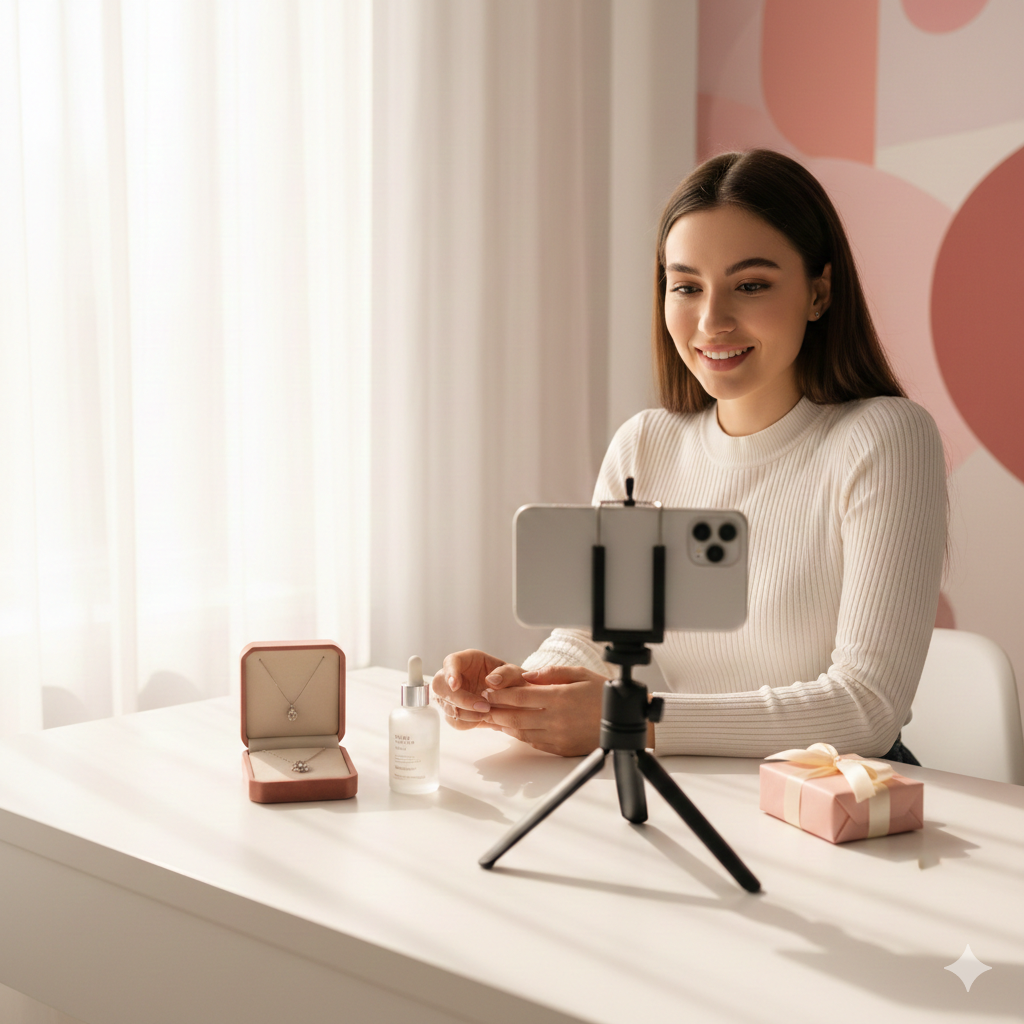
If your content helps someone decide faster, feel confident, or avoid a bad gift choice, you’re already influencing the sale.
That’s the real role of creators in social commerce: reducing friction in human decision-making.
2026 Shift
Creators who still treat Valentine’s as “couples-only” are leaving money on the table.
Modern gifting includes:
- Self-gifting
- Friend gifting
- Pet gifting
- Workplace gifting
- “Situationship” gifting (yes, this is real now)
The audience isn’t asking “What should I buy my partner?”
They’re asking, “What should I buy, and will this be the right choice?”
That nuance matters.
Creators who frame content around use cases and personas instead of generic romance outperform.
Example:
“Gifts for someone who says they don’t want anything”
will convert better than
“Top Valentine’s Gifts for Him.”
Because it solves a real problem.

Gift Guides Still Work
Gift guides are everywhere. That’s not the issue. The issue is that most are lazy.
A strong Valentine’s guide doesn’t just list products. It filters choices.
Good guides:
- Segment by budget
- Segment by personality
- Offer one “best pick” per category
- Explain WHY the item fits
People don’t want more options. They want fewer, better ones.
Creators who understand this become trusted curators. That trust drives creator ROI more than follower count ever will.
Storytelling Is About About Context
We often say storytelling converts. That’s true, but incomplete.
What converts is context.
When a creator explains:
- Who a product is for
- When it’s useful
- Why it stands out
- What problem does it solves
The audience maps it to their own life. That’s cognitive alignment. And alignment drives action.

Live Shopping: The Most Underused Valentine’s Format
Live shopping deserves more attention than it gets.
Why? Because it handles objections in real time:
- “Is it worth the price?”
- “Will it arrive on time?”
- “Is the quality good?”
A static post can’t answer those. A creator can.
Creators who treat live sessions like mini shows, structured, paced, and product-focused, often see stronger social commerce performance than with regular posts.
UGC Is Distributed Trust
When followers tag friends or share gift ideas, they’re transferring trust.
That’s powerful.
Simple prompts outperform complex campaigns:
- “Send this as a hint.”
- “Tag someone who’d love this.”
- “Comment on your budget,t and I’ll suggest something.g”
Participation increases reach, yes.
But more importantly, it increases credibility.
A Reality Check Creators Need to Hear
Brands are no longer impressed by views alone.
They want signals tied to outcomes.
- Clicks.
- Conversions.
- Purchase intent in comments.
- Saved posts.
This doesn’t mean creators must become data analysts.
But it does mean creators who track results will outpace those who don’t.
Tanya, Business Development Manager at Logie, puts it bluntly:
“Brands don’t just want exposure anymore. They want creators who understand how their content moves people from discovery to decision. The creators who win Valentine’s campaigns are the ones who think like partners, not just promoters.”
That shift from promoter to partner is the real evolution in influencer marketing.
Recommendations for Creators
1) Run a Two-Wave Strategy
Wave 1: discovery and saves
Wave 2: urgency and conversion
Most creators post only in wave 2.
That’s why they see inconsistent results.
2) Make Proof Part of the Creative
- Show texture.
- Show size.
- Show durability.
- Show real-life usage.
Proof beats polish in 2026.
3) Treat Valentine’s Like a Campaign, Not a Post
Think in sequences, not singles.
Teaser → Guide → Demo → Live → Reminder.
That’s how creator ROI compounds.
4) Track the Basics
- UTM links
- Unique codes
- Platform-level performance
You don’t need advanced analytics.
You need consistency.