

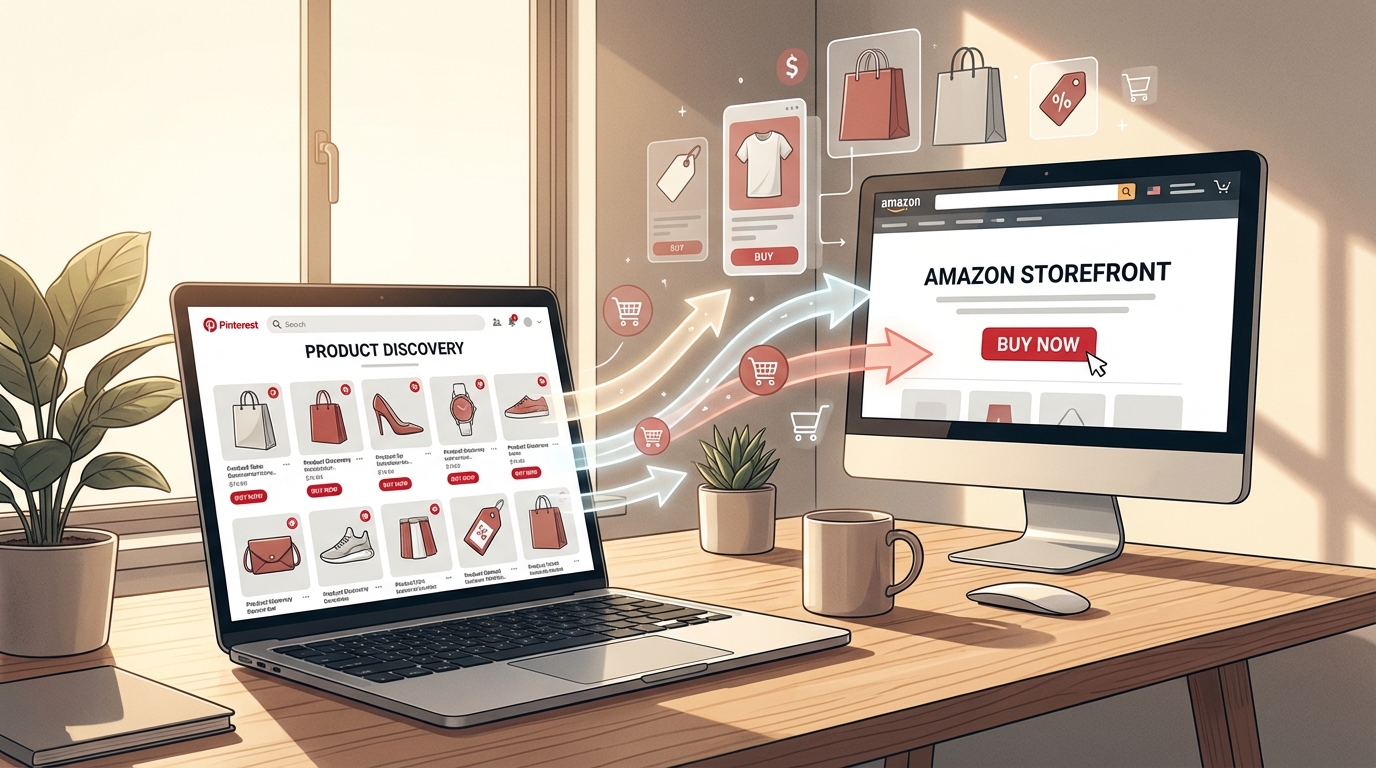
Affiliate marketing has gradually shifted from simple link-sharing to something more strategic.
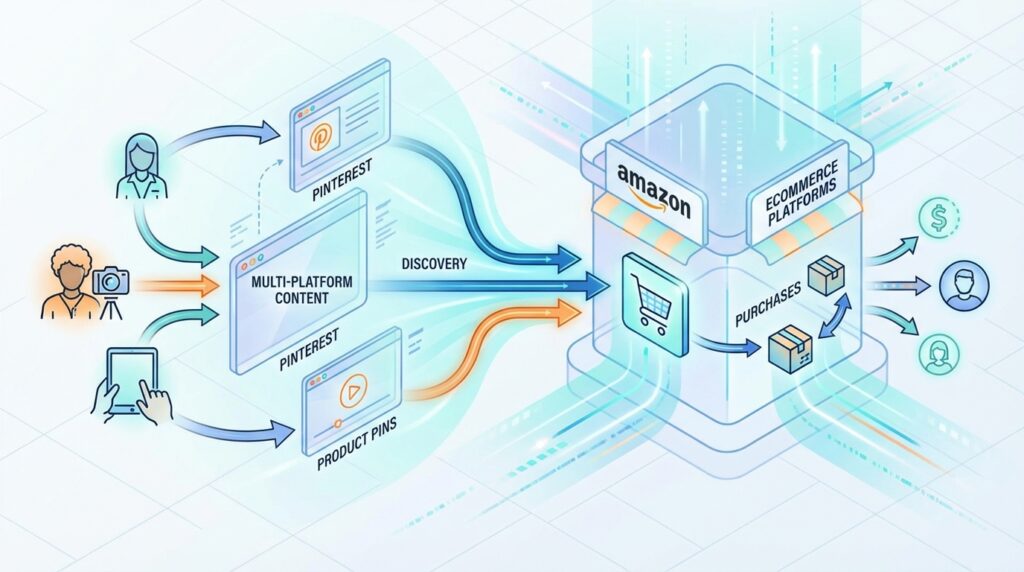
Today, creators who earn consistently from affiliate programs rarely rely on a single platform. Instead, they connect discovery platforms with purchasing platforms, building a clear path from inspiration to checkout.
One combination that is becoming powerful in 2026 is Pinterest and Amazon Storefronts.

Pinterest is where people go to discover ideas and products. Amazon is where they go to buy those products immediately.
When creators connect the two effectively, they build a system where curiosity turns into purchase intent and purchase intent turns into affiliate revenue.
This reflects how people actually behave online.
Why Pinterest Is Unusually Strong for Affiliate Traffic
Most social media platforms revolve around entertainment. Users scroll for fun, not necessarily to buy something.
Pinterest works differently.
“As soon as I added Pinterest to my Amazon profile, I was able to claim my Amazon storefront on Pinterest.” Sandy
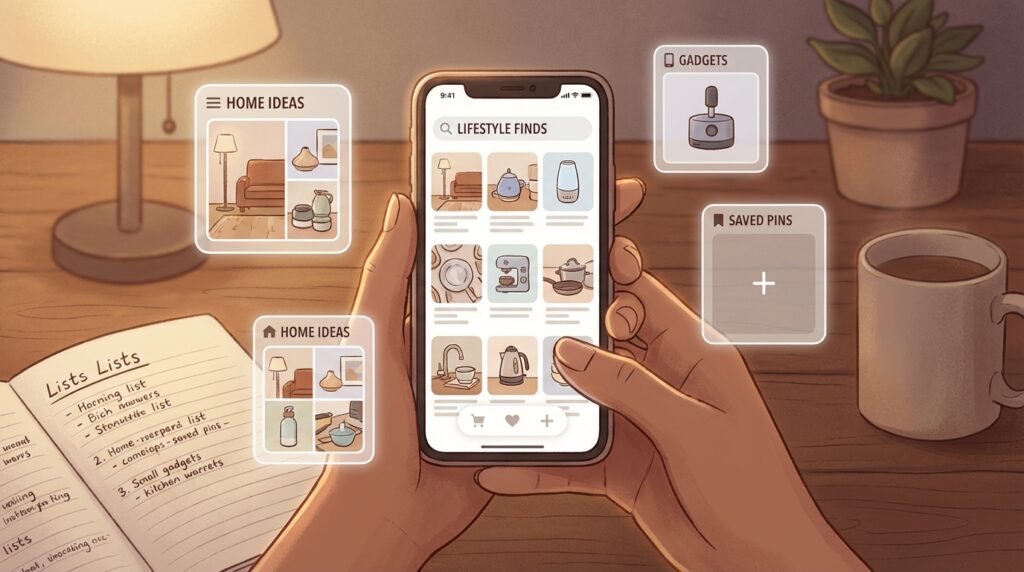
People visit Pinterest when they are planning something: redecorating a home, upgrading a workspace, organizing a kitchen, preparing for a trip, or exploring fashion ideas. That planning mindset means users are already thinking about products.
Several studies highlight how strong this intent is:
- 93% of Pinterest users say they use the platform to plan purchases.
- 85% of weekly users have bought something after seeing a Pin from a brand.
- More than half of Pinterest users say they actively use the platform to shop.
These numbers show that Pinterest users often arrive much closer to the buying stage than users on most other platforms.
From an affiliate perspective, this changes everything.
If someone discovers a product on Pinterest and immediately lands on a well-organized Amazon Storefront, the purchase path becomes extremely short. The user moves from discovery → curiosity → purchase in just a few clicks.
That is exactly the kind of funnel affiliate marketers want.
The Amazon Storefront Feature That Changed the Game
Pinterest recently introduced the ability for creators to link and claim their Amazon Storefront directly on their Pinterest profile.
Previously, creators had to drop individual affiliate links throughout Pins or send users to blog posts and landing pages. Now, Pinterest traffic can go directly to a curated Amazon storefront, essentially a creator’s personal product shop inside Amazon.
Here’s how the process generally works.
Step 1: Connect Pinterest inside your Amazon Influencer dashboard
Creators enrolled in the Amazon Influencer Program can add Pinterest as a connected social account. This verifies that the Pinterest account belongs to the influencer.
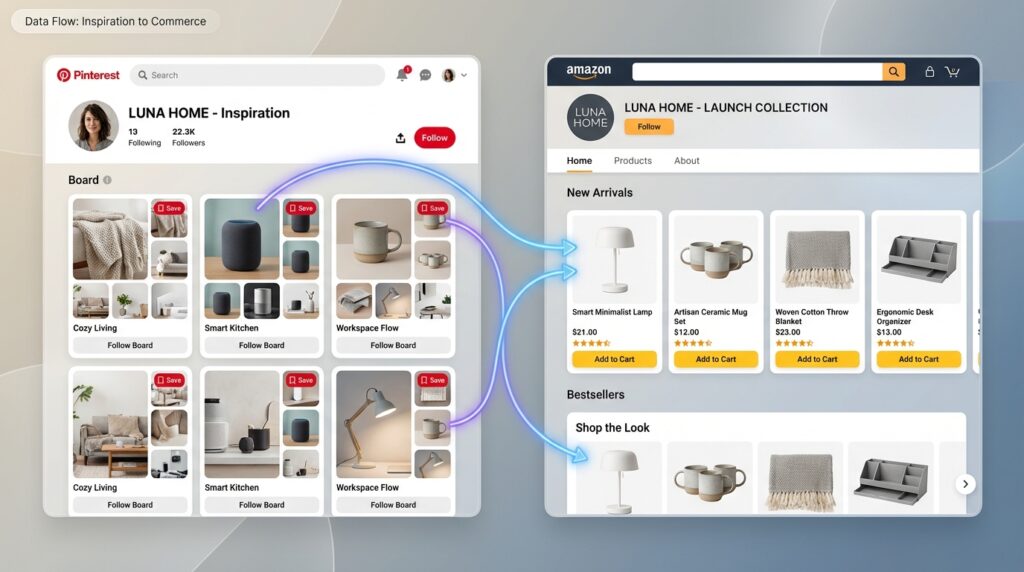
Step 2: Claim your Amazon Storefront on Pinterest
Inside Pinterest profile settings, creators can paste their Amazon Storefront URL using the “Claim your storefront” option.
Once this is done, Pinterest can display a storefront link on the profile.
Step 3: Use Pins to drive traffic into storefront collections
This is where the strategy begins.
Creators can publish Pins that revolve around specific product themes and direct viewers to curated storefront collections.
For example:
- “My Work-From-Home Desk Setup”
- “Kitchen Tools I Use Every Day”
- “Minimalist Bedroom Essentials”
- “Affordable Tech Gadgets Worth Buying”
Each Pin becomes an entry point that leads users toward the storefront.
The storefront then acts as a product hub, where multiple related recommendations live in one place.
This structure is much more effective than sharing a single affiliate link per Pin.
Pinterest Behaves More Like a Search Engine Than Social Media
One of the most misunderstood aspects of Pinterest is that it doesn’t operate like Instagram, TikTok, or X.
Pinterest behaves more like a visual search engine.
Content posted today can still generate traffic months or even years later. This long lifespan is one of the platform’s biggest advantages.
Another interesting statistic illustrates this point:
97% of Pinterest searches are unbranded.
Users rarely search for specific companies. Instead, they search for ideas.
Typical queries include things like:
- “best desk setup for productivity”
- “kitchen organization ideas”
- “minimalist living room inspiration”
- “travel essentials for long flights”
Because of this, creators don’t need massive audiences to gain visibility. If a Pin answers a search query effectively, it can appear alongside content from large brands.
This creates a real opportunity for smaller creators to compete with something that is becoming increasingly difficult on traditional social media platforms.
Pinterest SEO Is More Important Than Most Creators Realize
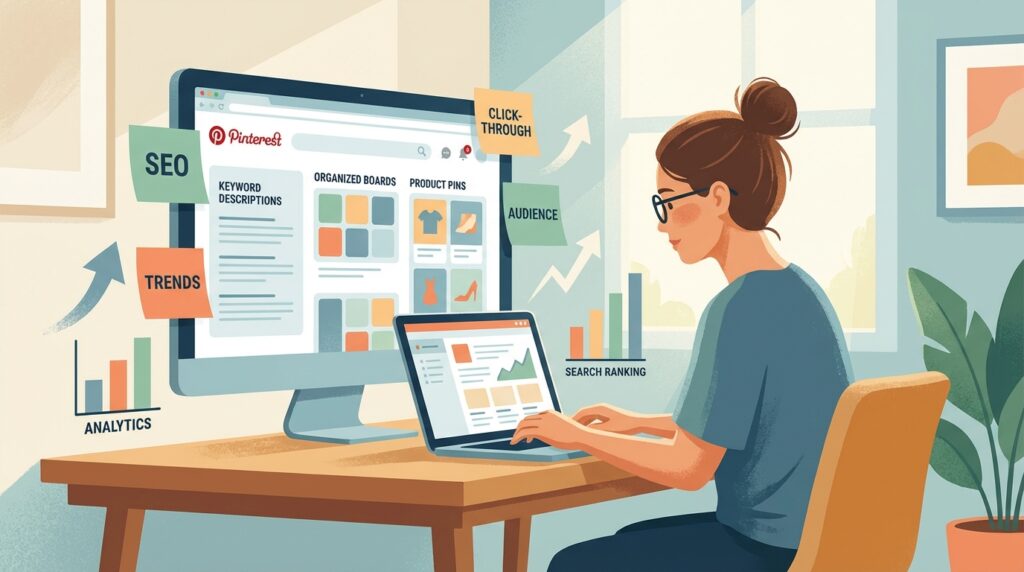
Because Pinterest behaves like a search engine, optimization matters.
Creators who treat Pinterest casually often miss this point. Posting attractive images is not enough. The platform needs context to understand where your content belongs.
A few practices consistently improve visibility.
Keyword-rich descriptions
Pinterest uses Pin descriptions to determine search relevance. Including natural keywords such as “Amazon kitchen tools” or “home office gadgets” helps the algorithm categorize the Pin.
Themed boards
Boards act like topical folders. A board titled “Amazon Kitchen Essentials” signals clearly what the content is about.
Visual storytelling formats
Pinterest increasingly promotes Idea Pins and video Pins, particularly in discovery feeds.
Consistent activity
Accounts that post regularly tend to receive stronger distribution signals.
None of this requires complicated SEO tactics. But ignoring it significantly reduces the chance of being discovered.
In my opinion, many creators underestimate Pinterest because they treat it like another social platform instead of treating it like Google for visual inspiration.
Are Amazon Affiliate Links Allowed on Pinterest?
This is one of the most common questions among creators.
The short answer is yes, but with some conditions.
Amazon’s affiliate program allows links to be shared on public social media platforms, including Pinterest. Pinterest also permits affiliate links inside Pins.

However, creators should follow a few guidelines carefully:
- Links must be publicly accessible and not hidden behind private groups or gated content.
- Content should provide genuine value, not simply spam product links.
- Creators should disclose affiliate relationships where appropriate.
Violating these guidelines can lead to account issues with either platform.
From a practical standpoint, creators who build helpful product collections and genuine recommendations rarely run into problems.
Common Problems Creators Are Encountering
While the integration between Pinterest and Amazon is promising, it is still relatively new. Early adopters have noticed several issues.
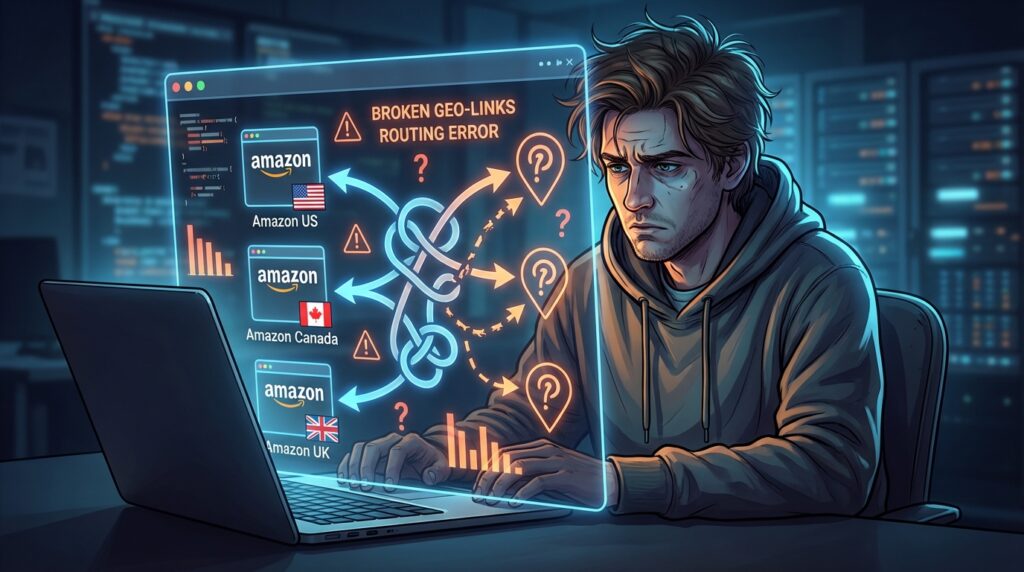
Storefront region confusion
Creators who operate multiple Amazon storefronts (for example US and Canada) sometimes discover that Pinterest links to the wrong region.
This can cause problems if the majority of the audience lives in a different country.
Inconsistent mobile behavior
Links may behave differently depending on the device. Some users open the storefront inside the Amazon app, while others are redirected to a browser.
Occasionally, users land on a generic Amazon page instead of the storefront.
This inconsistency can interrupt the user journey.
Gradual feature rollout
Not every creator has access to the storefront claim feature yet. Pinterest is releasing it gradually.
For now, creators should check their settings periodically.
Why Smart Link Tools Still Matter
Even with the new storefront integration, many experienced creators still use tools like GeniusLink.
These tools provide additional control over affiliate traffic.
For example:
- Automatically redirecting users to the correct Amazon country store
- Tracking which Pins generate clicks
- Measuring conversion patterns
International traffic is particularly important here. If someone in Canada clicks a US Amazon link, the commission may be lost unless geo-routing is used.
Because of this, many creators adopt a hybrid strategy:
- Pinterest storefront for visibility and branding
- smart tracking links for analytics and international routing
This approach offers the best of both systems.
The Bigger Trend: Social Platforms Are Becoming Shopping Engines
What we are seeing with Pinterest and Amazon reflects a broader change across the internet.
Social platforms are no longer just places for conversation or entertainment. They are becoming product discovery engines.
Users now discover products through:
- short videos
- visual inspiration
- curated creator recommendations
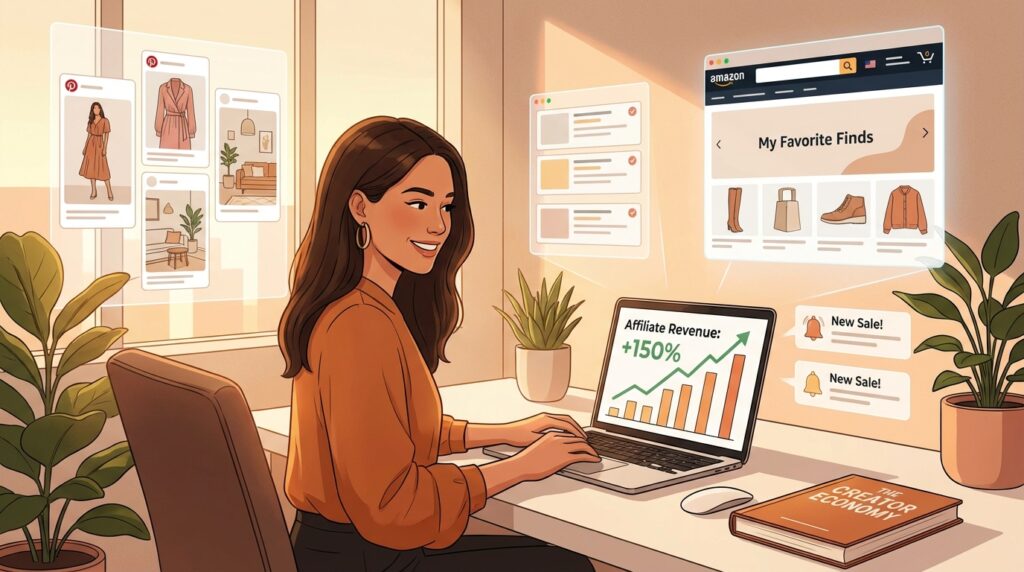
Pinterest fits naturally into this ecosystem because it has always focused on visual discovery rather than interruption-based advertising.
For creators, this means that apart from an opportunity to share links, they can also build curated product ecosystems where discovery and purchasing happen smoothly.
Final Takeaway
Connecting your Amazon Storefront to Pinterest is a strategic way to connect high-intent discovery with high-conversion purchasing.
Pinterest helps people find products they are already interested in. Amazon makes it easy to buy those products immediately.
Creators who understand how to structure this connection through thoughtful Pins, well-organized storefront collections, and reliable tracking tools can turn Pinterest traffic into a consistent affiliate revenue stream.
In a digital environment where attention is scattered across many platforms, the creators who succeed will be those who build systems that connect platforms together instead of relying on one platform alone.