
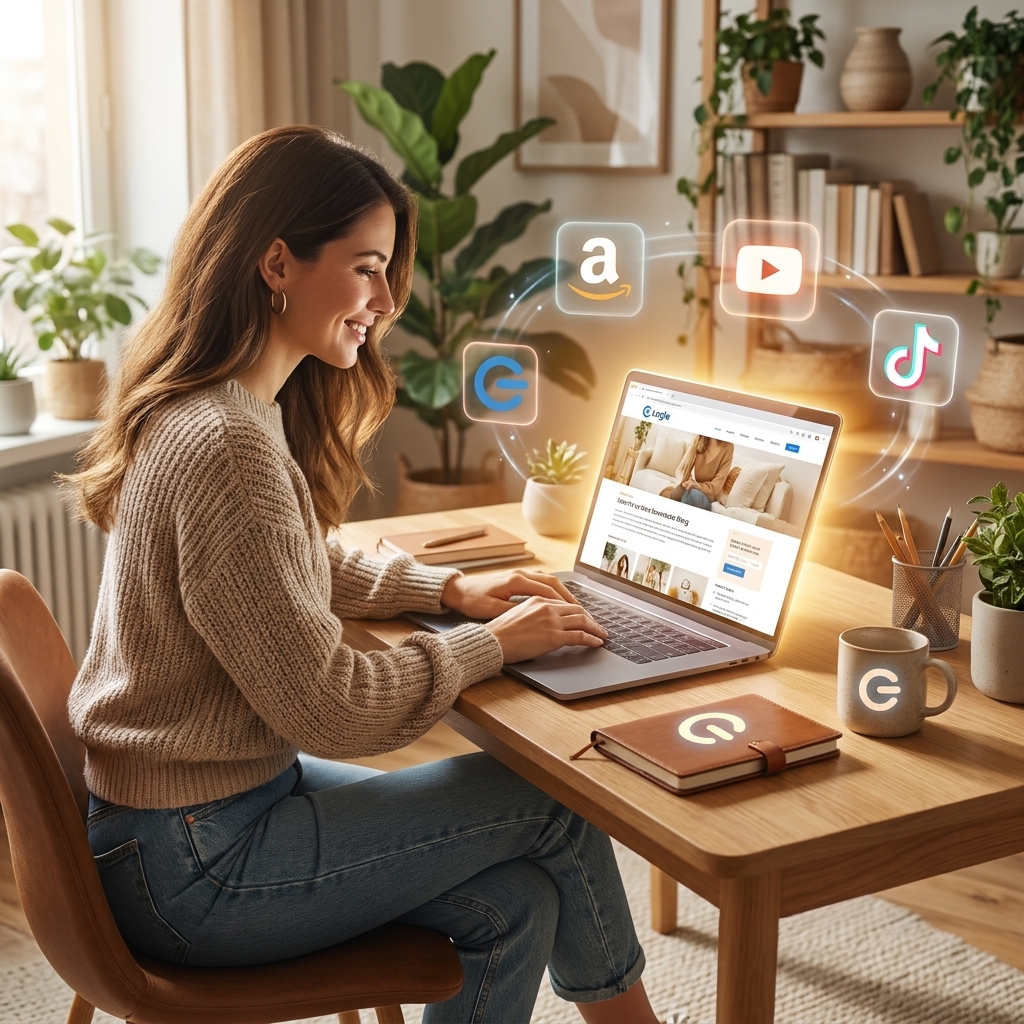
- With platform earnings shrinking and unpredictable algorithm changes, creators are returning to blogs, landing pages, and owned websites to secure their future.
- Blogs give content creators true ownership, brand leverage, and the power to repurpose multi-channel content – no more dependency on social feeds or commissions alone.
- Real examples and actionable tactics from the Logie community show how to refresh your site for today’s marketplace and drive revenue from direct audiences.
Platform commissions are shrinking, algorithms are deliberately killing organic reach, and creators who built everything on rented ground are paying for it.
In 2026, the smartest move in the creator economy isn’t chasing the next platform; it’s building something you actually own.
Blogs, owned websites, and email lists are back at the center of every serious creator’s business strategy, and the data backs it up completely.

Let’s stop pretending the last few years didn’t happen.
A lot of creators made real money doing things that felt almost too easy: drop an Amazon storefront link, post a TikTok, wake up to commissions.
Build a following on Instagram for free. Let the algorithm do the heavy lifting. Why would anyone bother maintaining a website when the platforms were basically doing the work for you?
That version of the creator economy is over.
In 2026, the platforms that once felt like goldmines have quietly restructured their relationship with creators.
Commission rates have been trimmed. Enforcement has gone automated and ruthless. Organic reach, the ability to actually get your content seen by the people who followed you, has collapsed to numbers that would have seemed dystopian just five years ago.
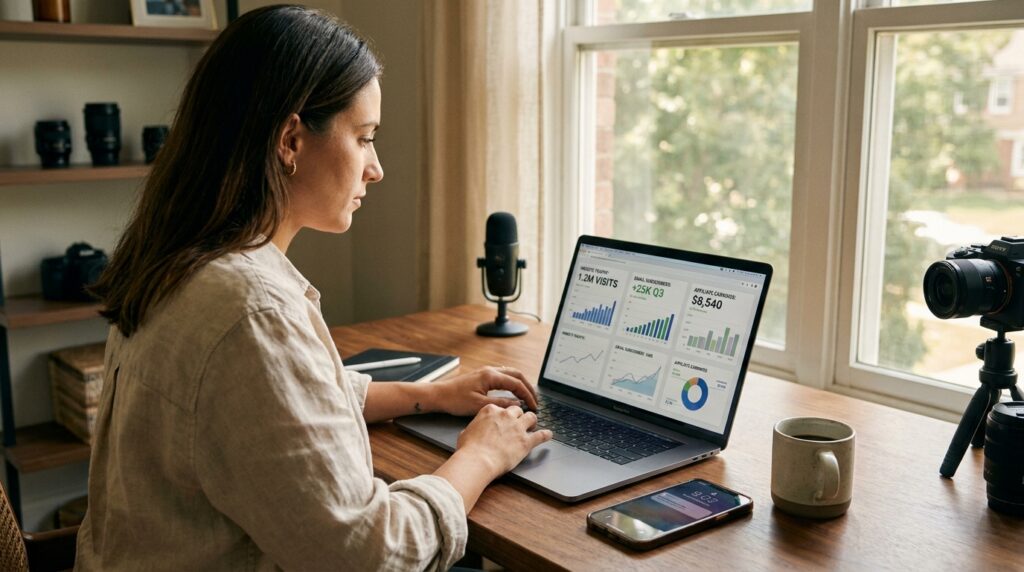
And the creators who built their entire income on any single platform are now living with the consequences of that dependency.
Meanwhile, the ones who kept their blogs alive, kept growing their email lists, kept building on the ground they actually owned? They’re having their best year yet.
This is the blog renaissance. And this time, it’s driven by data, not nostalgia.
The Platform Squeeze Is Real. Here Are the Numbers
Organic Reach Has Essentially Died
If you’ve noticed your posts getting fewer eyes lately, it’s not your content. It’s structural, and it’s intentional.
In 2026, organic reach on major social platforms has collapsed to historically low levels. Instagram now delivers your posts to roughly 5–7.6% of your followers per post.
Facebook is worse in organic reach, there sits between 2.6% and 5.9%, with some studies putting the average Facebook Page post reach as low as 1.65%.
These aren’t temporary algorithm blips. This is a permanent, deliberate shift by platforms designed to push businesses toward paid advertising.
The practical reality is stark: a creator with 10,000 Instagram followers can expect maybe 350–760 people to see any given organic post.
That’s a fraction of one, not an audience. A creator with 10,000 email subscribers, on the other hand, reaches nearly all of them with average open rates of 32–42% across industries, depending on how you measure it.
Meta has made its intentions explicit. The strategic takeaway, as one analysis put it, is that
“organic social, in the minds of Meta at least, isn’t meant to function as a free web traffic engine.”
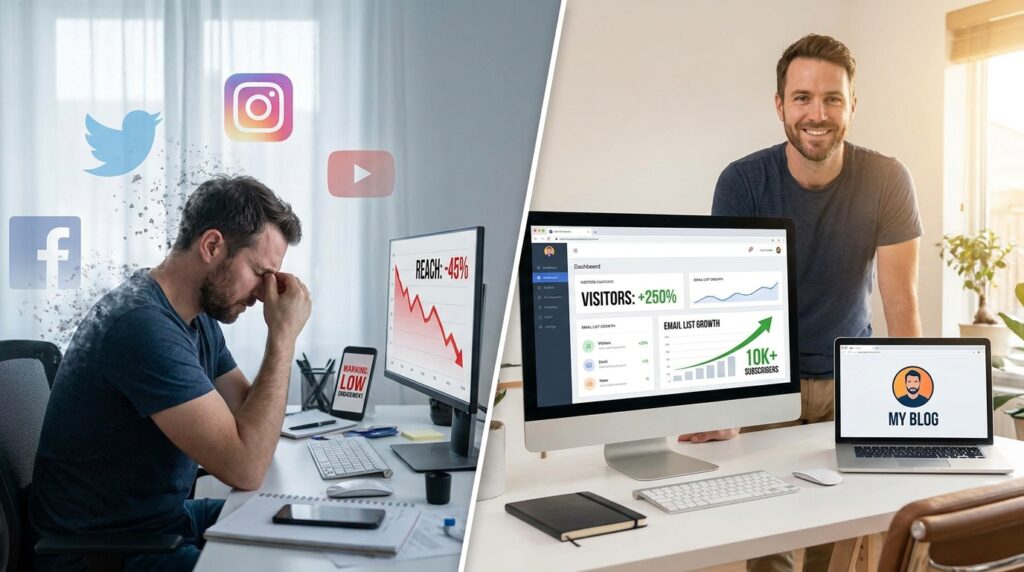
They want users scrolling on-platform, not clicking out. Your posts are fuel for their engagement engine, not a reliable distribution channel for your business.
Amazon and TikTok Have Changed the Rules
The commission squeeze has been steady and significant. Categories that paid 8% on Amazon in 2019, furniture, home goods, and outdoor products, were cut to as low as 3% by 2025.
Amazon updated its Associates Program Operating Agreement in October 2025, tightening compliance requirements, enforcement, and IP rules, often through quiet help-page revisions rather than loud announcements.
On TikTok, stricter commercial content disclosure rules arrived in 2025 with a punishing enforcement model: a 24-hour fix-or-penalize window, and over 85% of content removed for violations now identified automatically by AI.
Even experienced creators who thought they were playing by the rules found themselves caught out by changes that shifted under their feet.
The message from both platforms is the same: they are optimizing for their own business, not yours.
“The Blogs Are Gonna Come Back Into Play”
Altovise Pelzer, one of the leading voices in the Logie community, saw this shift before most people were willing to admit it. She put it plainly:
“This will be the time where the blogs are gonna come back into play!… This will be the time when your landing page will be beneficial for you, if you are using it the proper way.”
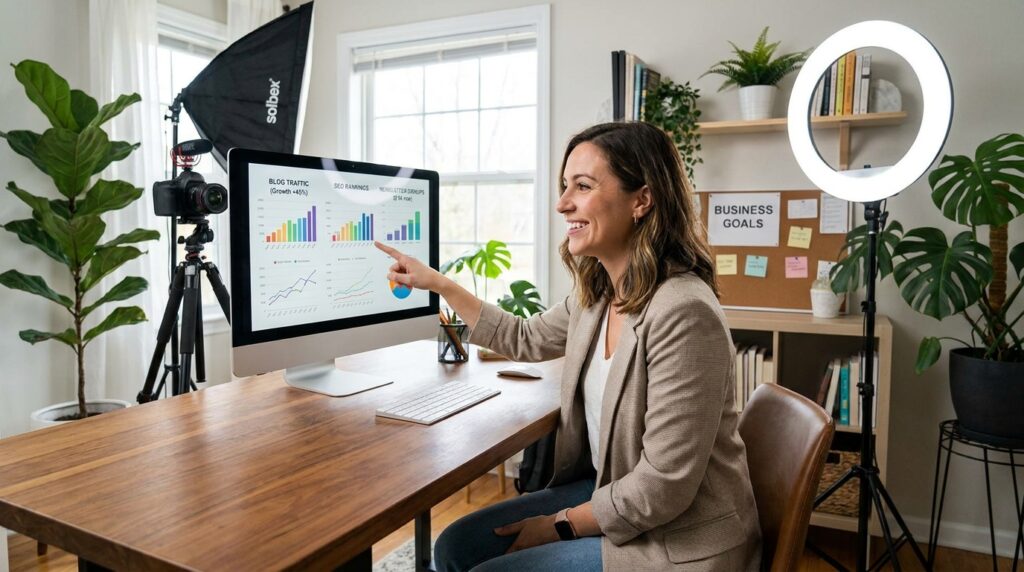
She was describing what she was already watching happen inside the community creators who had kept their own platforms alive, suddenly holding assets that others had to rebuild from scratch.
“People stopped doing the blog because we didn’t need to,”* she continued. *”We were making so much on-site. Well, now that the on-site has changed, blogging is going to be back in high demand.”
The data she was sensing in real time is now confirmed across the industry. A growing share of the creator economy’s expansion in 2026 is happening inside community-led, owned platforms, not on social networks.
For many creators, owned communities and websites have moved from side project to core business.
And creators who refreshed their blogs as Amazon on-site commissions began declining saw higher earnings and better brand deals than those who waited for the platforms to course-correct.
The 2026 Creator Economy Is Rewarding Ownership
The numbers describing the creator economy in 2026 are large and growing. Estimates range from $234 billion to $313 billion globally, projected to reach $528 billion by 2030 and potentially $1.49 trillion by 2034.
But the more important story isn’t the size of the market. It’s where the growth is actually happening.
The creator businesses that are thriving in 2026 share a consistent profile: they have diversified income streams that they own.
Recurring, community-based revenue now sits at the center of the strongest creator businesses, while sponsorships and affiliate income play increasingly peripheral roles.
Memberships have moved from one monetization option among many to the primary revenue foundation for the most resilient creator businesses. The ordering is instructive; it has flipped from a few years ago.

The brand side confirms this, too. U.S. creator economy ad spend is set to reach $43.9 billion in 2026, up from $37.1 billion this year.
But the biggest spending growth, a 56% increase, is coming from paid amplification of creator content *beyond social media*.
Brands are specifically investing more in creators who can prove multi-platform reach: a website with real traffic, an email list, a YouTube channel, not just a TikTok profile.
This is what leverage looks like in 2026. And it lives on owned platforms.
Why Email Is the Anchor of Every Serious Creator Business
The comparison between email and social media in 2026 is not even close.
Email marketing delivers $36–$45 in return for every $1 spent. Social media returns roughly $2.50 per dollar.
Email drives conversion rates of 4.24%, while social media sits at 0.59%, a 7x performance gap.
According to HubSpot’s 2026 State of Marketing Report, website/blog/SEO is the single highest-ROI marketing channel, with email marketing ranking first for B2C brands specifically.
42% of marketers say email is their most effective channel. Social media and paid search each sit at 16%.
Social media is great for discovery, for reaching people who don’t know you yet. But your followers are rented.
The platform owns that relationship, decides how many of them see your content, can change its rules overnight, or, as TikTok users in the US experienced firsthand at the start of 2025, can disappear entirely for a period.
Your email list is an asset you own outright. No algorithm can reduce its reach. No policy change can make it inaccessible. When you have 10,000 engaged email subscribers, that list compounds in value every year you keep it alive.
The businesses and creators that perform best in digital marketing in 2026, as one analysis put it, are “using social media to build the audience that email then owns, nurtures, and converts.”
Social gets you found. Email is where revenue happens.
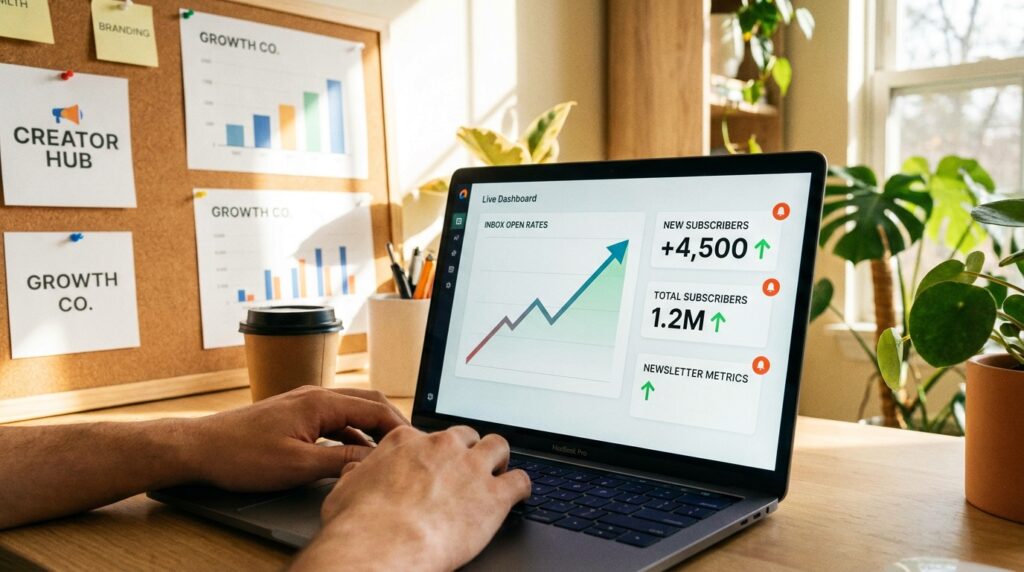
The Blog Is the Hub. Everything Else Is Spokes.
Blogging didn’t disappear; it matured. And the numbers show it’s still a central pillar of the affiliate marketing world: between 64% and 80% of affiliates rely on SEO and blogging as their main traffic sources.
Around 80% of brands and 84% of publishers still run affiliate programs. Customers read 3–4 blog posts about a product before making a purchase, because they want real information, not a 60-second video that got pushed to them by an algorithm.
What content formats are driving the most ROI for creators in 2026? According to HubSpot’s State of Marketing Report, blog posts ranked among the top five highest-ROI content formats, with small businesses 23% more likely than average to see ROI from blog content.
Organic search still drives 53% of all website traffic across industries, and that traffic is free, compounds over time, and doesn’t disappear when a platform changes its rules.
A blog also does something no social post can do: it converts intent. People who find you through search are in a decision-making mindset.
They’re looking for real answers. That intent produces higher conversion rates than the casual social scroll, and it produces an audience that trusts you before they’ve even clicked your affiliate link.
The creators winning in 2026 are running blogs like digital businesses: SEO-driven content, affiliate marketing, email capture, and multiple revenue streams that aren’t dependent on any single platform’s goodwill.
A well-built affiliate blog, once established, can generate $1,000–$5,000+ per month by the end of its first year. By year two, the income compounds. Platforms change; a well-optimized owned site doesn’t.
Why Brands Pay More for Multi-Channel Creators
Picture two creators pitching the same $2,500 review campaign.
Creator A has a strong TikTok following, but their commissions have been squeezed, and their organic reach is inconsistent. They’re one algorithm update away from a significant income dip.
Creator B says: “I’ll feature your product in a dedicated blog review that will rank in search for months, a custom newsletter segment to my 8,000 subscribers, and a homepage placement on my site with verified monthly traffic. Here’s the analytics dashboard.”
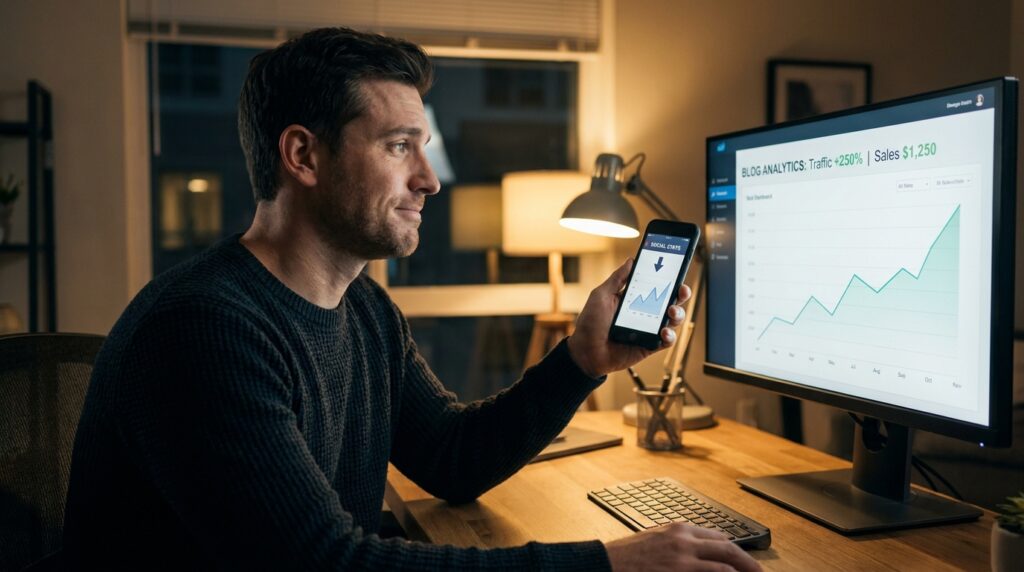
Creator B gets the deal. Every time.
Brands in 2026 aren’t just buying a post. They’re partnering with media companies. The brand side of the creator economy has matured to the point where 92% of marketers plan to work with both macro and micro creators specifically because a single-channel approach doesn’t cut it anymore.
The creators consistently winning the biggest brand deals and the ones able to command higher rates are those who can demonstrate a multi-touchpoint footprint: blog traffic, email list, YouTube subscribers, and social presence, working together.
Owned platforms aren’t just good for your independence. They are your negotiating leverage.
How to Refresh and Relaunch Your Blog: A Real 2026 Action Plan
This is about building a home base that works alongside everything else you’re already doing.
Step 1: Audit what you already have.
Log back into the WordPress, Wix, or Squarespace you’ve been ignoring. Remove dead links, outdated widgets, and anything that makes the site feel abandoned.
Update your About page and bio. A neglected site can be refreshed in a few hours, and what you revive is now an owned asset that no platform can take from you.
Step 2: Post search-driven, multi-channel content.
Your best-performing videos and storefronts belong on your blog. Embed them, but go further and write the context and your personal take around them.
This is how you build SEO authority and reader trust simultaneously. Google rewards pages that genuinely answer questions.
Keep long-form posts in the 1,500–3,000 word range, targeting buyer-intent keywords like “best,” “review,” and comparison searches. These attract high-intent readers who are already close to a purchase decision.
Step 3: Build your capture infrastructure.
Add a newsletter sign-up. Add direct buy buttons. Install Genius Link or a comparable smart affiliate tracker so that old content continues earning even when product links expire. Every page should have a clear reason for a visitor to stay connected with you.
Step 4: Diversify monetization on the blog itself.
The most profitable creator blogs in 2026 combine affiliate marketing, display ads, digital products, sponsored content, and email marketing rather than relying on a single stream.

Affiliate + ads together create the most balanced foundation. Layer in digital products, guides, templates, and courses as your audience grows.
Step 5: Treat your blog like a hub, not a task.
Schedule regular posts that deal with roundups, product reviews, seasonal gift guides, and behind-the-scenes pieces. Aim for at least one substantive post per week.
Blog content compounds: a well-optimized post from six months ago continues driving traffic today. A TikTok from six months ago is functionally gone.
Step 6: Use your social platforms as distribution engines, not the final destination.
Every new blog post feeds your social channels: Instagram Stories, Facebook community posts, YouTube Community tab updates, and email newsletters. Your blog is the root. Social media and email are how people find their way to it.
Your Next 48-Hour Checklist
If you want to start today, here’s exactly where to begin:
- Log into your blog and spend 30 minutes cleaning it up, updating your About page, removing dead links, and adding a current photo
- Write or schedule one piece of content: a product roundup, a comparison guide, a fresh video embed, or a personal take on how algorithm and commission changes have affected your business (your audience is living this too, they want to hear from you)
- Add an email sign-up form to your homepage and at least one key blog post
- Install a smart affiliate tracker so your old content keeps working even when products change
- Promote your refreshed blog across all your social channels and to your existing email list. Every connection you already have is a potential subscriber
The Bottom Line
The creator economy in 2026 is done playing small, waiting for platform payouts or chasing algorithmic whims.
The creators who are building durable businesses, the ones winning the brand deals, growing their income despite commission cuts, weathering platform policy changes without panic, are the ones who invested in things they actually own.
A blog is an asset. An email list is an asset. A social following is a rented relationship that the platform can reprice or repossess at any time.
The ground has shifted. The creators who recognized that shift early, who kept their own platforms alive even when it felt unnecessary, are now sitting on leverage everyone else has to scramble to rebuild.
Your blog is that foundation. It’s time to build on it.