
There is a particular kind of nostalgia that surrounds Amazon Live whenever long-time creators talk about its early years, a tone that blends excitement with frustration, because many remember a period when simply going live felt like stepping into a system that was wide open, generous with placement, and forgiving of experimentation, where product-page exposure, bestseller list visibility, and broad distribution seemed more attainable and less conditional than they feel today.
That era is over.
And while some creators still describe the shift as a loss, the reality in 2026 is far more nuanced and far more strategic. Amazon Live did not decline; it matured. What disappeared were shortcuts, not opportunity.

What tightened were standards, not revenue potential. And for creators who are committed to building durable income streams instead of chasing temporary spikes, the changes have created a healthier, more stable ecosystem.
To understand why this tightening is a good thing, you have to understand what happened before.
The Era of Abundance And Why It Couldn’t Last
In the earlier phase of Amazon Live expansion, creators who showed up consistently often found themselves rewarded with product page placements, category exposure, and visibility across bestseller surfaces, which created the perception that the primary requirement for success was frequency. Livestream often enough, list the right products, and distribution would follow.
That accessibility was intoxicating.
But it also attracted behavior that was not aligned with the long-term health of a commerce-driven platform.
As one experienced creator explained when reflecting on that period:
“When I first started with the program, I was livestreaming just about every day. There were so many opportunities, but a lot of that stuff was taken away because we saw a lot of people come in, and they misused the platform.”
When platforms scale rapidly, they inevitably attract participants who are motivated less by craft and more by arbitrage.
Amazon Live was no exception. As access widened, some creators began exploiting the distribution mechanics in ways that diluted the original value proposition of livestream commerce.
Amazon did not reduce placements arbitrarily. It responded to patterns that threatened customer trust.
And on a platform where conversion integrity is everything, trust is not optional.
What Misuse Looked Like And Why It Forced a Correction
The misuse was not dramatic; it was structural.
Some creators began running pre-recorded loops in place of real-time sessions, effectively transforming “live” into passive video playback.
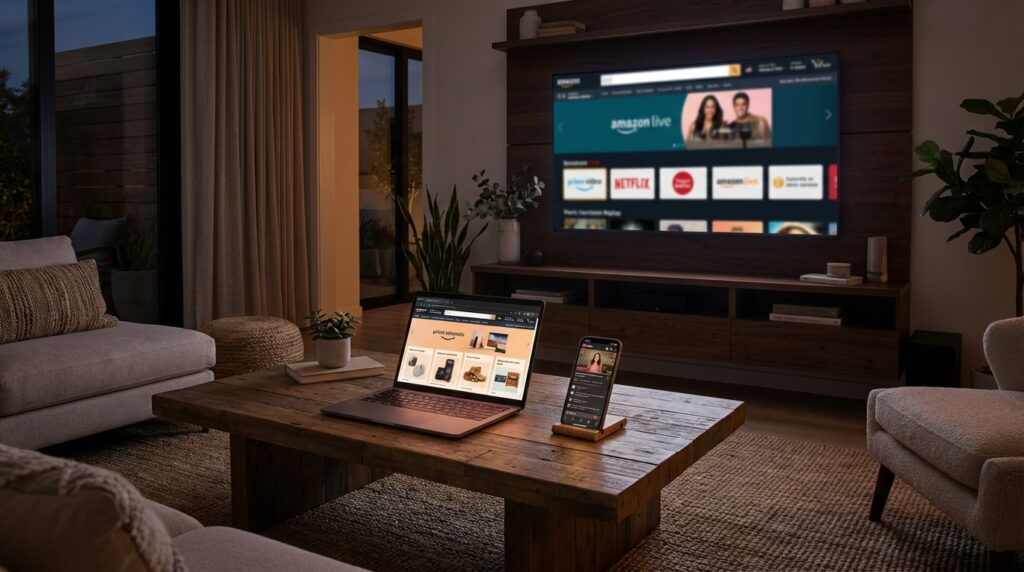
Others minimized or ignored audience interaction entirely, treating livestreams as automated funnels rather than interactive guidance sessions.
In certain cases, streams featured minimal product demonstration and little contextual education, functioning more as background noise than buyer support.
These behaviors may have generated short-term exposure, but they weakened the core purpose of livestream commerce, which is real-time decision support.
When a shopper clicks into a livestream expecting human guidance and instead finds repetition, automation, or disengagement, the format loses credibility. And when credibility declines, conversion declines. For Amazon, that is unacceptable.
Livestreams are now actively moderated, and distribution is more conditional than it once was, not because Amazon wants fewer creators, but because it wants better outcomes.
Visibility must now be earned through engagement depth, clarity of topic, and audience retention rather than mere presence.
Placement Is Harder But Significantly More Valuable
In 2026, placement on Amazon Live surfaces is no longer a byproduct of participation. It is a signal of alignment.
Livestream content is integrated across multiple surfaces within Amazon’s ecosystem, including homepage carousels, category-level experiences, product detail integrations, and connected TV environments such as Fire TV placements.
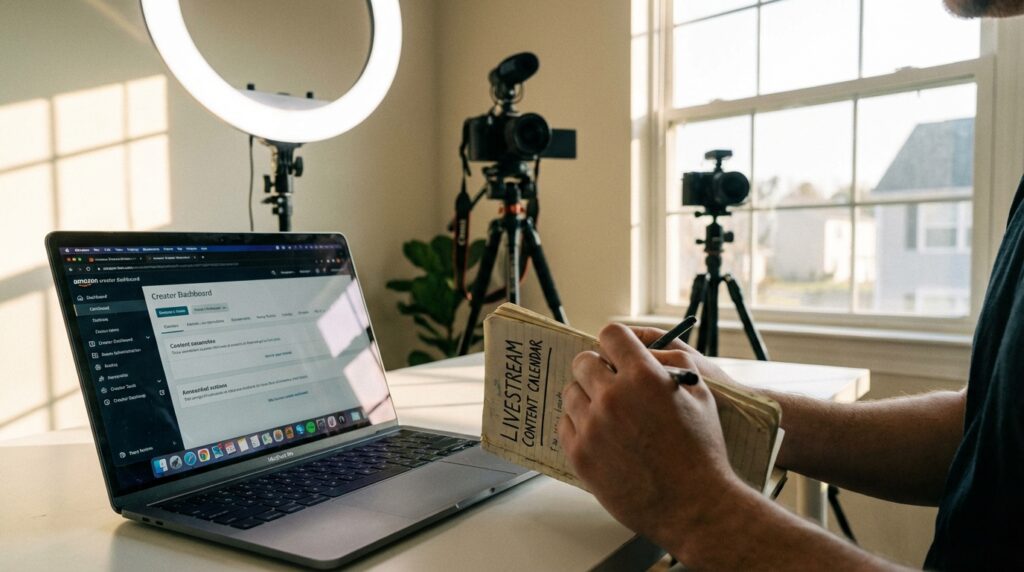
However, the distribution logic behind these surfaces has evolved.
Generic livestreams that lack thematic specificity struggle to maintain algorithmic relevance. Streams that clearly address defined buyer problems perform differently.
For example, a livestream titled “Best Budget Desk Setup for Remote Work Under $300” communicates buyer intent and product context immediately, which aligns with search behavior and category discovery patterns.
By contrast, a broad stream titled “Come Hang Out While I Share My Favorites” lacks the semantic signals that inform Amazon’s internal discovery mechanics.
The shift toward specificity is not arbitrary. It mirrors how buyers search, compare, and evaluate products.
In 2026, livestream placement increasingly reflects how well a stream reduces uncertainty for a shopper.
That is why a tighter distribution is beneficial. When placement is selective, it becomes meaningful. Being surfaced in multiple locations across Amazon’s ecosystem carries greater weight precisely because it is no longer automatic.
Authentic Livestreamers Now Have a Structural Advantage
When low-effort content was able to access wide distribution, serious creators were forced to compete with noise.
That competition was not based on quality; it was based on volume and speed. As a result, skilled presenters who invested time into product testing, structured demonstrations, and thoughtful Q&A often found themselves sharing surfaces with streams that lacked similar depth.
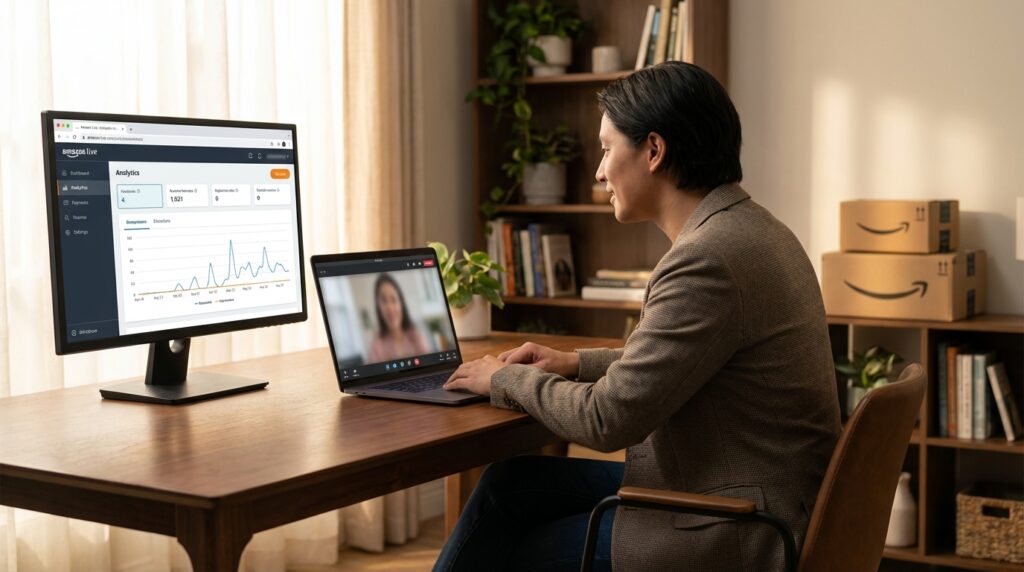
Today, that imbalance has shifted.
Authentic livestreamers benefit from:
- Real-time question handling that increases watch duration.
- Transparent product comparisons that enhance trust.
- Clear articulation of trade-offs, not just benefits.
- Consistent scheduling that builds repeat attendance.
Returning creators have noticed the difference immediately. After stepping away from consistent livestreaming and coming back into the ecosystem, one reflected on the need to evaluate progress with discipline:
“We’re about six weeks in… this is a good time to look and see… is it working? Am I seeing positives?”
That perspective highlights the new expectation: performance must be measured, not assumed.
The platform no longer rewards passive experimentation. It rewards intentional iteration.
Stability Has Replaced Spikes
One of the most overlooked advantages of Amazon’s tightening is the increased stability it offers long-term creators.
In the earlier era, it was possible to experience rapid spikes driven by temporary placements. Those spikes created excitement but often lacked durability. When distribution mechanics shifted, revenue dropped just as quickly.
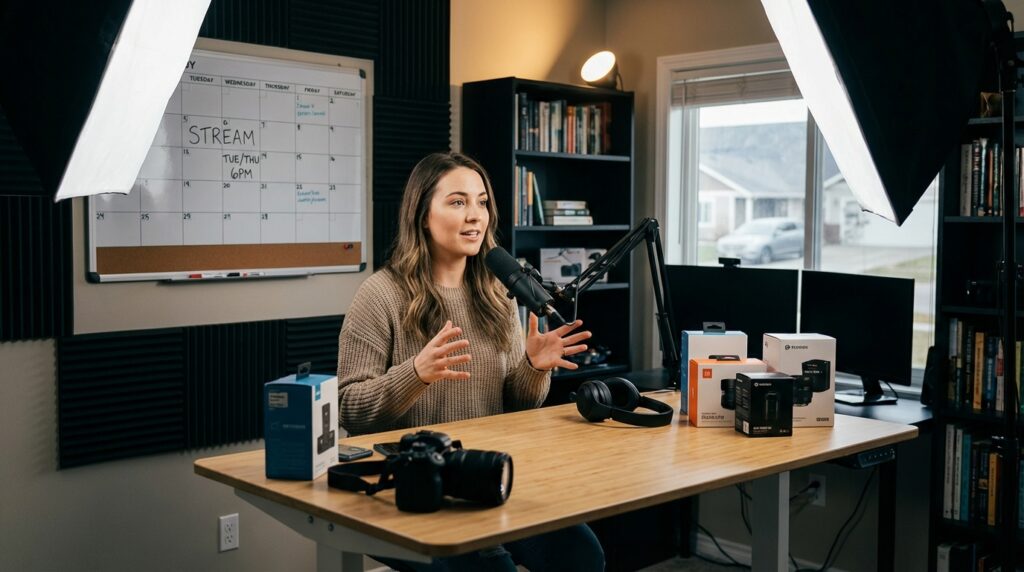
In 2026, the creators who thrive are those who treat livestreaming as a programming discipline rather than a casual broadcast activity.
- They build recurring themes.
- They create structured segments within streams.
- They analyze which moments drive the most engagement.
- They refine titles, hooks, and product sequencing over time.
This behavior compounds.
A weekly stream held at a predictable time trains both audience behavior and platform expectations.
Consistency becomes a signal. Engagement depth becomes data. Placement becomes reinforcement rather than surprise.
That is a fundamentally more stable system.
Brands Prefer the Tightened Ecosystem
From a brand perspective, the tightening of Amazon Live is not a drawback; it is reassurance.
Brands evaluate creators based on risk. A livestreamer who can demonstrate product fluency under real-time questioning, handle objections publicly, and drive measurable conversion signals is a lower-risk partner than one who produces static promotional content.
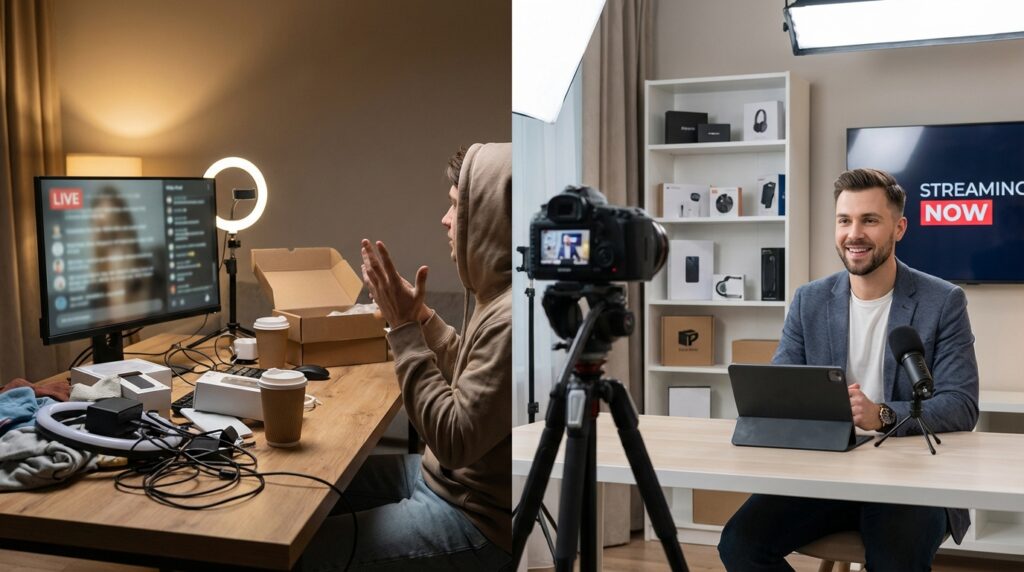
Livestreaming reveals competence in ways that pre-produced content cannot.
- It shows whether a creator understands a product deeply enough to explain it without scripting.
- It shows whether an audience trusts the creator’s judgment.
- It shows whether buying hesitation decreases in real time.
When Amazon raised the bar for livestream integrity, it inadvertently increased the credibility of those who remain active and successful.
Brands notice that.
In a more selective ecosystem, performance signals carry more meaning.
The Psychological Shift Creators Must Make
The biggest adjustment required in 2026 is mental.
Amazon Live is no longer a visibility experiment. It is a conversion system.
The question is not:
“Why didn’t I get placed?”
The question is:
“Did my stream create enough buyer clarity to deserve placement?”
That shift places responsibility back into the creator’s hands.
If a stream lacks structure, lacks specificity, or lacks engagement depth, distribution may stall.
But when a stream clearly addresses a defined buyer problem, sustains interaction, and reduces friction in decision-making, placement follows more predictably than many assume.
Operating Effectively in the Current Ecosystem
Creators who want to succeed in the tightened Amazon Live environment should design streams around buyer uncertainty rather than product promotion alone.
Before each livestream, it is worth asking:
- What specific hesitation does this stream resolve?
- Why am I qualified to guide this purchase decision?
- How will this stream continue generating value after it ends?
A stream that answers those questions naturally becomes more focused, more searchable, and more valuable within Amazon’s content distribution logic.
Long-form demonstrations outperform surface-level showcases. Clear product comparisons outperform vague enthusiasm. Transparent discussion of limitations builds more trust than exaggerated praise.
And trust, ultimately, is the engine of Amazon’s ecosystem.
Amazon Live is not what it used to be.
- It is stricter.
- More selective.
- More disciplined.
But those qualities have not diminished the opportunity. They have clarified it.
The shortcuts are gone. The expectations are higher. The distribution is smarter.
For creators willing to approach livestreaming as a craft and a system rather than a casual activity, 2026 offers something the early era never did:
Predictable leverage built on earned trust.