


- Amazon’s new AI ‘Creator Assistant’ offers basic help, but experienced creators find its advice generic and limited.
- Early users report the tool repeats existing help docs and lacks specific actionable analytics.
- This launch signals Amazon is dipping into AI for creators – yet for now, it’s more sizzle than steak.
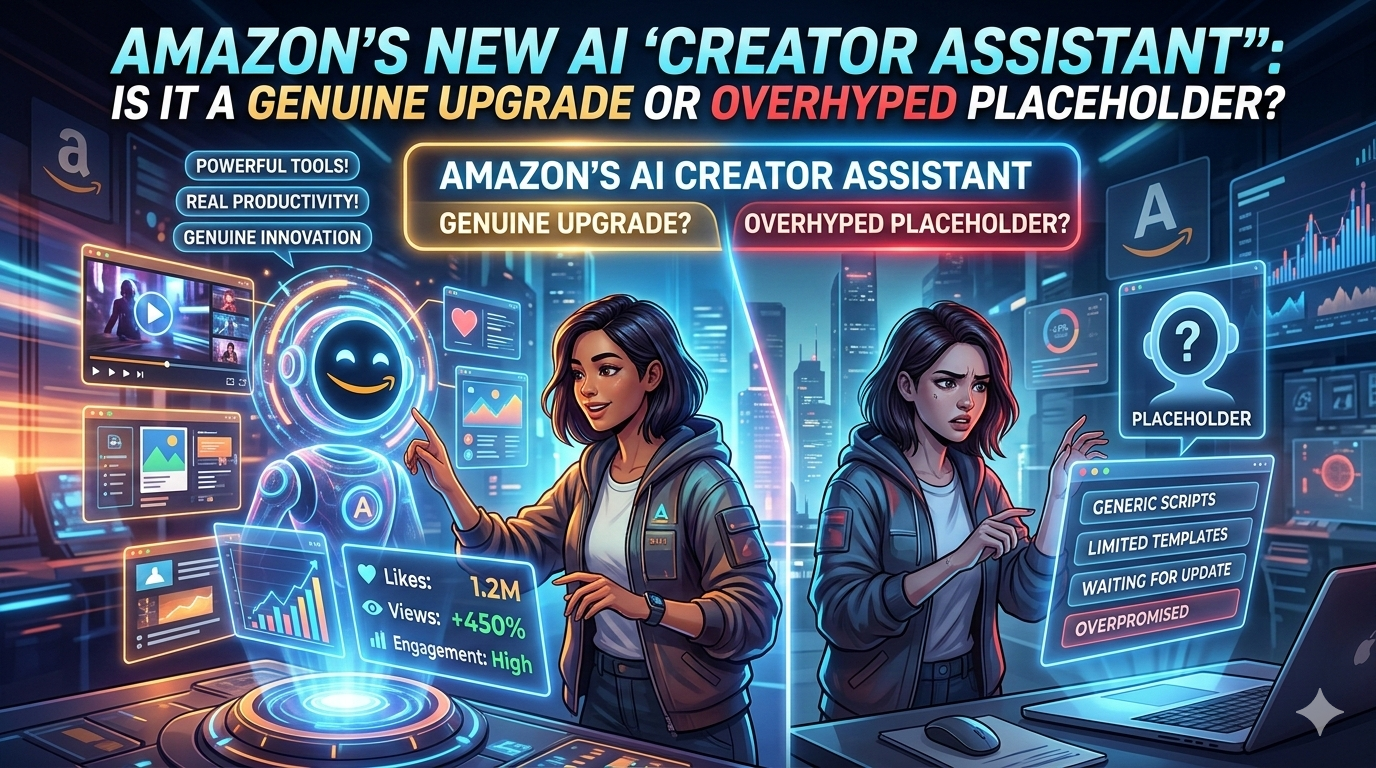
Amazon’s AI Creator Assistant: What Is It?
In an unannounced beta, Amazon quietly launched a new ‘Ask Creator Assistant’ AI feature, visible as a chat bubble on some Influencer Program dashboards. Billed as a 24/7 chatbot to answer questions about the program and reporting, its rollout immediately sparked active debate among Logie’s professional creator community. Is this just a catch-up move, or is Amazon really rethinking creator support?
First Impressions: Underwhelming for the Experienced
Upon first use, the AI Assistant feels like a polished version of Amazon’s FAQ. It fields general questions, how the program works, where to find basic reports, TOS clarifications but shies away from anything account-specific or data-driven. As one respected community member put it:
“The AI Ask feature. These are all general questions that are already in the operating agreement. Seems not that useful. Yeah, Sandy, in general, I would say that it’s not that useful.”
– Ileane Smith –
This sentiment is echoed by multiple creators, especially those who’ve been through years of platform changes and have already mastered the basics. Instead, they’re looking for:

- Direct answers about their own metrics, performance, and payout issues
- Actionable insights (e.g., “what’s driving my revenue up/down?”)
- AI-driven suggestions for growing their storefronts or shortlists
Instead, the current version repeats safe, compliant, but ultimately surface-level info. That leaves power creators cold and searching for real value.
Is It Just a Placeholder?
The timing is no coincidence. Every major platform is rushing to embed AI into its ecosystem, and Amazon is no exception. This launch feels less like a finished product and more like a strategic test balloon.
In its current form, the Creator Assistant appears to serve three purposes:
- Reduce pressure on human support teams
- Funnel basic queries into self-service
- Signal that Amazon is “AI-forward”
But without access to real storefront data, performance analytics, and actionable intelligence, the tool struggles to justify its existence beyond basic support.
Creators are asking the obvious question: If this AI can’t see my data, understand my storefront, or analyze my performance, why would I rely on it over peer communities, forums, or third-party tools?
Where Does This Fit Into the Larger Tools Landscape?

If you’re an Amazon influencer or building your own creator SaaS, you’re probably already assembling a toolkit that goes far beyond what Amazon offers directly. To benchmark this new AI against the best solutions out there, read The Best Influencer Marketing Tools for 2025: A Field‑Tested Stack That Pays Off. You’ll get a sense of how first- and third-party tools compare in terms of actionable intelligence and brand safety.
Curious how recent Terms of Service changes could intersect with automated advice? Stay compliant and up-to-date with What Every Amazon & TikTok Creator Must Know About TOS Changes in 2025 especially before taking new AI-generated guidance at face value.
Community Verdict: Skepticism, with a Dash of Hope
Many ask if the AI Assistant is really for them, or just a crutch for total beginners. Yet the product also telegraphs Amazon’s bigger intentions: more self-service, AI-powered support might be just the start. As Ileane Smith and others point out, the risk is that creators get funneled away from personal, nuanced support into a generic chatbot experience, unless Amazon rapidly upgrades its data access and response sophistication.
For now, creators with even moderate experience should use the Assistant as a backup, but lean on their communities, peer-vetted tools, and direct account reps for anything nuanced or crucial. Treat the feature as one to watch – not one to rely on. As always, stay savvy, compare notes, and share your real feedback – the more Amazon’s product team hears from pros, the better the next version could become.