
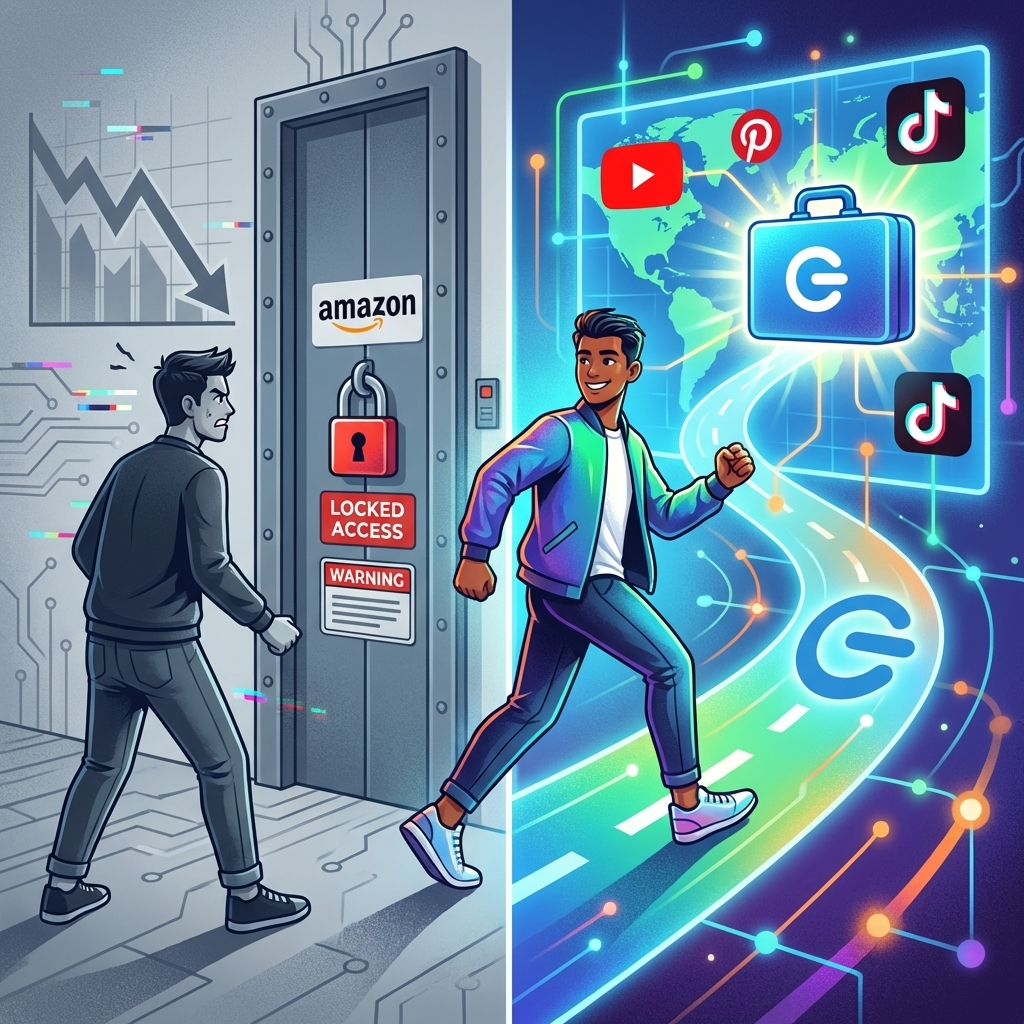
- Amazon’s latest policy changes have forced creators to rethink platform dependence and embrace diversification for true career resilience.
- With Logie’s latest YouTube integration, creators can share and manage their content across platforms easily, finally putting freedom and control back in their hands.
- Want to grow in 2026? Focus on building real systems for your own discovery, let AI handle your briefs, and always look for ways to push your creativity beyond any one platform.
The Moment Amazon Changed Everything for Creators and Brands
Until early 2026, Amazon’s influencer program set the standard for social commerce. Its rich data, reporting, and product samples made it the preferred playground for content creators and DTC newcomers alike. But with the March 9 reporting reset, sweeping changes to data transparency, and a pivot away from supporting traditional affiliate workflows, that solid ground creators relied on? It vanished overnight.
What happened next? For many creators who built their reputations (and livelihoods) on Amazon, it sparked some real soul-searching.
If you found yourself scrambling to make sense of it all, trust me, you’re not alone.
Why Relying on a Single Platform Is Over, For Good
As Ehud Segev, founder of Logie, puts it:

“We want to be free from being attached to one platform or one program and be at the mercy of people who don’t have your success in mind… Freedom is what we need as content creators.”
Ehud Segev
In private groups and community calls, the sentiment is clear: platform dependence is the new business risk. If you’re a creator or brand manager, the abrupt disappearance of reporting, attribution, and payout clarity is a wake-up call. Community member Altovise Pelzer captured this existential shift in a recent Logie webinar:
“When stuff hits the fan, when changes happen, we have the opportunity to come together and talk about it… It doesn’t stop. Amazon is still going to be looking for content creators, and brands are still going to want to work with you. But it’s about building flexibility into your business.”
Enter: Logie’s Diversification Playbook
Logie isn’t just scrambling to keep up with Amazon’s changes; they’re openly shifting gears to put creators in charge, transforming from an Amazon-focused helper into a true cross-platform hub for your content.
Here’s how the new wave of creator tools (with Logie at the forefront) is re-imagining the workflow:
- YouTube Integration: Instantly connect your YouTube, upload content (video, assets, scripts), and share directly across your networks. It just works, no buggy add-ons or endless downloads. Upload, connect, and you’re done.
- Brief-Driven Organization: The new Logie “briefcase” model lets you centralize all materials: assets, platform-specific variations, hashtags, scripts, captions, and even images. (See how this expands on the recommendations in Amazon’s March 9 Reporting Reset.)
- AI-Driven Customization: No more one-size-fits-all. Briefs dynamically adapt to your voice, niche, and target platform, evolving as you create and edit, never forcing you into bland “template” content.
How Does the New System Change Your Day-to-Day?
Creators can now deploy the same campaign, with customized assets, to YouTube, TikTok, Pinterest, Facebook, and their Amazon storefront, without re-uploading, renaming, or rewriting each element from scratch. Here’s an example from the latest Logie community session:
- Connect your YouTube to Logie under profile settings.
- Create a new brief: add products (Amazon and non-Amazon supported), describe your project in a sentence or two, and select the target platforms.
- Let the AI organize your content: You’ll get tailored scripts, thumbnails, platform-specific captions, and suggested hooks, plus the ability to further personalize or regenerate content instantly.
- Share to YouTube and beyond: All from your Logie dashboard, with a click. Video uploads automatically receive proper SEO/AIO (Artificial Intelligence Optimization) treatment, compliance tags (ad/affiliate), and are linked to your Go Shopping store, so you own the audience journey.
As explored in Amazon Live Isn’t What It Used to Be, And That’s a Good Thing (2026), this cross-platform approach is about more than technical efficiency. It’s a mindset: your content should outlive every policy shakeup or algorithm change.
Mindset Reset: From Panic to Real Ownership
The influencer “gold rush” of the last decade thrived on rapid trend-jumping and short-term wins. Now, the calculus is different: how do you build systems that last?
- Off-site monetization is now a need-to-have, not a nice-to-have. With Amazon TOS updates and new restrictions (see What Every Amazon & TikTok Creator Must Know About TOS Changes in 2025), off-Amazon links, YouTube discovery, and Go Shopping storefront links are the insurance every serious creator needs.
- Freedom to experiment: You’re no longer forced to tailor every post to Amazon’s formatting mandates, vertical vs. horizontal, explicit vs. implied calls to action. Organize your content on your terms, then distribute with context for each channel.
- Collaborative community feedback powers platform improvements. Logie invites and implements real creator feedback weekly, ensuring the tools solve actual, current pain points, not imagined ones.
What Does This Mean for Social Commerce in 2026?
Platform diversification and creator-centric workflows are no longer buzzwords; they are survival strategies. Here’s how you can make the leap now:
- Aim for redundancy, not reliance. Build workflows and asset pipelines that keep your business operational no matter what platform changes tomorrow.
- Embrace off-site, cross-platform visibility. Route new audiences to your owned spaces: Go Shopping stores, your YouTube hub, your mailing list.
- Invest in workflow organization. Replace scattered folders with AI-powered ‘briefs’ to keep every niche, campaign, and product in one easy-to-update place.
Creators who make it through the current storm will be those who don’t just react, but innovate, scripting their own terms even as algorithms and affiliate rules shift underfoot.
Closing Thought
So here’s the bottom line: The future favors creators who own their space, love their data, and stay flexible. Whether you’re just beginning or already playing across multiple channels, what counts is how far you bring your audience, on your terms.
Experiment, diversify, and share your wins with the community. The next breakthrough might start with your story.