
For years, social commerce was defined by digital hustle: viral videos, smart hashtags, and relentless algorithm chasing.
But in 2026, something unexpected is surging in a creator’s offline influence. IRL contacts, festival run-ins, and everyday encounters are driving traffic and sales faster than some online-only strategies.
The fuel? QR codes, right on your mobile device, and your willingness to show up, be seen, and convert casual interest into real revenue.

In this guide, we break down exactly how creators and brands are using QR codes for IRL social commerce in 2026, from the tools you need to the placement tactics that convert, to the mechanics that boost Amazon’s algorithm every time someone scans.
This isn’t a niche tactic. QR code adoption continues to grow among marketers and consumers, and QR codes are now a core part of how brands connect physical moments to digital journeys.
For social commerce creators and brands alike, the IRL moment is no longer an afterthought; it’s a competitive edge hiding in plain sight.
Why QR Codes Are Having Their Moment
Before diving into tactics, let’s ground this in data. The social commerce landscape has shifted dramatically:
- Global social commerce is projected to reach nearly $1 trillion in 2026, with U.S. sales hitting $79.64 billion, growing 35% year-over-year
- 91% of all social commerce transactions happen on mobile devices, making QR codes the ideal bridge between physical and digital
- 94% of marketers now consider QR codes an effective engagement tool
- QR codes deliver a 37% average click-through rate on customer journeys, compared to 2–5% for traditional digital display advertising
- Brands that integrated QR codes into physical touchpoints have seen a 35% increase in social media follower growth within six months
The math is clear: QR codes are not a gimmick. They are infrastructure.
QR Codes: Your Always-On, In-Person Funnel
Whether you’re at a festival, the grocery store, or dropping kids off at an event, product “buzz moments” happen naturally.
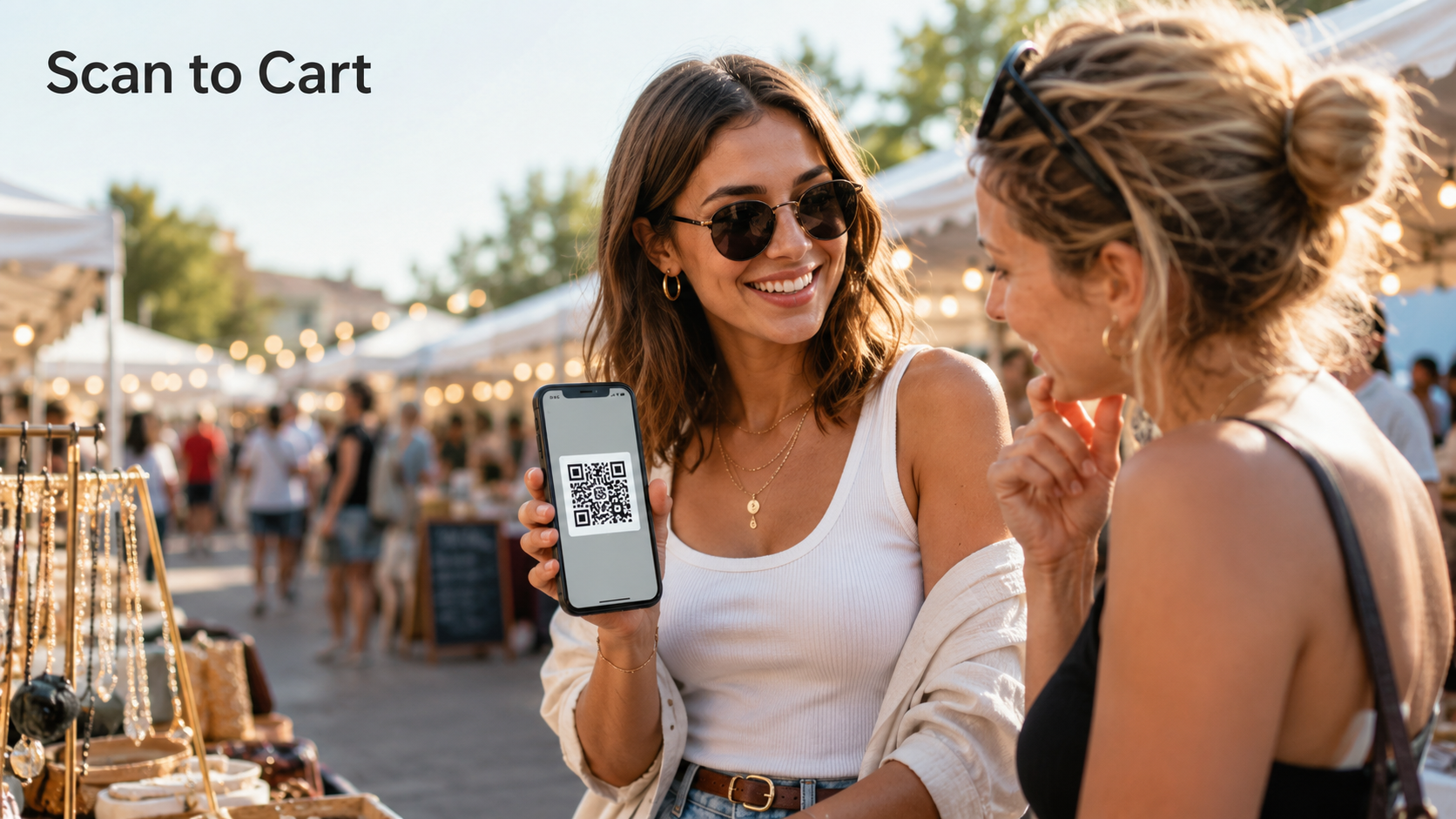
Creators are turning these IRL interactions into on-the-spot sales with one simple move: a ready-to-go QR code that leads straight to their shoppable hub.
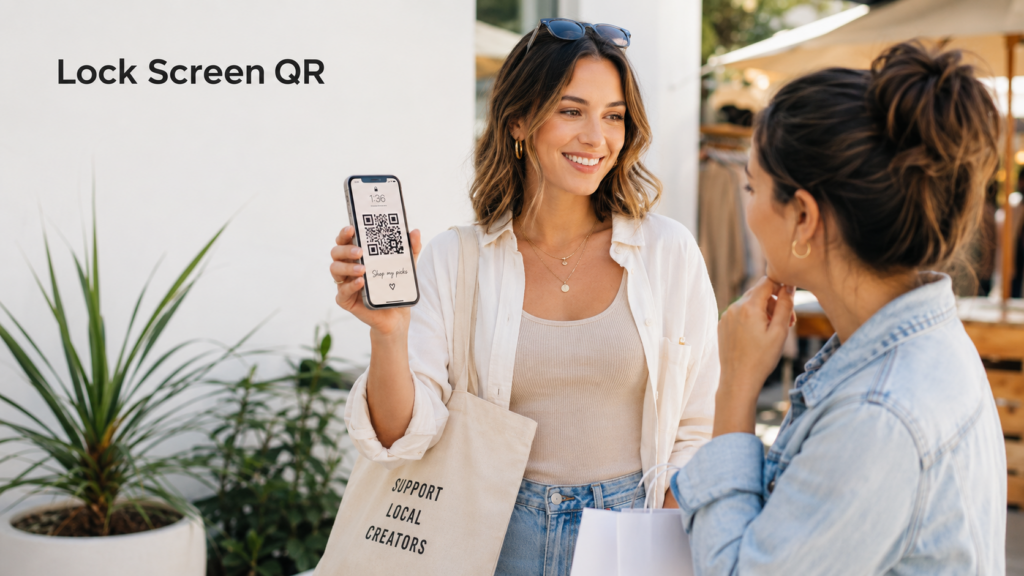
“I have, on my phone’s lock screen, a QR code that takes people to my link tree. So, I wanted to suggest… that’s a great way… people are really impressed when I’m like, oh, you love my wagon? I made a video about it… I show them the QR code on my phone, and that takes them right to my link tree.” Stephanie Faith, Logie Creator
Stephanie’s approach is working. This is because she’s intercepting high-intent shoppers at the exact moment of peak interest, before they get distracted, before they forget, before the algorithm serves them a competitor.
That real-world moment of authenticity, “You love my wagon?” is something no paid ad can replicate.
Other Logie creators have extended this playbook further:
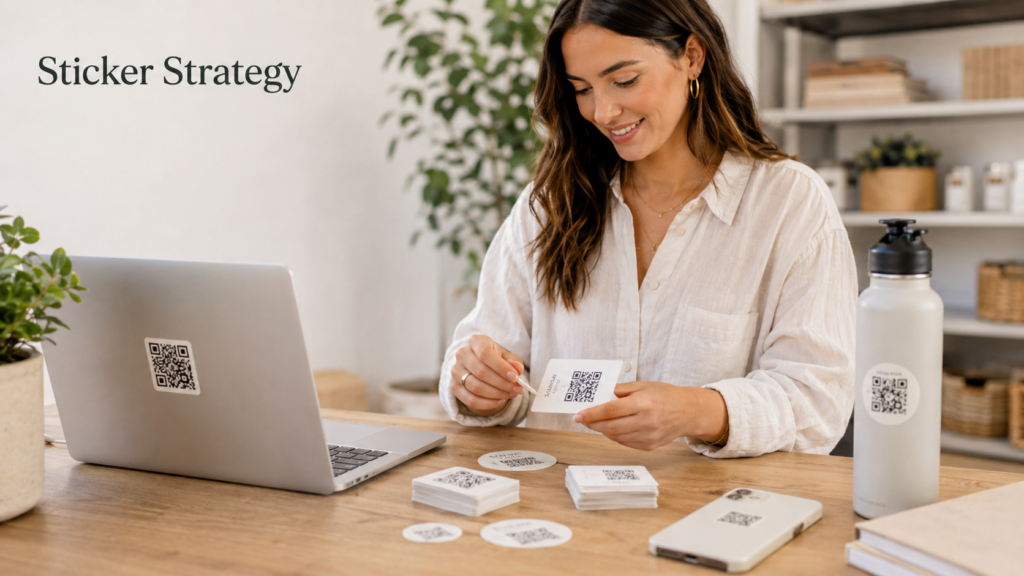
- Printing QR codes as stickers for phone cases
- Adding them to water bottles and business cards
- Wearing them as NFC-enabled accessories for true tap-and-go handoffs
- Embedding them in tote bags and branded merchandise
Start with the lock screen QR code. It costs nothing, requires no printing, and is always with you.
Once you see it working, invest in physical formats like business cards and stickers. The ROI on a $20 pack of QR code stickers is hard to beat.
Static vs. Dynamic QR Codes:
Not all QR codes are created equal. This is one of the most important decisions you’ll make.
Static QR Codes
- Destination URL is permanently encoded
- Free to generate
- Cannot be changed once printed
- No analytics
Dynamic QR Codes
- The destination URL can be updated at any time without reprinting
- Full scan analytics: when, where, what device
- Support retargeting pixel integration
- Can be A/B tested
Always use dynamic QR codes for any printed or distributed material. If you print 500 business cards with a static QR code and your Linktree URL changes, every card becomes worthless.
Dynamic codes protect your investment and give you the data you need to optimize.
Top tools for creators in 2026:
- TQRCG (Flex plan, ~$5/month) – best value for independent creators needing analytics
- Uniqode – best for brand campaigns requiring Meta Pixel and GA4 integration
- Flowcode – best for visually branded, campaign-forward activations
- Hovercode (~$12/month) – best for creators who prioritize design speed
- Bitly – best for teams already using Bitly’s link analytics
The Creator’s IRL Playbook: Where to Deploy Your QR Code
The beauty of a QR code is that it works anywhere you are. Here’s a breakdown by scenario, with specific tactics for each:
At Festivals, Markets & Events
Events are gold mines for social commerce creators. You have a captive audience, an exciting environment, and people in a buying mindset. Deploy QR codes on:
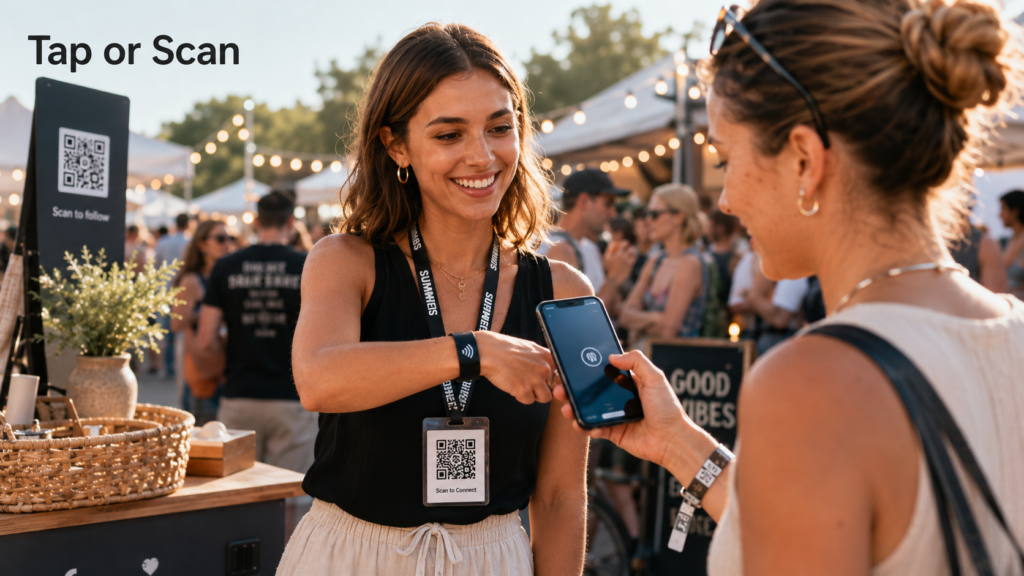
- A card in your lanyard or badge holder – easy to flip out during conversation
- A banner or pop-up, if you have a booth – passive scanning while you talk
- Branded merchandise you’re wearing – your outfit becomes a funnel
- NFC-enabled accessories – rings, wristbands, and badges that allow a “tap-to-follow” experience with no camera required
NFC (Near-Field Communication) deserves special attention here. While QR codes require opening a camera app, NFC requires only a tap.
Brands deploying NFC wristbands and lanyards at events report higher tap-through rates compared to QR codes in crowded, fast-moving spaces.
For creators who attend multiple events per year, an NFC-enabled smart card or ring is a worthwhile investment.
In Everyday Encounters
This is the Stephanie Faith approach, and it’s extraordinarily underused. Any time someone compliments your style, asks about a product you’re using, or expresses curiosity about what you do:
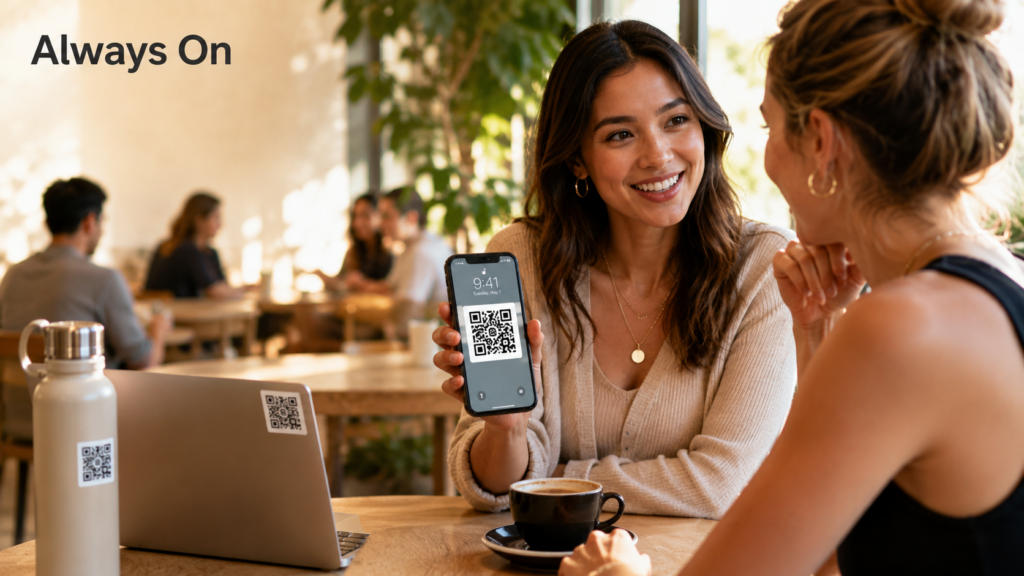
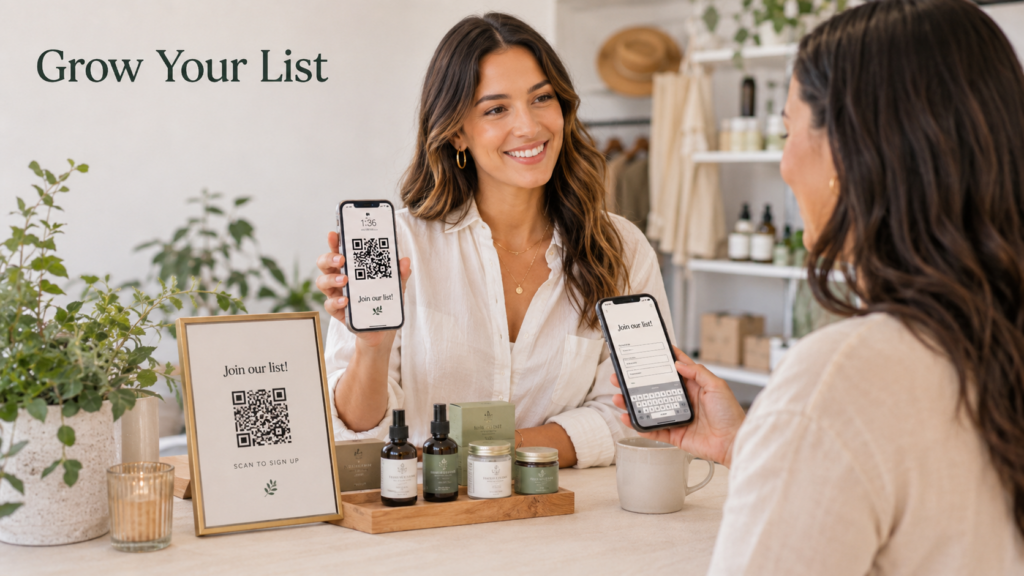
- Pull out your phone and show your lock screen QR code
- Hand over a business card with your QR code (and a clear CTA like “Scan to shop my picks”)
- Point to a QR code sticker on your water bottle or laptop
These micro-moments of peer-to-peer recommendation are among the highest-converting traffic sources imaginable. The person is already curious, already trusting you, and already holding a smartphone.
In Your Content
QR codes aren’t only for physical encounters. They work inside your content too:
- In video thumbnails or end cards – a scannable QR code in a YouTube video or TikTok
- On Instagram Stories – with a “scan to shop” prompt
- On printed materials you ship – if you send products or packages, include a QR code in the box
- In email signatures – ideal for creators who do brand outreach
For Brand Partnerships
If you’re a creator working with brand partners, unique QR codes are a professional power move. Brands get trackable attribution data for every IRL handoff you make.
You get proof of performance that justifies higher rates. Everyone wins.
Pro tip for brands: Assign each creator partner a unique dynamic QR code. This lets you measure exactly which creator drives the highest-converting offline traffic data, which is invaluable for optimizing your influencer spend.
Offline-to-Online: How IRL Promotion Powers Algorithms Too
Here’s where the strategy gets exciting for both creators and brands. When you give someone a QR code at a BBQ, a concert, or a store checkout, you’re not only helping that one person shop.
You’re triggering a chain reaction with meaningful platform-level consequences.
The Amazon A10 Algorithm Effect
Amazon’s current ranking system, widely referred to as A10, explicitly weights off-platform signals more heavily than its predecessor did.
When a shopper clicks a link from an external source, a QR code scan, an influencer recommendation, a blog post, and then completes a purchase, Amazon interprets it as a market validation signal: evidence that your brand has demand beyond Amazon’s own paid ecosystem.
The data is compelling: sellers who consistently drive outside traffic that converts report faster climbs in organic rank for competitive keywords than those relying solely on internal PPC advertising.
Even more striking, campaigns using TikTok, Google Ads, or influencers have reported conversion rates as high as 58.6%, compared to an industry average for traditional digital display of 2–5%.
For creators, this means every QR code handoff that leads to an Amazon purchase is doing double duty: earning you a commission and boosting your storefront’s organic visibility on the platform.
The Brand Referral Bonus
For brands driving QR code traffic to Amazon, there’s a direct financial incentive: the Amazon Brand Referral Bonus, which refunds an average of 10% on referral fees for external traffic that converts.
This essentially means Amazon is paying brands to bring outside traffic. QR code campaigns that are even modestly successful can pay for themselves in referral bonus earnings alone.
Algorithm Love Beyond Amazon
The external traffic effect isn’t unique to Amazon:
- TikTok’s algorithm rewards content that drives off-platform actions. External link clicks are a strong engagement signal.
- Instagram’s algorithm surfaces content from creators whose links generate active click-throughs, not just passive likes.
- Google’s search algorithm rewards domains that receive consistent, diverse traffic from multiple sources, including QR code link destinations.
The key insight: IRL QR code handoffs generate high-intent, high-quality traffic. A person who scanned your code at a farmer’s market because they genuinely loved your product is far more likely to convert than someone who scrolled past a paid ad.
That quality signal ripples through every algorithm that touches your content.

Pro Tips: Making the Most of Every QR Code
- Nail Your Landing Page First
Your QR code is only as good as what it leads to. Before deploying any code, audit your destination:
- Does it load in under 3 seconds on mobile? (Test it, most people won’t wait longer)
- Is the CTA immediately clear? (“Shop my Amazon picks,” “Watch the video,” “Get the discount”)
- Is it mobile-optimized? (Desktop-only layouts tank conversions)
- Is there a single focus? (Avoid sending people to a cluttered page with 10 options)
A sleek Linktree, a well-organized Amazon storefront, or a purpose-built landing page all work well. The goal is frictionless conversion from scan to action.
- Add a CTA to Every QR Code
A bare QR code with no context generates far fewer scans than one with a clear prompt. Frame it:
- “Scan to shop my wagon finds”
- “Scan to watch the full video”
- “Scan for 15% off”
Even on a phone lock screen, you can add a note to your wallpaper design. The micro-friction of explaining what someone will get increases scan rates dramatically.
- Make Your QR Code Visually Recognizable
A plain black-and-white QR code is functional but forgettable. With dynamic QR code tools like Flowcode or Uniqode, you can:
- Add your logo or headshot to the center of the code
- Use brand colors
- Add a decorative border
Branded QR codes increase scan rates and reinforce brand recognition. More importantly, a branded code signals legitimacy, and users are increasingly cautious about scanning unknown codes. Your face or logo in the center instantly removes hesitation.
- Track Everything
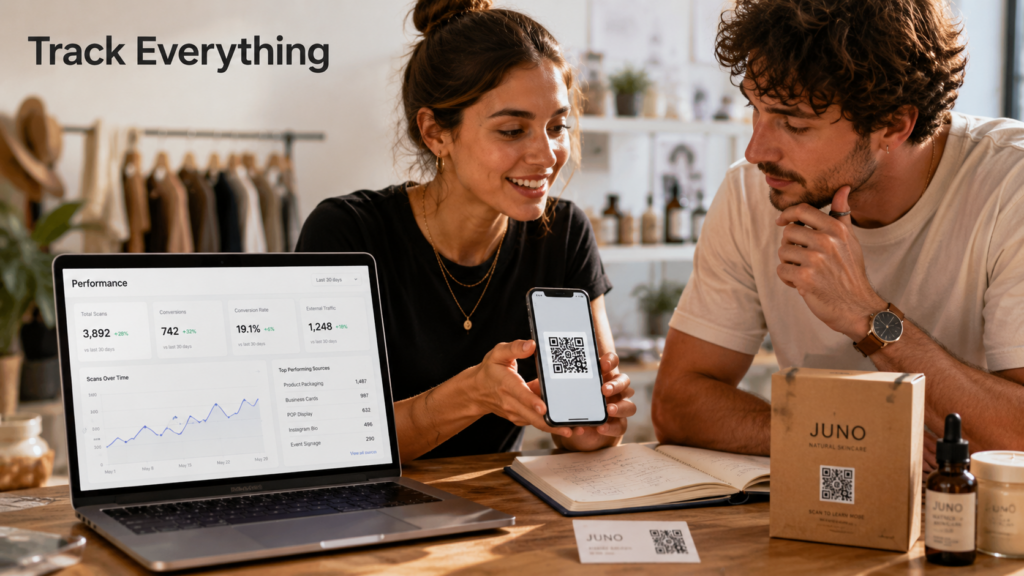
If you’re not tracking your QR code performance, you’re flying blind. Dynamic QR codes give you:
- Scan volume over time
- Geographic data (which cities/events drive the most scans)
- Device data (iOS vs. Android)
- Time-of-day patterns (useful for event timing)
Use UTM parameters in your destination URLs to connect QR scans to Google Analytics 4, Amazon Attribution, or your preferred analytics platform.
This data tells you which IRL activities are actually driving revenue, priceless for deciding where to spend your time.
- Consistency Wins Over Campaigns
One of the most important insights from Amazon seller data is that the algorithm rewards consistent, steady external traffic more than periodic spikes.
A QR code you carry every day and share in natural conversations generates a reliable stream of converting visits.
This steady signal builds organic rank over time in a way that one viral moment simply cannot.
For brands, this means investing in creator relationships in which IRL QR code sharing is ongoing, not just tied to a single launch campaign.
- Use QR Codes to Build Your Email or SMS List
Not every IRL encounter should go straight to a product page. Sometimes the smarter play is to capture a lead first.
A QR code that triggers an SMS opt-in or links to a simple email signup with a discount offer can turn a casual conversation into a long-term customer relationship.
This is especially powerful for brands: a person who opts in to your SMS list after meeting a creator at a festival is among the most qualified leads you can get.
- Test Multiple Placements and Rotate Offers
Treat your QR codes like any other marketing channel, test and iterate. Try:
- Lock screen vs. physical business card
- “Shop now” destination vs. “Watch the video first” destination
- Generic storefront link vs. specific product page
If a QR code on your business card outperforms your lock screen version by 3x, shift focus.
If Friday event scans convert at twice the rate of Tuesday grocery store encounters, prioritize your event presence. The data will guide you.
For Brands: Building a QR Code + Creator Strategy That Scales
Individual creators like Stephanie are proving the concept every day. Brands that want to harness this at scale need a structured approach.
Build a Creator QR Code Program
Instead of generic affiliate links, give each creator partner a unique, trackable dynamic QR code that leads to a custom landing page. This lets you:
- Attribute IRL conversions to specific creators
- Compare creator performance on offline audiences, not just social metrics
- Compensate creators fairly based on actual sales-driven, including in-person handoffs
Focus on Micro-Influencers for IRL Deployment
The era of paying mega-influencers thousands of dollars for a single post is largely over for mid-sized Amazon brands.
The ROI is almost always better with micro-influencers, people with 5,000 to 50,000 highly engaged followers in a specific niche.
These creators have higher trust factors and are far more likely to be seen as authentic peer recommendations in IRL settings.
A network of 50 micro-creators, each carrying a branded QR code in their daily lives, generates more sustained, high-intent traffic than one celebrity post.
Seed your QR code program broadly across micro-creators in your niche.
Integrate QR Codes Into Product Packaging
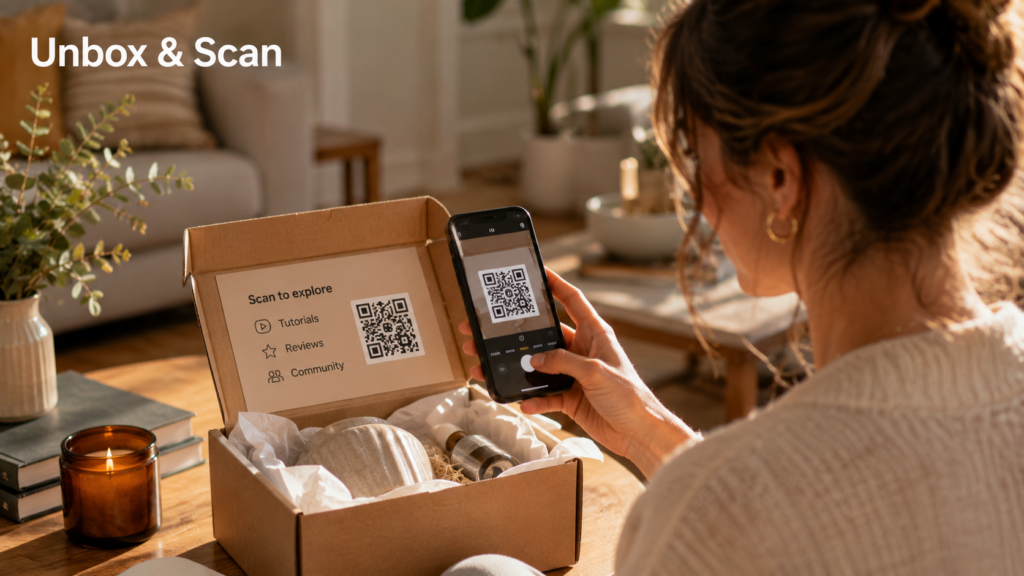
If you sell physical products, your packaging is prime QR code real estate. A QR code on the inside of your box can lead to:
- A tutorial video (reduces returns, increases satisfaction)
- A review request page (boosts social proof)
- An upsell or cross-sell page
- Your brand’s social community
64% of shoppers have scanned product packaging QR codes while shopping in-store, and 79% are more likely to purchase products that provide additional information via QR scan.
This is one of the highest-ROI QR code placements available to brands.

Treat QR Code Traffic as Long-Term Infrastructure
The brands winning on Amazon in 2026 are those treating QR codes and external traffic not as a campaign tactic, but as long-term digital infrastructure.
A dynamic QR code can be repurposed for indefinitely updated destinations, refreshed landing pages, and new product features while maintaining the same physical code on your packaging, signage, and creator partnerships.
Once properly set up, this system generates compounding returns.
The Future: NFC + QR Codes as the Default Creator Interface
QR codes are already powerful. But the next wave is combining them with NFC (Near-Field Communication) technology for a truly frictionless experience.
NFC-enabled accessories, such as smart rings, wristbands, business cards, and clothing tags, allow a simple tap rather than a camera scan.
The engagement rates are meaningfully higher, especially in crowded event environments where pulling out a camera feels cumbersome.
For high-volume IRL operators (creators who attend multiple events per month, brands with retail presences), NFC accessories are worth exploring now.
Early adopters in the fashion and creator space are already experimenting with NFC-embedded badges, garment tags, and accessories that trigger instant product pages, behind-the-scenes content, or loyalty sign-ups with a single tap.
The infrastructure is here. The creators willing to embrace it first will have a meaningful head start.
Quick-Start Checklist: Your IRL QR Code Setup in 24 Hours
For Creators:
- Generate a dynamic QR code pointing to your Linktree or Amazon storefront (try TQRCG or Bitly)
- Set it as your phone lock screen wallpaper
- Add a brief CTA text (“Scan to shop my finds!”)
- Order 50 QR code stickers for your phone case, water bottle, or laptop ($10–$20)
- Enable UTM tracking on your destination URL
- Check your analytics after your next event
For Brands:
- Set up a dynamic QR code platform with analytics (Uniqode or Flowcode recommended)
- Create unique codes for each active creator partner
- Add QR codes to product packaging with a compelling CTA
- Connect QR scan data to Amazon Attribution
- Establish a 90-day baseline of scan volume and conversion rate before optimizing
Final Thought: The Unfair Advantage Is Already in Your Pocket
The most powerful social commerce tool in 2026 isn’t a new algorithm, a new platform, or a new ad format.
It’s your authentic presence in the real world combined with a frictionless way to convert that presence into revenue.
A QR code on your phone lock screen costs nothing. It generates zero paid media spend. And it activates the one thing no platform or brand can manufacture for you: genuine, in-person trust.
The creators and brands who understand this won’t just win IRL encounters. They’ll win the algorithm, build compounding organic rank, and turn everyday moments into a quietly humming, always-on sales machine.
Show up. Be seen. Scan to cart.