

- Prime Day 2026 brought lower commissions and more competition – but creators who refined their workflow and leaned into essentials still saw results.
- Off-site and pre-Prime content, strategic list-making, and cross-platform affiliate expansion all played a crucial role in recapturing momentum.
- Understanding current consumer behavior (value-focused, price-comparison shopping) is now non-negotiable for creators aiming to outlast platform volatility.
Amazon Prime Day 2026: A Brave New (and Tougher) World for Creators
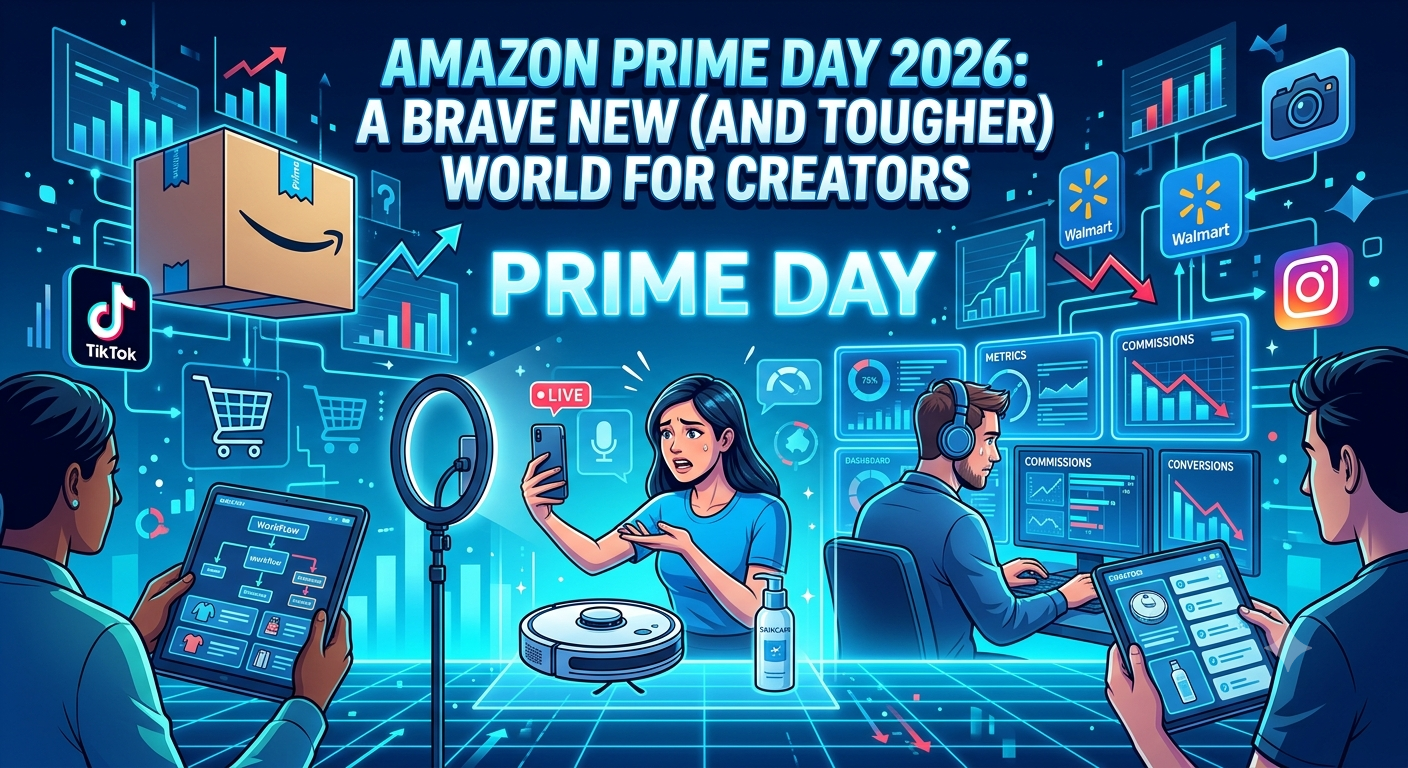
Ask any seasoned Amazon influencer or social commerce strategist this year’s Prime Day felt different. Not just different, but fundamentally transformed. Lower commissions, shifting algorithms, new reporting quirks, and an unprecedented level of competition (from TikTok Shop to Walmart and even brick-and-mortar players) left many creators and affiliate marketers unsure whether to double down or pack it in.But in challenge lies opportunity.
“It is the last day of Prime Day deals, and we’ve kind of… been in a weird space. This is Prime Day after the changes when it comes to our reporting. This is Prime Day after the changes to our commission. This is Prime Day 2026. And it definitely feels a whole lot different than previous Prime Days.”
Altovise Pelzer
Let’s break down what actually shifted, how top creators adapted, and what surviving (and thriving) in this new Prime landscape really takes.

Commission Cuts, Data Droughts, and the Creator Community’s ‘Weird Space’
2026’s Amazon Prime Day played out against a backdrop of global economic contraction, factory disruptions, and widespread job loss. For most creators, this translated not just into fewer sales, but into a radical reshuffling of what buyers actually purchased: “It doesn’t mean people are not buying,” Altovise noted, “it just means they may be changing what they’re buying.” Essentials, not splurges, led the charge.
The impact was felt across every metric. As commissions got chopped and Amazon’s reporting became trickier, even veteran creators found themselves hustling harder for smaller returns. Some, like Stephanie, confessed: “My clicks and views are going up, my commissions aren’t going down because they are already down. My conversion keeps getting lower, too.” Others, like David, noticed a divergence: “My on-site numbers are way low… but my Creator Connection sales exploded up, so it helped make decent money. Still not as good as a few years ago, but I won’t complain much here.”
Across the board, off-site numbers (think traffic driven from social media or other platforms) sagged often despite heroic content efforts. This isn’t just anecdotal: preliminary community-reported data put the average Prime Day order at $47. Lower-priced products were moving, often at deep discounts, but the days of fat commissions from high-ticket gadgets seemed over at least for now.
What Actually Worked? Tactics for 2026 and Beyond
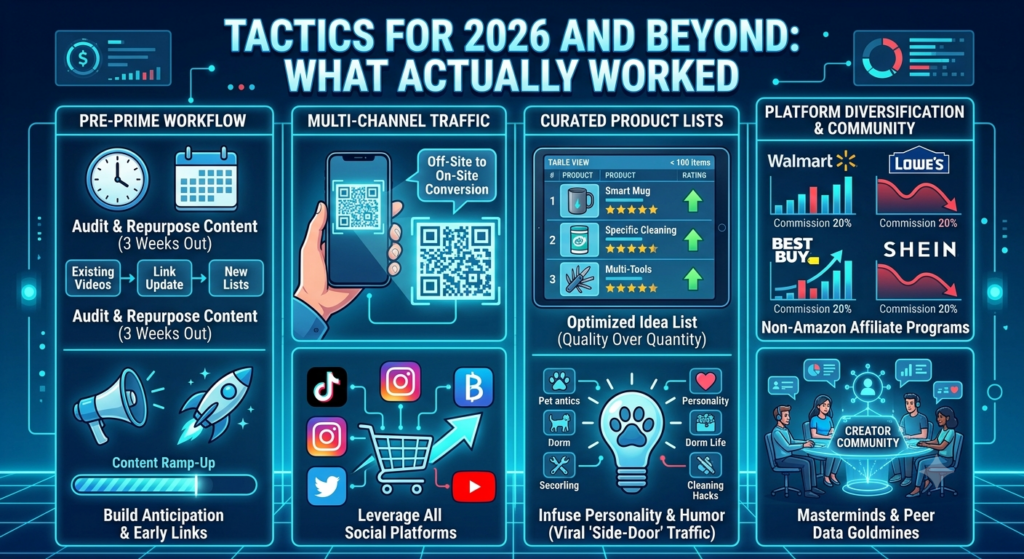
Surviving this new era wasn’t about waiting for better commissions; it was about smart systems, community calibration, and relentless iteration. Here’s what rose to the top in the trenches:
- Pre-Prime Workflow (and Content Repurposing): The most resilient creators did not wait for Prime Day itself. They started ramping up content in the weeks prior, auditing old videos/lists for relevance, and ensuring every post, old or new, was tightly connected to in-stock products. This echoes the workflow described in our piece Prime Day Panic? Why Early Shoppable Content Wins which goes deep on the ‘early bird’ advantage during big retail moments.
- Off-Site Traffic Building: Linking out from external platforms (YouTube, Bennable, Instagram stories, and even via QR codes), creators like Roxanne shared, “I link all my Amazon videos in my Bennable notes, if you have one.” Others saw lists optimized with multiple types of product links Amazon, Walmart, TikTok Shop get higher distribution and engagement. This off-site arm not only buffered against volatile Amazon commissions but attracted algorithmic love from other social platforms. To maximize, check the hacks in QR Codes & IRL Hustle: The New Secret Weapon for Social Commerce Creators.
- Savvy Product List Design & Updating: Successful creators zeroed in on essentials (cleaning supplies, personal care, college/back-to-school, etc.) and made regular updates to their idea lists. Amazon’s own lists, as noted, rarely exceeded 100 products; “quality over quantity” was the trend. Megan, for example, found incorporating her dog’s antics into tech and home content created viral side-door potential. Stephanie noted, “Even background products in your videos could be from Lowe’s. I have plenty of videos using a drill to install something. Didn’t tag the drill on Amazon. Can post and tag the drill on Lowe’s, though.”
- Cross-Platform Commissions and Non-Amazon Programs: With Amazon’s average order size and conversion down, more creators experimented with (or returned to) affiliate programs at Best Buy, Walmart, Lowe’s, and Target (when they’re open). Community members noted fewer influencers on these platforms, meaning more opportunity – see our full breakdown in Amazon’s Summer Shake-Up: Surviving Lower Sales & Commission Cuts as a Social Commerce Creator.
- Owning the Consumer Mindset Shift: Buyers no longer simply click and buy. They compare, price-match, and jump between platforms for the lowest cost or best shipping. Altovise observed, “…someone may put something in their cart, and then go to TikTok Shop to see if it’s cheaper there, or see if they can find a cheaper option on Shein, or on Walmart, or wherever.” Conversion wins went to those who understood and addressed this behavior head-on: showcasing unique value, urgency, or multi-platform presence.
Deep Discounting and Lower Commissions: Community Reactions
On the front lines, creators lamented how deep Prime Day discounts on large-ticket items were cannibalizing commissions: “Even if it’s $150, if they’re only getting it for $47, that’s going to completely devastate you… because you’re excited about something that was a high product, a high-cost product, or a higher cost product, that sold, but you’re still not going to get what you thought you were gonna get when you created the content for it.”
In response, many simply doubled down on essentials or viral hits in low-cost categories (cleaning gadgets, personal care, pet products), where volume could offset shrinking percentages.
Top-Selling Categories: What the Data (and Community) Showed
- Tech & Electronics: Always a tentpole think back-to-college, home-office upgrades, and summer fun gadgets.
- Home Appliances & Cleaning: Vacuum cleaners, steamers, pressure washers, and cleaning chemicals all items people need, not just want.
- Beauty & Personal Care: Consistent conversion from makeup, skincare, men’s grooming (Manscaped and beyond), and simple unisex essentials.
- Lifestyle & Outdoor: Summer vacation accessories, patio and RV gear, gardening tools driven by seasonality and evergreen demand.
Average item value may feel lower, but these categories still converted for creators who adapted their content style, mixed personal experience, and brought humor or authenticity to demos. Pet antics, cleaning fails, and real-world problem-solving all worked in 2026.
Winning the Next Prime Day: Tactical Takeaways
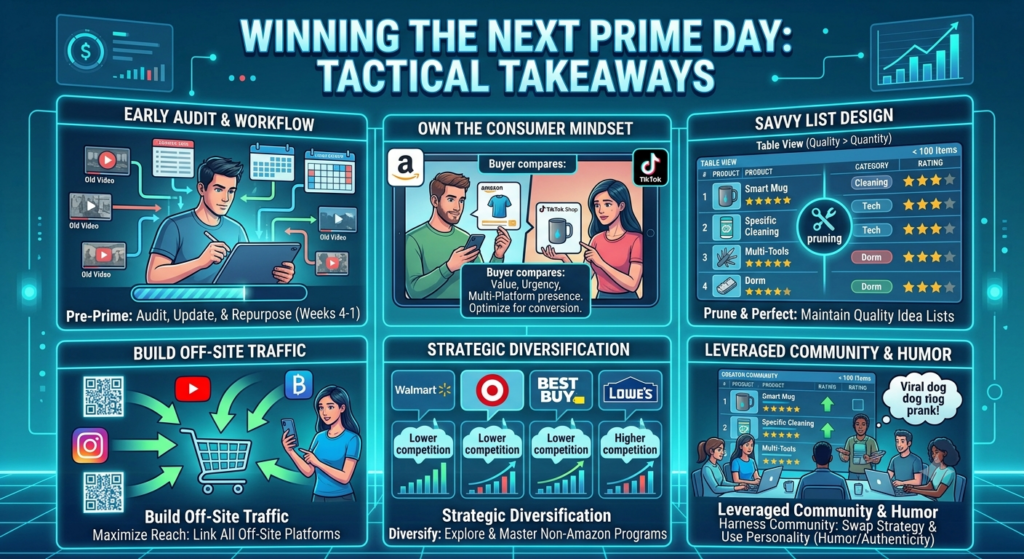
- Audit and repurpose content well before major sales: get those links and lists up early, optimize for search, and refresh your best stuff.
- Build (and promote) off-site traffic channels: Instagram Stories, TikTok Shop, YouTube, Binnable. Share your best lists and cross-link.
- Maintain and prune product lists: Focus on high-demand, essential, and seasonal categories track your own data to spot the next hit.
- Investigate and diversify with non-Amazon affiliate programs: lower competition could mean higher per-click commissions elsewhere.
- Align your content with evolving buyer behaviors: Highlight urgency, genuine value, and price comparisons up front.
- Leverage your creator community: Logie’s network, Facebook groups, and peer masterminds are data goldmines swap strategy, stay current.
The creator economy around Prime Day isn’t dead it’s just entering a harder, smarter era. With workflow refinements, persistent off-site engagement, and sharp product curation, social commerce leaders are still carving out new wins sometimes in unexpected places.
What’s your move for the next Prime surge? Will you hunker down on essentials, bet big on emerging platforms, or chart a new omnichannel path? Logie’s network is here let’s share strategies and build smarter, together.