

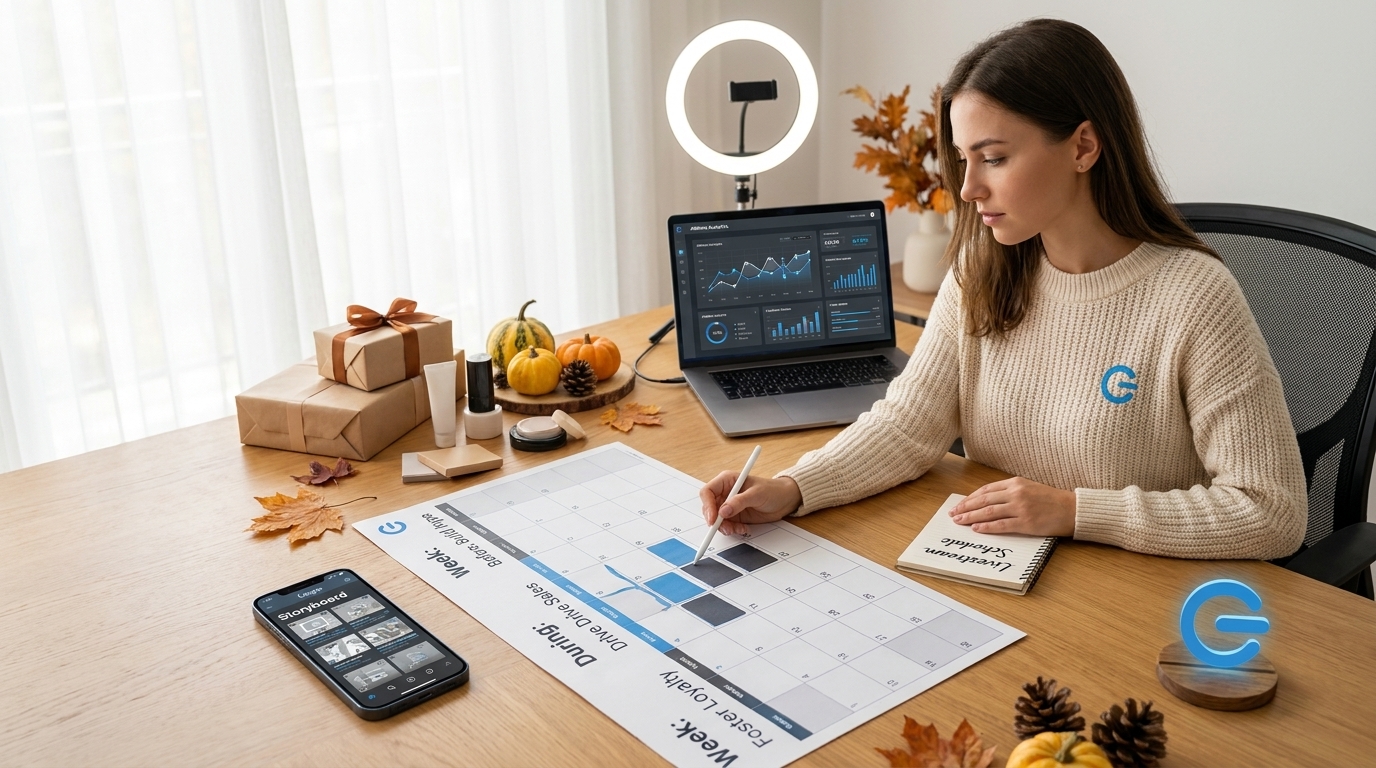
TL;DR: The Quick Strategy
- Use the three weeks before Prime Day to prepare: Research audience needs, choose products, contact brands, film reusable assets, test links, and schedule content before the event begins.
- Build around shopping missions: Help followers solve specific problems, such as preparing a holiday guest room, instead of publishing an endless list of discount badges.
- Plan beyond the preparation window: Verify offers and distribute content during the event, then update expired claims immediately and follow up with shoppers after the sale.
By the time the sale starts, your followers may already have a shortlist. The question is whether your recommendations helped them build it.
A last minute deal roundup can reach people who are ready to buy, but it cannot do every job. It has little time to introduce a product, explain why it matters, demonstrate how it works, answer objections, establish trust, and communicate a current offer.
Altovise Pelzer summarized the better planning question: “Not just what did you do for Prime Day, what did you do BEFORE Prime Day?”

For Amazon influencers, affiliate creators, social sellers, creator managers, and participating brands, that means treating the three weeks before Prime Day as a preparation period. Event days are then used for verification, distribution, conversation, and optimization. The days after the sale are for correcting expired information, helping recent buyers, serving people who are still deciding, and documenting what worked.
This guide walks through that complete workflow while following one practical campaign example: a holiday guest room reset. You will see how the same theme can move from an audience poll to product demonstrations, a focused livestream, and a useful post sale tutorial.
Why last minute Prime Day posting leaves opportunities behind
A discount can accelerate an existing decision, but it does not automatically show a shopper why a product fits their life. When creators begin early, the audience can move through the decision in a more natural sequence.
- Discovery: A follower recognizes a need, such as getting a guest room ready before family visits.
- Education: The creator explains options, features, dimensions, compatibility, setup, or price tiers.
- Validation: A demonstration, comparison, or livestream helps the follower decide whether the product is a good fit.
- Conversion: A verified promotion gives an interested shopper a timely reason to act.
- Follow up: The creator helps buyers use the product and continues serving followers who did not purchase during the event.
This approach also reduces pressure on any one post. You are not depending on a single viral video while every other creator is competing for attention. You are building several useful touchpoints through short videos, Stories, livestreams, storefront collections, idea lists, email, and other channels you control.
Plan for a shopping season, not just a sale
Prime Day sits inside a larger seasonal cycle. Your audience may be shopping for holiday gifts, colder weather, travel, entertaining, school activities, beauty routines, home organization, or year end projects. Those needs exist whether or not a product receives an official event badge.
Start with a shopping mission that your audience understands. Useful themes might include:
- Preparing a guest room before holiday visitors arrive
- Finding practical gifts under a specific price
- Updating a kitchen before seasonal cooking and entertaining
- Preparing for winter travel or outdoor activities
- Organizing toys, closets, offices, or pantries before year end
A mission gives your campaign a point of view. For the holiday guest room reset, a discounted sheet set might be the anchor. A bedside lamp, charging cable, luggage rack, towel basket, or small fan may complete the room even if those products are not official deals. The key is to label each recommendation honestly.
Seasonal timing can also differ by platform. Someone may save an idea on Pinterest weeks before clicking an Amazon link. Logie’s analysis of why Amazon and Pinterest trend signals do not always match can help creators separate early inspiration from immediate purchase intent.
The three week Prime Day preparation plan
The following three weeks take place before the event. Once the preparation period ends, move into the separate event day and post event workflows covered later in this guide.
Use the calendar as a framework rather than a rigid publishing quota. A solo creator covering three well chosen products can build a more useful campaign than a team posting dozens of items without a clear audience fit.
Starting small?
You do not need a huge product library or a complicated production schedule. Build a focused campaign around:
- Three products that solve one recognizable audience need
- One comparison video that helps followers choose
- One curated list with clear labels and tested links
- One livestream organized around the use case
For a holiday guest room reset, that could mean sheets, a bedside lamp, and a luggage rack. This is enough to create a coherent story without exhausting yourself or your audience.
Week 1: Choose products your audience actually needs
The first week is for deciding what deserves your production time. Begin with your audience, not a random page of popular products.
Review what people have already told you
Look at previous Prime Day, holiday, fall, and fourth quarter results. If this is your first major event, use the closest comparable period. Review which products generated clicks, orders, affiliate commissions, questions, saves, and repeat interest.
Do not assume the video with the most views was your strongest commercial asset. A focused demonstration may have modest reach but attract people who are much closer to buying. A product with many clicks and few orders may point to price resistance, unclear expectations, unavailable variants, or a weak product page.
Keep the measurements distinct. Ordered revenue refers to the value of products attributed as ordered where that reporting is available. Affiliate commissions or creator earnings refer to what the creator may earn under the applicable commission structure. They are related, but they are not interchangeable.
Ask a specific question
Broad prompts such as “What are you shopping for?” often produce broad answers. Ask something that can shape your content.
For the holiday guest room reset, run a poll such as: “What is the most annoying part of getting a guest room ready: bedding, lighting, charging access, storage, or temperature?” Follow it with a question box asking what followers have already tried.
The answers give you both product direction and audience language. If charging access appears repeatedly, you know not to build the entire campaign around decorative bedding.
Score products before committing
Rate each candidate from one to five based on audience fit, seasonal relevance, demonstrability, listing quality, stock confidence, and usefulness after the event. Prioritize products you can explain honestly and show clearly.
For the guest room campaign, a luggage rack may score well because it solves a visible problem and is easy to demonstrate. A decorative item may look attractive on camera but offer less practical value to your audience.
Contact brands early
Reach out before your filming deadline. Ask about samples, confirmed promotions, creator briefs, paid placements, usage rights, disclosure requirements, and embargoes. Pricing can change, so do not promise an exact discount before it is confirmed.
“I am planning my fall Prime Day and holiday content around a guest room reset. My audience has shown interest in practical home updates, and I am considering your product for a demonstration and focused livestream. Are you supporting the event with confirmed promotions, samples, creator briefs, paid placements, or usage opportunities? Please also share any claim, disclosure, timing, or embargo requirements.”
If the brand cannot confirm a promotion, you can still film evergreen product education. Add current offer details only after checking the live listing.
For expensive products, audience alignment matters more than the prestige of the item. Logie’s review of Amazon luxury campaigns and creator ROI explores why niche relevance and thoughtful curation can matter more than featuring the highest priced option.
Week 2: Film reusable demonstrations
This is your filming week. Capture the demos now so you’re not trying to shoot, edit, and check prices at the same time.
Your goal is a bank of clean, modular footage that remains useful if a promotion changes. Avoid placing prices, discount percentages, or event dates directly into the master footage.
Film the demo once, then update the deal details when they’re confirmed.
One product can support several assets. Film a clear problem and solution video, close product shots, a realistic setup, a limitation, and a short answer to a common question. You can later add a current caption, voiceover, Story frame, or price card after verifying the offer.
For the holiday guest room reset, film the luggage rack folded, opened, and holding a real suitcase. Show how much floor space it uses and whether it is easy to store. Film the bedside lamp at night, including its controls and charging features. Put the sheets on the bed and discuss fit, feel, care instructions, and anything shoppers should know before ordering.
Then create one comparison video. You might compare two lighting options or explain when a luggage rack is more useful than a bench. The purpose is not to declare one universal winner. It is to help different shoppers choose.
Followers remember when you tell them a product isn’t right for them, even if that means losing a sale.
Save the information you will need later
Keep clean footage, verified features, product dimensions, limitations, affiliate destinations, disclosure language, usage rights, and draft captions together. Include an alternative product in case the featured item sells out or the expected offer never appears.
This is also the time to prepare your curated list. Separate confirmed deals from ordinary recommendations when the event begins. A useful label might say “verified deal,” “coupon available when checked,” or “included for the guest room setup, not currently discounted.”
Start warming up the audience
Publish educational content without manufacturing urgency. For the guest room campaign, try:
- “Three details guests notice before you do”
- “What I would check before buying a bedside charging lamp”
- “Luggage rack or bench: which one works better in a small room?”
Ask followers which product they want to see tested live. Save their questions for your livestream outline.
Test the path from content to product
Open every affiliate destination on a phone. Confirm that it reaches the correct product and variant, and make sure the disclosure is clear before the link.
Nobody wants to send a follower hunting for the right suitcase while the deal clock is ticking. The same is true for sheets, lamps, beauty tools, or any other product. The next step should be obvious.
Stories can be especially useful for demonstrations, polls, reminders, and direct product routing. Logie’s deep linking playbook for Amazon creators covers the tactical side of this workflow.
AI caption tools can speed up variations, but generated copy still needs human review. Check every product claim, seasonal angle, disclosure, and price reference. Logie’s assessment of Amazon’s AI Caption Generator for SiteStripe explains where automation can help and where creator judgment remains essential.
Week 3: Schedule the campaign and prepare to adapt
The final week before the event is for quality control, scheduling, reminders, and backup plans. Most filming should already be complete.
Build a livestream around the shopping mission
“Prime Day deals” is a broad promise. “A practical holiday guest room reset for small spaces” tells viewers exactly what they will learn.
For this example, schedule a short preview stream before the event and one focused stream during it. Walk through the room in a logical order: bedding, bedside lighting, charging access, luggage storage, and comfort. Demonstrate the three priority products, answer the questions collected from your poll, and mention alternatives at different prices.
Your run of show only needs a few essentials: a clear affiliate disclosure, the audience problem, demonstration order, verified features and limitations, planned question breaks, backup products, and a straightforward call to check the current listing.
Keep your links, prices, and posting schedule in one place.
Use a spreadsheet, project board, or creator management platform. Track the product, affiliate destination, current verified price, time checked, coupon or membership requirement, inventory concern, scheduled channel, disclosure status, asset location, and replacement content.
If you work with a manager or team, assign ownership. One person can monitor listings while another publishes, moderates the livestream, or answers brand messages. Solo creators can simplify the tracker, but they should still avoid relying on memory during a fast moving event.
What to publish before, during, and after Prime Day
| Phase | Primary job | Useful content | Call to action |
|---|---|---|---|
| Before | Build recognition and answer early questions | Comparisons, checklists, polls, demonstrations, previews, and livestream announcements | Save this, ask a question, or review the curated list |
| During | Help shoppers evaluate current opportunities | Verified offer updates, focused livestreams, Stories, demonstrations, and alternatives | Check the current price and details through the disclosed affiliate link |
| After | Help buyers and serve people still deciding | Setup tutorials, FAQs, related products, evergreen lists, and seasonal follow ups | Explore the updated collection or the next useful guide |
Event day: Verify before you amplify
Speed matters during a large shopping event, but accuracy protects the trust you spent weeks building. Before making a price specific claim, check the live product page. Confirm the correct model, color, size, coupon, membership requirement, and promotion window.
When useful, write “price checked at [time]” and avoid implying that an offer will remain available. If a promotion expires, remove or update the claim immediately. Do not wait until the next day or leave an outdated post active because it performed well.
Keep disclosures clear and conspicuous. They should not be buried at the end of a long caption, hidden in a block of hashtags, or phrased so vaguely that viewers cannot understand the commercial relationship. Follow applicable regulations, platform policies, Amazon requirements, and brand instructions.
Preserve buyer choice. Mention meaningful limitations and compatibility requirements. Say who may not need the item. If the guest room lamp has a bright status light or the luggage rack is too wide for a small corner, explain that before asking for the click.
Event day is also when your Week 3 planning pays off. You already have the footage, links, disclosures, alternatives, and livestream outline. Your attention can stay on current information and audience questions rather than frantic production.
Non deal products can still complete the solution
A seasonal guide is not the same as an official deal directory. Its purpose is to help a follower complete a shopping mission.
In the holiday guest room reset, the sheets may be a verified deal while the luggage rack remains at its regular price. The rack can still belong in the guide if it solves the problem. Label it clearly as a regularly priced companion product rather than implying that every item is discounted.
This makes the content more useful and more durable. If one offer disappears, the entire guide does not become irrelevant. The guest room still needs lighting, charging access, storage, and bedding after Prime Day ends.
Measure the campaign without confusing sales and earnings
Major events can distort normal benchmarks. Traffic, conversion rates, order values, commissions, and platform reach may look very different from an ordinary week. Do not use one event day as the automatic forecast for the rest of the year.
Compare similar content
Compare event days with previous event days where possible. Compare an educational preview with other educational content, not only with a high intent deal Story. Compare livestreams of similar length, topic, and audience size.
Separate early signals from purchase outcomes
Saves, replies, product questions, clicks, livestream reminders, and repeat viewers can indicate interest. Ordered product revenue, conversion, returns, and affiliate commissions are later outcomes.
A pre event guest room guide may have supported a purchase that happened days later through a different touchpoint. Unless your reporting proves causation, avoid claiming that one post created the demand or caused every attributed order.
Use the right financial label
If you report the value of attributed customer orders, label it as ordered revenue or the platform’s equivalent term. If you report what the creator earned, label it as affiliate commissions, creator earnings, or the applicable program term. Returns, cancellations, commission rates, attribution rules, and reporting delays can create a substantial difference between the two.
Diagnose the funnel
High views with few clicks may indicate weak product fit or an unclear next step. Many clicks with few orders may point to price resistance, listing problems, unavailable variants, or research behavior. Low reach with strong conversion or earnings per click may identify a valuable concept that needs better distribution.
Track only the metrics you can use. A practical review can include click through rate, conversion rate, ordered revenue, affiliate commissions, earnings per click, average order value, livestream watch time, product interactions, and performance by campaign phase.
Add notes about stockouts, price changes, canceled promotions, paid support, platform problems, or viral traffic. Those details will keep you from drawing the wrong lesson later.
Don’t disappear when the sale ends. Some followers are still deciding; others need help using what they bought.
The campaign needs a deliberate off ramp. As soon as an offer expires, remove or correct price claims and update affected links. Then continue with useful content that does not depend on the promotion.
Return to the holiday guest room reset. Publish a setup tutorial showing how you placed the bedside lamp, folded the luggage rack for storage, and prepared the sheets. Answer questions from the livestream and link to an updated evergreen collection. This serves recent buyers while helping followers who skipped the sale but still need to prepare for visitors.
You can also repurpose clean footage for holiday guides, winter home content, or future promotions. Share relevant results and audience feedback with brand partners, then document which products, formats, and questions should shape the next campaign.
Logie’s Post Prime Day Playbook for maintaining creator momentum covers the broader follow up workflow. The goal is for one event to support the next useful content cycle rather than empty your calendar.
A streamlined campaign checklist
During the three preparation weeks
- Choose one or two clear seasonal shopping missions.
- Review prior audience questions, clicks, orders, and creator earnings.
- Select products based on relevance, demonstrability, and listing quality.
- Contact brands and confirm requirements without promising unverified offers.
- Film clean demonstrations, limitations, alternatives, and one comparison.
- Test affiliate links and prepare clear disclosures.
- Schedule focused livestreams and create backup content.
During Prime Day
- Verify prices, variants, coupons, inventory, and requirements before posting.
- Update expired offers immediately.
- Label regular recommendations separately from verified deals.
- Answer questions, offer alternatives, and track useful performance signals.
After Prime Day
- Repair outdated links and remove remaining expired claims.
- Publish setup help, FAQs, complementary products, and evergreen guidance.
- Separate ordered revenue from affiliate commissions in reporting.
- Record stockouts, price changes, brand support, and other anomalies.
- Move strong assets and audience insights into the next seasonal campaign.
Preparation is the real advantage
Prime Day can concentrate shopping activity, but creators still have to earn attention and trust. The advantage is not posting the largest number of products. It is understanding what followers need, filming useful content before the rush, communicating current information accurately, and staying helpful after the countdown ends.
Pelzer’s question offers a practical measurement standard: What did you do before Prime Day? When you evaluate the preparation, event, and follow up as separate phases, you can see which content may have supported purchases instead of assigning all the credit to the final conversion post.
Build your campaign calendar now: choose a seasonal mission, select your priority products, schedule the livestream, and film reusable demonstrations before event day competition reaches its peak.