
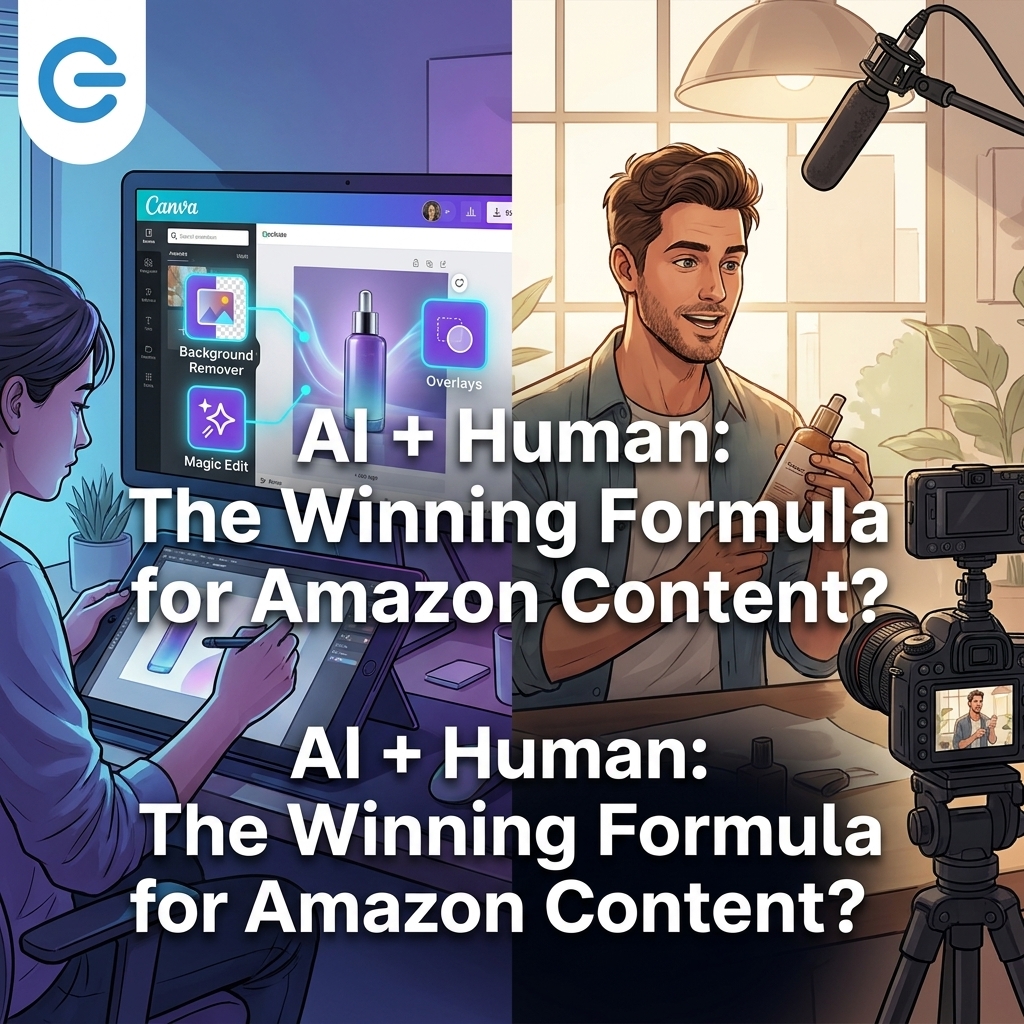
- Amazon currently allows creators to use AI-powered tools (like Canva or Logie) for images, videos, and brainstorming – if the content is original, non-misleading, and fits community standards.
- Official policy bans fully synthetic spokespeople/avatars, but tasks like background removal, image generation, and AI-assisted design are embraced – when done ethically.
- Use AI for what it does best: speed up workflows, hit higher visual standards, and generate first-draft ideas. Always add human context, transparent editing, and personal experience for long-term trust and compliance.
Introduction: AI’s Rapid Rise Opportunity and Uncertainty
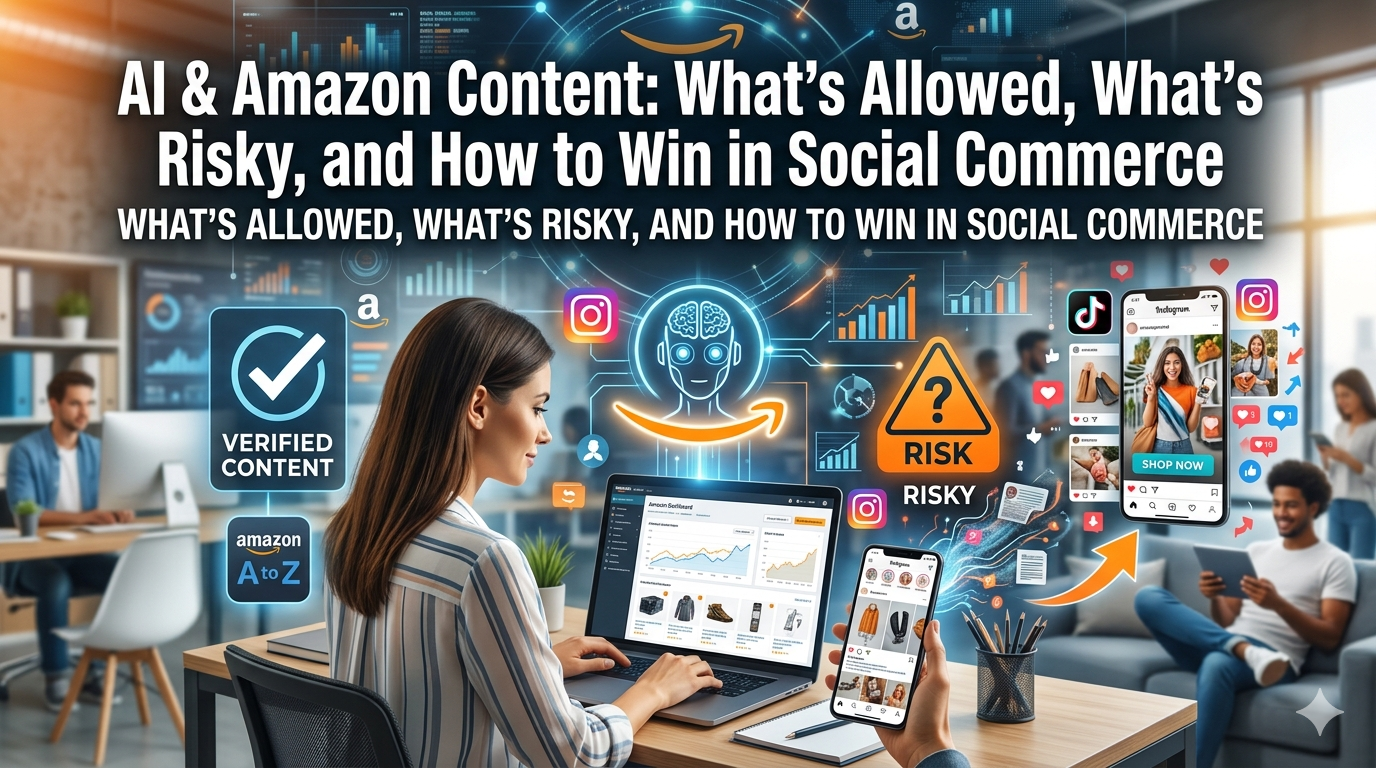
Social commerce creators are living through an AI revolution. Tools like Canva, Logie, and CapCut promise to speed up content creation, polish visuals, and even generate product overlays or lifestyle images before a sample even arrives at your door. But a major problem has emerged: the rules surrounding Amazon content are shifting, and the risks aren’t always obvious.
Should you use AI-generated videos, synthetic voices, or photorealistic product shots? What crosses the line, and what gives you a legitimate edge as a creator, brand manager, or affiliate marketer? Let’s dive into the current playbook for navigating AI in the Amazon ecosystem.

1. What Does Amazon’s Policy Really Say About AI?
One of the biggest questions from the community: “Can I use AI to make Amazon video, images, or shoppable posts?” Surprisingly, there’s no explicit all-out ban. Session leader Ileane Smith summed it up:
“I tried to find any wording in the terms against using AI. Never found it… And if anybody does find wording that says we don’t want you to use AI, or you can’t use AI? Tell me. Let me know, because I can be wrong. But, here’s one thing I do know. I don’t think their systems could pick up if you did use AI.”
Ileane Smith
What’s permitted:
- AI-Assisted Design: Background removal, smart cropping, and graphic overlays especially when utilizing Canva’s direct Amazon integration.
- Creative Enhancement: Image and video editing workflows that leverage AI to upscale quality or correct lighting.
- Text Generation: Using text-based AI to brainstorm captions, draft titles, and outline video hooks.
- Layout Automation: Utilizing Logie’s briefs and automated templates to structure your content strategy.
What’s risky/disallowed:
- Generating a completely synthetic avatar or using “deepfake” characters in Amazon videos (Amazon notes authenticity matters – content must show real product experience)
- Plain photo slideshows passed off as video (unless Amazon’s tools specifically allow it)
- Voices or images that impersonate real people without permission
The Bottom Line: While the policy is still evolving, platform enforcement heavily favors user experience and transparency. Ethical boundaries rule the day never use AI to mislead shoppers or misappropriate someone else’s creative assets.
2. AI in Practice: How Creators Actually Use It (and Stay Safe)

The community shared powerful use-cases and smart risks to avoid:
- Canva’s Amazon Tools: Automatically removes backgrounds, allows product overlays, and directly exports as shoppable video/image with Amazon’s blessing. The integration is clear proof that Amazon welcomes practical, non-deceptive AI use.
- AI Video Helpers: Tools like CapCut or InShot leverage AI to edit, color-correct, trim, or subtitle content in seconds. These speed up batch creation and improve accessibility, but they don’t replace “human in the loop” the creator’s personal touch is always present.
- Logie Briefs: Use AI to mock up lifestyle images or suggest creative angles pre-launch, helping creators get ahead on presentations for sponsors and brands even before receiving samples.
- First-Draft Brainstorming: Let AI help you generate titles, hashtags, and captions then layer on your experience and edit for voice and compliance.
Session participants agreed: focus on adding genuine context, demonstrating real product usage, and keeping your face and personality front and center. This anchors trust and meets both Amazon’s written and unwritten rules for influencer marketing.
3. Risk: What Can Go Wrong?
Even as AI powers up your process, pitfalls remain for the unwary:
- Authenticity & Transparency: Amazon wants content demonstrating product ownership, hands-on use, and unfiltered reviews – even if background assets are AI-edited. Don’t use synthetic people or misrepresent experience.
- Content Ownership: When posting to Amazon, you grant broad non-exclusive rights, and your video or image may be used in ads or to train AI. (Read TOS for details!)
- Copyright & Misappropriation: Using third-party AI art, celebrity likenesses, or unaltered commercial images can trigger copyright flags, takedowns, or even bans and Amazon reviewers can act at any time if assets seem misleading or stolen.
- Quality Over Automation: Audiences crave human connection creators worry (with reason) that fully AI content feels flat. Real stories and real people win every time.
As one discussion participant put it: “There’s always people that want that human connection. Even the younger generation they still crave old stuff, vinyl, records… The human connection.”
4. Pro Tips: Winning with AI + Human Creativity
- Save time on setup, but narrate your own story: Use AI for repetitive tasks (thumbnails, clipping, smart templates), but always record authentic voiceover or text commentary.
- Mix & Match: Build hybrid workflows: AI for batch processing, you for reviews, context, and final polish.
- Manual QA: Always check the output! Fix strange hands, artifacts, or errors especially in AI-generated images/videos.
- Document your process: Brands and Amazon reviewers want transparency: keep a record of your creative process if you experiment with advanced AI tools.
- Stay current with platform updates: As policies change, adapt quickly. AI features in Canva or Logie evolve fast test new integrations but verify compliance before a big launch.
Conclusion: The Playbook for AI in Amazon Content Trust, Transparency, and Tactics
Amazon is not just tolerating it’s embracing AI tools that help creators produce beautiful, relevant, and fast-turnaround content for storefronts, idea lists, and deal events. But remember, success goes to those who blend AI speed with human truth: never outsource your authenticity, and never forget the heart behind the numbers. Use AI to run faster, not as a mask.
One last thing: As of today, there’s no explicit AI ban if you keep it real, original, and ethical. Practices and TOS can change always check official updates, join pro communities like Logie’s, and share what works (and what doesn’t) with your network.