Home Blog Page 76

Amazon launches anti-counterfeiting Exchange; identifying and tracking counterfeits

0
Hands together

In a proactive move to address its counterfeit issues, Amazon has launched an anti-counterfeiting Exchange (ACX), a collaboration within the industry to prevent bad actors from moving their products across different stores.

In its recent brand protection report, Amazon revealed measures that it had previously put in place to get rid of bad actors and prevent the entry of fake products. In the era of using creators to market products, it is difficult to identify which products go to their consumers and what vendors they come from, mainly because they only get access to samples. The recent measure by Amazon is therefore necessary.

How it works

To spot discrepancies, participants share information about previous counterfeit attempts; this makes it easier for sellers to identify and stop perpetrators using collaborative data. When one of the collaborating stores spots a counterfeit, participants share data. The bad actor is then easily stopped and appropriate actions determined; each store independently decides on appropriate action. Since the launch, Amazon has detected hundreds of matching accounts with counterfeit selling accounts and a store perpetrator through ACX.

“We want our customers to have confidence in their shopping experience and for brands to know they are protected from counterfeits. It is critical to share information about confirmed counterfeiters to help the entire industry stop these criminals earlier. By leading the way in creating an industry-wide solution to share information about known counterfeiters, we are excited to have helped improve the industry’s collective ability to fight counterfeit crime, providing consumers and rights owners with greater peace of mind.” Dharmesh Mehta, Amazon’s vice president of Selling Partner Services

Scaling up

The ACX has been piloting the initiative for a while to ensure appropriate guardrails are in place; a model has also been designed to allow more participants, including sellers and marketplace service providers, to join the program. This will give everyone involved an opportunity to make the industry safe, allowing only genuine products to be traded and therefore improving quality. It is time for everyone in the industry to come together and fight against perpetrators; this move is the right approach; it just needs all collaborators to follow the right steps and take action

“Bad actors are a menace to the industry; some have faced legal action and lost customers due to products they are not primarily liable for. It is high time we come together as an industry and eliminate counterfeits once and for all. It may take time, but at least we are moving in the right direction”. Tanya Breus, Senior Business Development Executive at Logie

Multiple links in bio: a game changer for Instagram

0
Missing piece

In a recent announcement, Mark Zuckerberg unveiled a much-awaited feature set to roll out on Instagram through his broadcast channel. The new feature will allow users to add up to five links in their Instagram bios. In the update, Metas CEO describes this as the most requested feature. It is expected to change the landscape of influencer marketing and drive traffic from other platforms to Instagram.

How to access

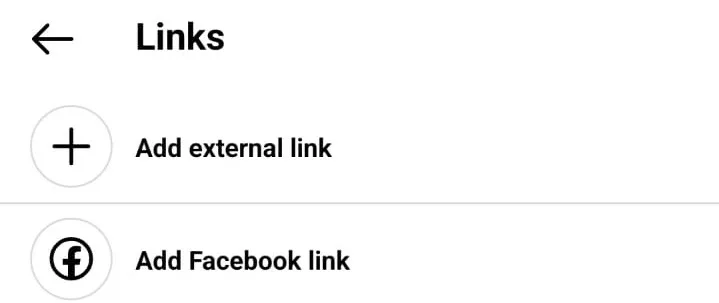
We tried out the new feature; users can go to their Instagram profiles and click edit profile. In this section, there is a dedicated section to add links which allow users to add their Facebook links separately in the section with a Facebook Icon and external links in the plus button written ‘add external links’; the process is pretty simple and is accessible to all users.

The primary goal of this feature is to allow users access to multiple links and prevent users from leaving the platform to access other sites.

Impact on Influencer Marketing

Multiple bio links mean influencers, content creators, and brands will be able to promote various projects, products, or campaigns simultaneously. This flexibility will allow marketers to target their audiences better and increase their potential to make sales. For instance, an influencer will now be able to include links to their latest blog posts, YouTube videos, affiliate partnerships, and a sponsored promotion all within their bio, making it easier for their followers to engage with different aspects of their content.

With Instagram users able to explore more content and resources within the platform, engagement, and retention rates are expected to rise. The feature will also encourage collaboration and cross-promotion between creators and brands, allowing users to strengthen their networks and leverage each other’s following to expand reach and engagement.

Creators experience

Shaba Shams, a content creator, shares her experience trying out the new update.

“I just tried using the new features, and at first, I could not identify where to find them, and on finding the add link section, I was not able to add links using my desktop; I’m still not sure how it works, but I was able to find where to add my Facebook page link and one more external link. I’ll play with it and figure out how it works.”

Will It Be Seamless?

Although the feature offers numerous benefits, there is potential for challenges. Content creators should be keen not to clutter their bios, making it impossible for followers to identify the relevant content from the others. With such an update, organization will be key; if not, they might lose followers due to clutter. Allowing multiple links may also lead to a lot of spam content or, worse inappropriate links, and Instagram must ensure that robust measures are put in place to safeguard its users.

YouTube updates its Policies on eating disorders

0
Signing a document

YouTube announced on Tuesday that it will be updating policies on content for eating disorders and ban videos showing imitable behaviour. The updates include the following; 

Prohibition of Content that Imitates Harmful Behaviors

While YouTube has initially had policies to remove content glorifying eating disorders, the platform will now also prohibit content that experts have determined to be potentially imitated by at-risk viewers. Such behaviours include purging and weight-based bullying. By restricting these types of content, YouTube is taking a step further to ensure that there is no spread of harmful practices related to eating disorders.

Age-Restriction on Certain Content

This new measure aims to prevent different age groups and vulnerable audiences from viewing potentially triggering or harmful content related to eating disorders. For instance, the updates will restrict viewers under 18 from accessing specific videos if they are signed out or embedded in another website. The restrictions will be based on YouTube’s guidelines and determined in consultation with eating disorder experts. 

“We developed this age restriction approach for eating disorder-related videos in consultation with third-party experts to strike the right balance in our continuing efforts to protect younger viewers from content they may be more susceptible to imitating than adults”.

Expansion of Resource Panels to Watch Pages

To raise awareness about eating disorders, YouTube plans to expand its crisis resource panels which previously appeared on top search results related to eating disorders, to also appear on watch pages in the UK, the US, Canada, Mexico, Korea, Japan, Germany, France, and India. By doing this, the platform believes that broader audiences will be reached with meaningful context and mental health resources. The panels will be available in each of the aforementioned countries in their official languages; they also promise to launch more countries and languages.

Social media has been seen to affect its young audiences negatively. Many have been said to be susceptible to suffering from eating disorders to keep up with their Tiktok, Youtube or even Instagram idols. To limit this, Youtube seeks to bring uplifting content to its platform through new updates. It recently partnered with NEDA to produce a year-long series on eating disorder information. It has also encouraged mental health professionals and clinicians to apply and make their channels eligible for health product features. 

The features will be available on Youtube starting today and will ramp up in the coming weeks.

“These efforts are ongoing, and we’ll continue working to make sure YouTube is a safe place for authentic and diverse stories”.

New updates to Instagram reels

0
Browsing on instagram

Instagram recently announced a series of improvements to its reels. The company has launched a bunch of features that give content creators better tools to maximize reach while also providing users with a more engaging platform for discovering new trends and creativity.

So, what’s new?

1. Central Destination for Trending Audio and Hashtags

Users will now be able to see top trending songs and hashtags on Reels, view how many times audios have been used, tap to use – and even save audios for later. For creators, top trending topics and hashtags are now easily accessible to help inform your content plan. This is a significant addition for creators because sometimes, it is difficult to know which type of content consumers are likely to respond to. It’ll make it a whole lot easier to keep up with what’s trending.

2. Redesigned Editing Experience 

The new update makes it easier for users to time elements and align reels at the right moments visually. Video clips, stickers, audio, and texts are brought together on a unified editing screen. The update will be accessible to both iOS and Android devices globally.

3. In-Depth Insights and Recognitions 

Two new metrics to help creators understand how various content is performing have also been added. This is the total watching time and the average watch time. The metrics will provide valuable insights when viewing reels directly. Users will be able to capture the total amount of time your reel was played and any time spent replaying the reel. The average watch time will capture the watch time divided by the number of total plays. This will also provide a way for creators to know how their reels contribute to their growth; from specific reels, they will also receive a notification of their new followers.

4. Updates to Gifts: Easier Way to Recognize Fans

Gifts on Reels had previously been rolled out for fans to show their appreciation, and creators could earn money; the feature has now been expanded to more markets; the UK, Canada, Australia, France, New Zealand, and Mexico. A new feature has also been added to show creators which fans have sent gifts to allow them to recognize their supporters.

“We strive to make Instagram a home for creators like you to express your creativity, connect with your audience, and earn a livingCreators like you inspire people and shape everyday culture. We’re committed to building more products to help you grow and thrive on Instagram, and today’s updates are just a few of the ways we’re investing in your success” Instagram.

Instagram is paving the way for creators to excel and build a strong presence online. With improved editing tools, better insights, and an increasing focus on community engagement, creators will find ways to adapt to these new features and improve their content creation. We expect to see a more vibrant and dynamic landscape of short-form videos on Instagram Reels.

Amazon joins generative AI bandwagon

0
AI empowered hand

Amazon has unveiled Bedrock, an AI platform that will make the development of generative AI-powered applications more accessible than ever before. In a creative twist, it has taken a different route from other platforms. Instead of building AI models in-house, it is leveraging the prowess of third-party AI startups such as Anthropic, Stability AI, and AI21 to host their pre-trained models on Amazon Web Services (AWS). This unique approach will empower developers to harness the power of cutting-edge AI technologies without the need for extensive infrastructure or resources.

What it is set to Offer

Unlike other AI platforms, Amazon Bedrock is set to offer unprecedented flexibility and provide a choice to its developers when selecting foundation models. Its collaboration with leading AI startups will provide an array of pre-trained models, allowing developers to choose the ones they feel best suit their needs. This move will empower creators to build more tailored and efficient generative AI-powered applications without starting from scratch. If successful, the initiatives will make AI technologies more accessible and affordable, ultimately benefiting hundreds of millions of Amazon creators and customers by streamlining supply chains, personalizing digital experiences, and making goods and services more readily available.

Availability

Currently, Amazon Bedrock is available in a limited preview; it offers exclusive access to the Titan family of foundation models developed by AWS and access to foundation models (FM), a suite of ultra-large ML models that generative AI relies on. Recently, Amazon collaborated with Nvidia to develop and launch a generative AI accelerator for startups, the “next-generation” infrastructure for training AI models; this shows its commitment to driving innovation further and building a technological revolution.

‘’We have a lot more coming, and we are excited about what you will build with generative AI on AWS. Our mission is to make it possible for developers of all skill levels and organizations of all sizes to innovate using generative AI. This is just the beginning of what we believe will be the next wave of ML powering new possibilities for you.’’ Swami Sivasubramanian, Vice President of Data and Machine Learning at AWS

“Logie joined the bandwagon a long time ago, but it is interesting to see Amazon’s approach. We hope to see how the invention will impact developers; not having to start from scratch will surely give them a head start. I am excited about what is to come,” Mohamed Raza, Logie’s lead engineer and security expert

TikToks new push to boost in-app shopping

0
shopping on tiktok

TikTok is trying to improve shopping uptake on the app and tap into its vast US audience. To achieve this, the company has recently launched a new push in its in-App shopping platform and invited selected US sellers to create shops and promote their products through clickable links embedded in videos and live streams. The company has also offered incentives such as subsidies and coupons on sales and shipping to maximize interest and encourage users to purchase within the app.

Integration 

Unlike the previous TikTok shop where to complete a purchase, consumers would be directed to the website inside the app, selected brands have now added a shop tab on their TikTok profile, and there is now a direct overview and purchase. The new program allows businesses to sell products directly within the app and offer customers a seamless checkout process. The app has succeeded with Instream commerce with the Chinese version Douyin, but the Western market seems less enthusiastic.

To increase popularity, TikTok has offered sales commissions through a new affiliate marketing program, incentivizing creators to promote and support retail partners. Using the TikTok hashtag with 50.4 B views, #TikTokmademebuyit, the app aims to make the new shop into a full-funnel sales platform. Recently, Tiktok announced a new feature ShoppingCenter for its Malaysia users, making it easier for them to find more product options and providing better ways for merchants to manage orders within its shop. This shows its determination to ensure its in-app shopping succeeds globally.

Will it be Successful?

Facebook, Instagram, Pinterest, and Twitter have tried different live shopping streaming methods but soon scaled back due to the low adaptivity of their users. Just recently, Instagram removed its dedicated shop tab from users’ feeds and is now looking to retire its live-stream shopping after a similar end to the live stream by Facebook. If TikTok succeeds, other social media platforms may soon follow suit and adopt similar strategies that allow for consumer collaboration with retailers, incentivize influencers, and prioritize consumer engagement. Will the new push by TikTok be the missing piece? This is, of course, if it survives the ban threats it’s currently facing.

“The latest innovative approach by TikTok is empowering both influencers and retailers. The determination to pursue avenues that other social media platforms seem to have given up on holds immense potential for social commerce. If successful, the new push will reshape how consumers discover and purchase products online. And this could very well propel them to the forefront of social commerce if they survive the ban threats,” said Mohamed Raza, Logie’s lead engineer.

Instagram launches new API access to enhance creator collaborations

0
Instagram new post button

Instagram is extending its API access to allow multiple brand agencies to connect easily with their preferred content creators. It is extending access to elements of the Creator Marketplace through an API to enable brands to discover potential creators and continue working with them via their preferred third-party creator marketing platforms.

Some key features of this update include:

  • Prioritized Direct Messages (DMs): Brands can easily reach creators in a new priority inbox on the creator marketplace. This will be possible without leaving their preferred creator marketing platform. 
  • Project Briefs: Using Instagram’s matchmaking capabilities for project partnerships, Brands can now publish structured project briefs to the creator marketplace direct from a third party

These features will make it easier for brands and creators to communicate and collaborate effectively. Before opening access to more creator marketing partners, Instagram is currently testing these APIs with a select group of partners, including Captiv8, CreatorIQ, and Aspire. 

API Integration

Integrating APIs into Instagram’s Creator Marketplace is set to revolutionize how creators and brands collaborate. With the new release, agencies will;

  • Leverage APIs to track creator conversations with a dedicated folder. Messages will be sent directly to creators, where they will see and conveniently respond on Instagram.
  • Effectively work with Content creators and track projects. Structured briefs will be quickly published or sent to creators on behalf of the clients. They will also be able to publish discoverable projects that creators can apply to, track if creators have agreed to collaborate, and monitor progress.
  • Acquire the best talent for their client brands. Using advanced filters and search capabilities from their business accounts, and advanced filters, they will discover creators from the creator marketplace.

The new API integration will bridge the gap between Instagram and the preferred third-party marketing platforms, streamlining the collaboration process. As Instagram continues to refine the functionality of its Creator Marketplace, it is set to become an important hub in fostering collaborations between creators and brands. It has shown its commitment to supporting its creator community and adding value to brands since the creation of the marketplace in 2022. We, therefore, expect to see more exciting developments in tools and features.

“The new third-party API access by Instagram is a great addition to digital marketing. Although it is still being tested in a small cohort, I am excited to see how it will impact brands and elevate the content creation process. They say it can track project progress, right? I wish they included a digital payment method to ensure creators or brands are not short-changed, but this is a step in the right direction,” said Tanya Breus, Senior Business Development Executive at Logie.

Temu gains traction in the US despite TikTok’s controversies

0
Online Purchase using a credit card

Temu, currently the most downloaded app in the US, is an online marketplace for discount products. It provides a platform for creators and businesses to monetize their content or sell products. The app is operated by PDD Holdings, owners of Pinduoduo (the company’s parent eCommerce app that has also been in the spotlight for data privacy concerns). Most products in the app are shipped directly from China to consumers in the US.

Temu’s Surprising Success in the US

Despite the controversies surrounding TikTok, Temu has experienced remarkable growth in the United States. Its key selling point is cheap products, leading consumers to weigh options between the different e-commerce platforms and eventually landing on Temu. With the help of Tiktok, Temu has reached over 300 million views on the hashtag #Temu, where creators are taking advantage of low prices and unboxing purchased items on camera.

Temu held an extravagant marketing campaign during the Superbowl with the caption ‘shop like a billionaire,’ resulting in millions of downloads and varying customer reactions. When asked about its motto, a Temu spokesperson told CNN

‘’Through the largest stage possible, we want to share with our consumers that they can shop with a sense of freedom because of the price we offer,” 

Review of Temu Products

Being the top downloaded App since January 2023, you would expect shipped products sold on the site to offer maximum quality for the least price possible. On the contrary, customer reviews on Better Business Bureau show that Temu has only a 2.21/5 star rating and 235 customer complaints, most of which allege that products were delayed, delivered with damages, or the customer service was slow and unhelpful. 

Is Temu Safe?

The app deals with sensitive information like home addresses and credit card information, and consumers are bound to be paranoid. Temu supports several secure payment methods, including PayPal, Apple Pay, google pay, and most credit cards; apart from this, it is backed by PDD Holdings Inc, which has many years of experience in global commerce. Still, there are doubts surrounding the app considering, Pinduoduo, Temus’s sister company, and Tiktok are under scrutiny, yet they were considered safe. Should users be skeptical? 

Navigating eCommerce fraud in 2023: what you must know

0
ECommerce Product

Counterfeiting has been a sticking issue in both the e-commerce and traditional retail industries. When vendors sell or promote sub-standard or misleading products, they put their reputation on the line and expose their customers to all sorts of dangers. Countless complaints show that scores of consumers have been harmed by counterfeit cosmetics, poor-quality toys, inadequately constructed shoes, and similar purchases. 

Modern consumers have high expectations and demand authenticity, uncompromised quality, and a seamless shopping experience. Now more than ever, creators and brands must watch out for cracks that could negatively impact consumers and translate to costly or permanent business damage.

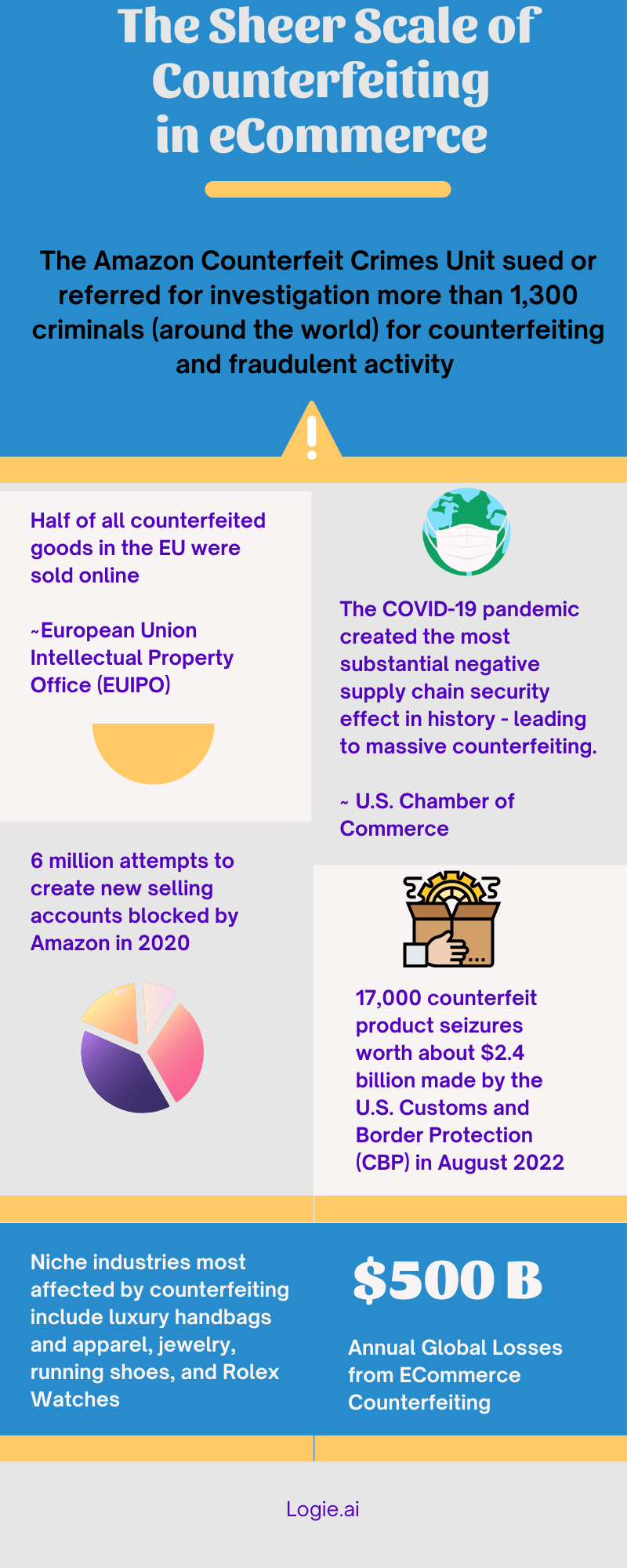
Snapshot: Scope of Counterfeiting & Fraudulent Activity in eCommerce

The Amazon Counterfeit Crimes Unit sued or referred for investigation of more than 1,300 criminals (around the world) for counterfeiting and fraudulent activity. 

A joint study by the European Union Intellectual Property Office (EUIPO) and the Organization for Economic Co-operation and Development (OECD) found that more than half of counterfeit goods entered the EU market were sold online.

China (along with its trading partner and transit point Hong Kong) is the leading producer and distributor of counterfeit goods in the world, according to the same OECD-EUIPO study.

The Intellectual Property Roadmap 2020 report by the International Chamber of Commerce declared that the COVID-19 pandemic created the most substantial negative supply chain security effect in history.

In its latest Brand Protection Report published April 2023, Amazon stopped over 6 million attempts to create new selling accounts in 2020, compared to 2.5 million in 2021, and 800,000 in 2022.

Counterfeit goods are not just a temporary challenge but a major industry problem that has grown from $30B value in the 1980s to over $3 trillion (projected) in 2023. 

In August 2022, the U.S. Customs and Border Protection (CBP) agency made nearly 17,000 counterfeit product seizures worth about $2.4 billion.

Counterfeiting problems are evident across the entire eCommerce but are more prevalent in niche industries such as music and DVD movies, luxury handbags and apparel, jewelry, running shoes, and Rolex Watches, among others.

Ecommerce Fraud & Counterfeiting Infographic

It’s clear from these statistics that counterfeiting peaked during the pandemic and has been gradually climbing down since then. But this obviously does not mean that the industry is off the hook. All stakeholders must devise strategies to make sure that they (and their customers) do not fall prey to counterfeits or any sort of fraudulent eCommerce schemes. 

2 Creators Share Their Experience With Fraudsters 

Altovise Pelzer, a seasoned digital creator, fell victim to a disloyal vendor.

I had a vendor reach out about a product. I agreed to do the video, but when it was time for them to pay me, they told me I needed to purchase a large quantity of another product. 😳 Even went so far as to show screenshots of other “people” they had made payments to after they made the big purchase. Nope, nope, and nope. I immediately explained that what they were doing was fraudulent practices. Blocked them and moved on,” said Altovise.

Melody Johnson, an experienced digital creator crossed path with a bad actor whose product did not match the reviews:

I was once going to accept a collaboration. Something seemed off, so I went to the reviews. The product did not match the reviews. It was a broom they wanted me to stream. The reviews were about birthday cards😒,” Melody revealed.

Amazon’s Latest Brand Protection Report

As one of the dominant players in the global eCommerce playground, Amazon is at the forefront of protecting brands and consumers. The company has repeatedly emphasized that trust, brand safety, and consumer protection are among its key goals. It’s no wonder the online shopping giant has invested more than $1.2 billion dollars and employed over 15,000 personnel (including machine learning specialists and expert investigators)  to achieve these very goals. 

See the 2022 Brand Protection Report by Amazon

Some of the key tools the company has launched to help you and your customers stay on the safe side include:

  • Project Zero – this is cutting-edge technology that uses in-depth knowledge of intellectual property to effectively detect counterfeits. This is done using a cocktail of robust brand protection tools such as automated safeguards, product serialization, along with granting brands the unique ability to directly remove counterfeit listings from the Amazon store.
  • Transparency –  Amazon uses a product serialization service with unique codes to identify individual items, preventing counterfeits from reaching customers. These codes can be scanned throughout the supply chain and by customers to confirm authenticity using the Amazon Shopping App or Transparency App.
  • IP accelerator – this intervention helps small businesses secure intellectual property rights by connecting them with a trusted network of IP law firms in 39 countries and 13 languages. It offers affordable trademark registration services and expedites access to Amazon’s Brand Registry to enhance brand protection.

Other tools used by Amazon to protect brands include; the Brand Registry and Amazon Patent Evaluation Express (APEX). The company’s Counterfeit Crimes Unit collaborates with selling partners and global law enforcement to disrupt counterfeiters and target bad actors through joint enforcement and seizures. Additionally, the company collaborates with industry authorities such as the European Federation of Pharmaceutical Industries Associations and the U.S. Chamber of Commerce to raise awareness and educate tens of millions on how to avoid counterfeits. 

Interventions in Other Marketplaces

Outside of Amazon, most other leading marketplaces seem to adopt a lot of measures, from creating anti-counterfeiting policies to prohibiting third-party sellers from promoting fake products and even appointing fake shoppers to flag potential counterfeit products. But how effective these measures can be trusted to be is a whole different ball game. It’s something that cannot be left to system-wide interventions. 

What you can do to Guard Against eCommerce Fraud

It’s easy to rest in the comfort that Amazon and other marketplaces are investing big-dollar and their top talent to stay on top of counterfeiting and malicious sellers. But you also need to take the initiative to make sure that your business or customers do not brush shoulders with any product that is not what was genuinely intended. Below are some of the intervention measures you can take: 

  • Verify suppliers – thoroughly vet and research potential suppliers to ensure they are reputable and have a history of providing genuine products. Check for certifications, licenses, and references to ensure they are authentic.
  • Purchase from authorized distributors – buy directly from the manufacturer or authorized distributors to minimize the risk of accidentally purchasing counterfeit goods. And even so, make sure you only work with manufacturers who have a proven track record creating authentic products. 
  • Implement strict quality control measures – regularly conduct quality checks on products received from suppliers to detect any inconsistencies or discrepancies in materials, packaging, or branding that may indicate counterfeiting.
  • Educate customers about counterfeit products – inform customers about the dangers and consequences of using counterfeit products, and provide them with information on how to identify genuine items.
  • Use product serialization – assign unique serial numbers or barcodes to each product, making it more difficult for counterfeiters to replicate and easier for you to track and authenticate items.
  • Register trademarks and copyrights – ensure that your brand’s logos, designs, and intellectual property are legally protected by registering them as trademarks and copyrights. This will help you take legal action if necessary, against counterfeiters.
  • Monitor online marketplace listings – regularly monitor online marketplaces like eBay, Amazon, and Alibaba for any counterfeit products sold under your brand name. Report any suspicious listings to the respective platforms for removal.
  • Implement anti-counterfeiting technologies – utilize available security features such as holographic labels, tamper-evident packaging, or RFID tags to make it more difficult for counterfeiters to duplicate your products and easier for customers to identify genuine items.
  • Collaborate with customs and law enforcement – work closely with customs authorities and law enforcement agencies to share information about known counterfeiters, track shipments, and enforce anti-counterfeiting efforts. This collaboration will help identify and stop counterfeit products from entering the market.
  • Educate employees – if you have a team, train them on how to identify counterfeit products and what actions to take if they encounter them. Ensure they’re aware of your company’s anti-counterfeiting policies and strategies, as well as the consequences of not adhering to them.
  • Monitor and enforce legal action – if you discover instances of counterfeiting, pursue legal action against the counterfeiters to protect your brand and send a strong message that you will not tolerate such activities. This may include sending cease-and-desist letters, filing lawsuits, or working with law enforcement agencies.
  • Encourage customer feedback – invite customers to report any counterfeit products they encounter and provide them with an easy way to share this information with you, such as through a hotline, email address, or online form. This can help you identify potential counterfeiting issues more quickly.
  • Keep track of counterfeit trends – stay informed about the latest counterfeit tactics, technologies, and risks in your industry to ensure your anti-counterfeiting measures remain effective and up to date.
  • Join industry associations or coalitions – collaborate with other businesses and organizations in your industry to combat counterfeiting collectively, share best practices, and exchange information about new threats and countermeasure strategies. By working together, businesses can magnify their efforts against counterfeiters.
  • Be proactive on social media – monitor social media platforms for any signs of counterfeit products being sold under your brand name. Act quickly to report and remove suspicious content and educate users on how to identify genuine products.

These experiences show that at any given point, we may have to deal with fraud or encounter counterfeit products; it is just prudent that we devise ways to prevent us from falling victim to such malicious acts.


Video display elements transform Facebook Marketplace listings

0
Video Display Elements

Facebook has introduced a video display elements feature to their marketplace listing. Buyers can now request a video of a product so they can make better purchase decisions. This new addition will also allow sellers to record or upload videos alongside their product listings, offering potential buyers a more comprehensive understanding of the products they are considering.

Benefits of Video Display Elements

Here’s some of what you can expect from this valuable new feature:

  • 360-degree Views – with video display elements, buyers can now enjoy 360-degree views of listed items and adequately see the product’s appearance, size, and potential issues or defects.
  • Proof of Authenticity – sellers can demonstrate that the listed item is genuine and matches the description provided. 
  • Real-time Demonstration of Functionality – in addition to displaying the physical appearance of an item, video display elements can also demonstrate its functionality
  • Improved Communication and Engagement – sellers can create a more engaging experience for potential buyers. 

How you can Harness the Power of Video Display Elements

Sellers must invest in high-quality videos and keep them concise to maintain customer interest. Adding descriptions and captions to enhance the viewer experience also helps. Videos offer a unique opportunity for sellers to showcase their personalities and build a connection with potential buyers. A genuine and friendly demeanor will help establish trust and make the buying process more enjoyable for the customer. 

Consider offering a brief introduction, sharing some background information about the item, or sharing a personal anecdote related to the product.

“As social media platforms continue to create tools for creators and eCommerce vendors, it is important that you stay on top of the latest releases so you can make the most out of them. Video display elements are set to become indispensable tools for enhancing customer experience and driving success for brands and content creators alike,” said Bethwel N., Logie’s Creative Director. 

About Logie

Logie streamlines influencer discovery, product distribution, and content performance to drive measurable sales for eCommerce brands. We also equip content creators with the smart tools, brand partnerships, and commission opportunities they need to turn content into income.

Recent Posts