
It’s a common frustration: last week, a trending hashtag explodes on Amazon, but when you scan Pinterest, it’s nowhere to be found.
Or you pinpoint a spiking Pinterest trend, only to see zero demand on your Amazon storefront. Are you missing out, or just misreading the digital room?
Amazon and Pinterest operate on fundamentally different timelines, and that’s by design.

Align your strategy with each platform’s behavioral DNA, and you’ll not only protect your bandwidth, but you’ll also amplify revenue streams most creators overlook.
“In the past, I paid more attention to the trends that Amazon shares, which rarely align with Pinterest’s predicted trends… I was wasting so much time trying to find a common thread. And that’s exactly what the problem was for me. I was trying to find a commonality between Amazon’s trends and Pinterest trends. And… Pinners make plans before they purchase, you know. Think of them as planners and dreamers… Whereas… Amazon shoppers are more interested in instant gratification.” Ileane Smith, Amazon Influencer & Community Host
Amazon: The Platform of ‘Now’
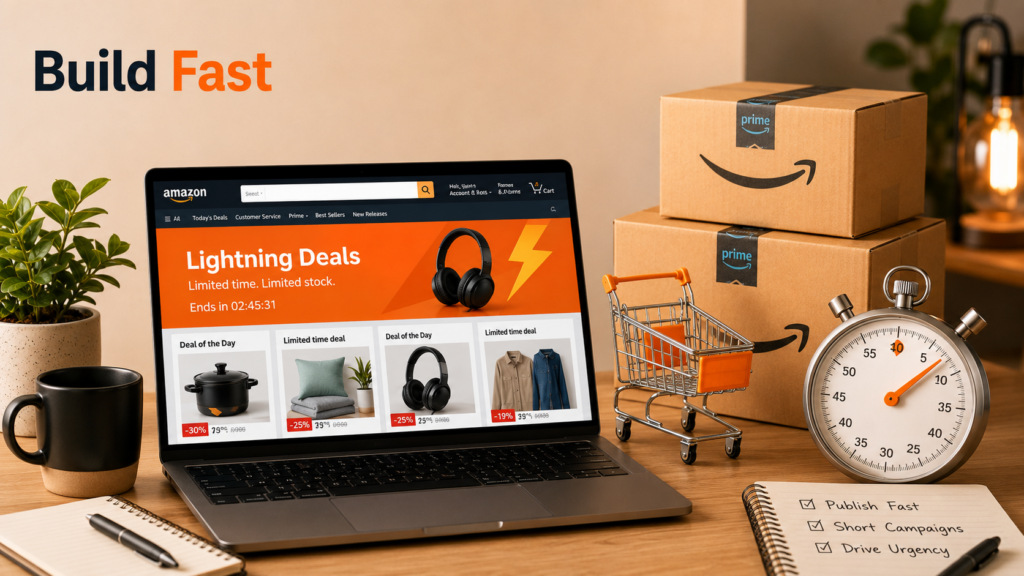
Amazon’s trend algorithm is built for urgency. When buyers reach Amazon, they’re in active shopping mode, searching for what they need immediately, lured by deals, fast shipping, or necessity.
Trending products on Amazon are often tied to events like Prime Day, viral TikTok moments, or even weather spikes. What’s hot today could be passé next week; that rapid turnover is the norm.
There’s real behavioral data behind why this is true rather than just a vibe. Amazon has spent two decades training shoppers to expect near-instant fulfillment, and it’s working exactly as designed.
Research on what’s been called the two-hour economy found that 46% of shoppers favor Amazon specifically for its delivery speed, and 44% cite free shipping as their reason for choosing the platform over anywhere else.
That combination of speed and low friction is precisely what makes a trend spike and fade so fast on Amazon: shoppers act on impulse the moment something catches their eye, because the platform has removed every reason to wait.
Amazon’s own scarcity mechanics reinforce the same pattern. Limited-time deals, countdown-style promotions, and Prime Day-style urgency are built to trigger fear of missing out in the moment, not to plant a seed for a purchase three months out.
That’s a very different design goal than a discovery platform, and it explains why a hashtag can dominate Amazon search one week and vanish the next: the urgency that made it spike is the same thing that makes it collapse once the deal or moment passes.
Essential Onsite Tactics:
- Deploy content that capitalizes on urgency, think limited-time lists, “as seen on” roundups, and quick unboxing videos.
- Double down on SEO for products in Amazon’s current Trends portal; these buyers are ready to click “add to cart” now.
- Treat Amazon spikes as short campaigns rather than long-term content bets. Build fast, publish fast, and expect the shelf life to be measured in days, not months.
Pinterest: The Engine of ‘Next’
“Pinners are planners and dreamers”. Pinterest is a vision board, not an immediate marketplace.
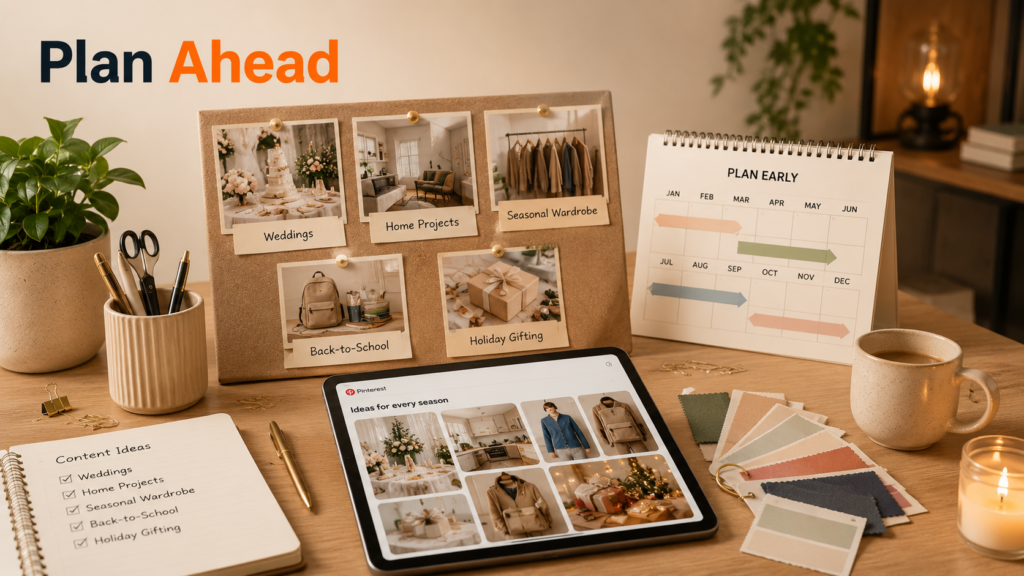
Its users look for inspiration for events, sometimes months (or even years) in advance, weddings, home renovations, seasonal wardrobes, holiday gifting, and life milestones that require lead time to plan around.
The data backs this up more precisely than most creators realize. Roughly 70% of Pinterest users say they arrive on the platform already carrying shopping intent, according to Pinterest’s own usage data, which reframes every search as a leading indicator rather than idle browsing.
Pinterest’s annual forecasting report, Pinterest Predicts, has held an 88% accuracy rate over the past six years, built from analysis of billions of monthly searches. That accuracy is only possible because the platform is capturing intent long before it converts into a purchase, sometimes a full year before a trend peaks elsewhere.
Pinterest itself points out that its trends also simply last longer once they take hold, nearly twice as long as trends elsewhere on the internet, which is the flip side of the slow-build entry curve.
A trend that takes months to develop on Pinterest doesn’t burn out in a week either. The commercial upside of catching one early is real too: checkouts tied to the previous year’s Pinterest Predicts content grew 68% year over year, evidence that planning-stage content does eventually convert, just on Pinterest’s own clock, not Amazon’s.
The “mismatch” creators keep noticing isn’t a bug in either platform’s algorithm; it’s the honest output of two different consumer psychologies being measured accurately.
Amazon is telling you what people are buying right now. Pinterest is telling you what people are going to want later.
Treating either one as a leading indicator for the other was always going to produce noise, because you were reading a speedometer and a compass and expecting them to agree.
Essential Pinterest Tactics:**
- Plan content around the calendar moment a trend will actually peak, not the moment you spot it. A trend on Pinterest in December may not translate into checkouts until spring.
- Build boards and pins for occasions with natural lead time; weddings, renovations, back-to-school, and holiday gifting are where Pinterest’s planning behavior is strongest.
- Treat a slow start on Pinterest as normal, not a failure signal. The same content that looks flat in week one can still be compounding toward a peak months out.
So, Should You Panic When the Signals Don’t Match?
No, and honestly, expecting them to line up was the mistake, not the platforms. Once you stop treating Amazon and Pinterest as two windows into the same audience, the “wasted time” Ileane described disappears, because you’re no longer hunting for a pattern that was never going to exist.
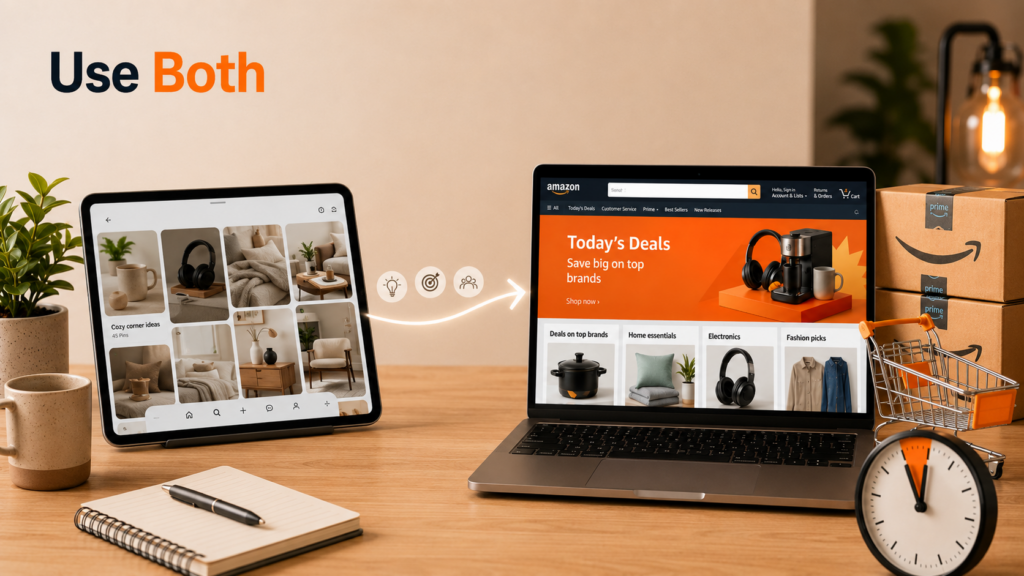
A more useful way to think about it: run Amazon for what’s converting today, and run Pinterest as a forward-looking pipeline that feeds Amazon later once that slow-building demand actually peaks.
A Pinterest search climbing now might not show up as an Amazon best-seller for months, and that gap isn’t a sign your strategy failed; it’s the lead time doing exactly what it’s supposed to do.
Creators who build a content calendar around each platform’s actual clock, rather than forcing a shared one, end up with two genuinely complementary revenue streams instead of one confusing, contradictory dashboard.