


- Platform rules are changing fast – review and tailor your content for each network’s evolving policies and algorithms, especially in 2026.
- Leverage deep linking, creative repurposing, and cross-platform brand engagement to maximize reach and safeguard your revenue from surprise policy or discovery shifts.
- Streamline reporting and attribution with analytics tools – so you know what’s working, where, and can pivot faster than the next update.
Repurposing Content in a Policy-Obssessed Era
Not long ago, repurposing content for Amazon, YouTube, Instagram, TikTok, and X was as simple as adjusting aspect ratios and tweaking the caption. But as 2026 advances, that surface-level approach now carries risk from account flags to muted reach. Every platform is rewriting its rules and letting algorithms, often powered by AI, decide what gets seen – and what gets buried.
As social sellers, affiliate marketers, and brand partners, it’s time to treat your repurposing playbook as a living document.
“What applies to one platform may not always apply to another, and as things change, it may be time for you to go back and refresh, go back and look through your content… to determine, am I still in alignment with what the policy says? Not what the policy said 10 years ago… but what the policy says for today.”
Altovise Pelzer
Why Blanket Repurposing No Longer Works
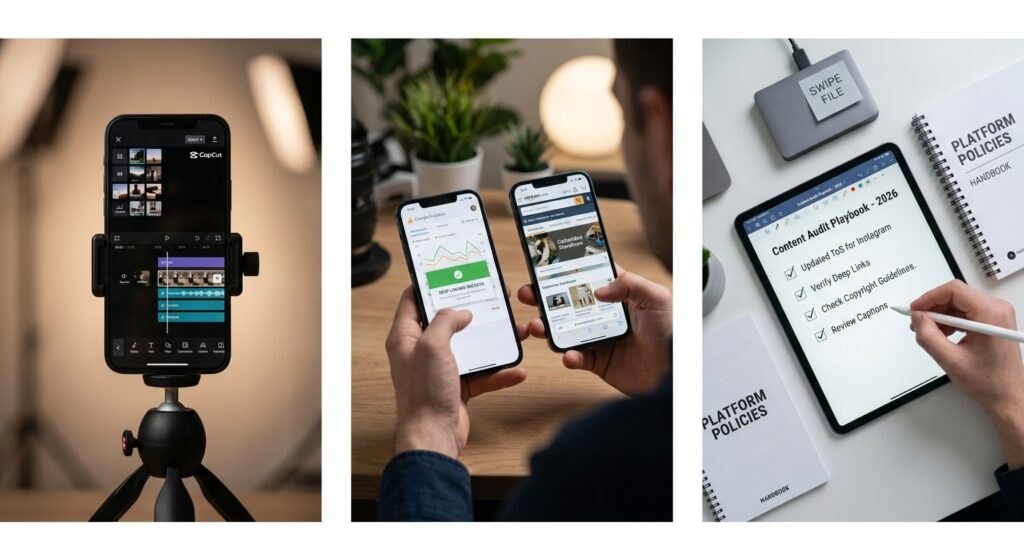

Each social platform is now making subtle and not-so-subtle demands of creators:
- Instagram: Now favors shares to DMs and stories over likes or comments, giving 3x to 5x more ranking weight to share-ability. Fail to spark shares, and your content gets ghosted (even with high views).
- Amazon: Deep linking auto-routes traffic to localized storefronts but blurs reporting; influencers now juggle between native deep links, GeniusLink, and platforms like Logie for tracking and compliance. Stay current with Amazon Collages Explained: How the Creator Tool Works, Rules, and Best Practices.
- YouTube: Faces both tougher Partner Program metrics (see The Amazon YouTube Shopping Integration: The Complete Creator Guide for the recent updates) and stricter enforcement against recycled content, copyright gray areas, and policy non-compliance.
- Meta Platforms (FB, Threads): Now push AI-generated suggestions and enable ad exclusion for brands, reshaping what gets surfaced to whom and why.
Add to this the AI-driven discovery shifts and the growing threat of likeness/content theft (detailed in AI Likeness Theft in 2026: How Creators Can Protect Their Face, Voice, and Brand), and repurposing requires a more nuanced, policy-proof plan than ever.
How Top Creators Rewire Their Repurposing Workflows
1. Treat Each Network as Its Own Channel
Never assume what works on one platform will fly elsewhere. For example, some platforms let you tag brands freely; others (especially Amazon and TikTok) scrutinize brand mentions or block certain claims outright. One creator in the recent session revealed, “Depending on what platform you’re working with, you can’t give that information. That’s medical information. And you will be flagged, and potentially have your account shut down.”
2. Build with Multi-Style Assets from the Start
- Three-for-one is the new gold standard: Every product should get a landscape video (for YouTube or Amazon main), a vertical (for Stories, Reels, Shorts), and a static post (for Pinterest, blogs, or product collages).
For practical advice on using these formats, reference Amazon Collages Explained. - Use platform features that amplify share-ability and discoverability: On Instagram, focus calls-to-action on sharing your content in DMs or Stories. For TikTok and YouTube Shorts, prompt users to watch the full video on your Amazon or YouTube channel where you can actually share links.
3. Optimize Links and Attribution – Everywhere
Deep links are central, but so is knowing what converts. “I use GeniusLink for Facebook, IG, and YouTube, and Post Tech for Pinterest and Blog,” one influencer shares, illustrating the growing role of third-party tools for better visibility.
Logie’s analytics and API integration also help you monitor exactly where traffic comes from even as Amazon deep linking seeks to hide those details.
4. Engage Brands Off-Platform Not Just via Official Marketplaces
Amazon Creator Connections or other platform-native brand networks are now crowded. Repurposed posts, especially when tagged or shared (and when responding to comments promptly), often get more direct and lucrative brand responses. As Altovise noted: “When repurposing your content on other platforms, that gives you an opportunity to connect with the brands. Don’t believe me? I’ve had brands come and leave a comment… We’d love to work with you again, or work with you, and send you some more products.”
Platform Policy: Your New Competitive Advantage
Staying policy-current is as important as nailing your creative style or distribution. Workshop your “content audit” regularly – scrubbing old posts, reviewing captions, and checking that deep links work as intended. The best social commerce creators don’t just adapt they anticipate the pivots:
- They maintain updated swipe files of network TOS, recent “hot words,” and current influencer bans.
- They build in flexibility so every content piece can be quickly tweaked (or even withdrawn) if a rule changes.
- They never stop learning from what’s driving reach (or getting flagged) on every network, week by week.
What If Your Content Gets Flagged or Hidden?
It’s not always about breaking the rules yourself sometimes the rules themselves are changing mid-game. If a post is flagged or a video unpublished (as is commonplace on Amazon, noted in the session), use it as a trigger to review all similar posts for compliance. Don’t just resubmit revise and reshare, and double down on cross-channel exposure to avoid single-platform risk.
Conclusion: Repurpose with Resilience, Agility, and Intelligence
The new rules of repurposing demand you combine creative flexibility with policy intelligence and robust analytics. As you look ahead to the next wave of discovery algorithms and compliance bottlenecks, your edge will be in how quickly you can adapt and how smartly you can continue to monetize and build brand relationships across every network.
Still struggling to update your content workflow? Make your next team meeting about a full audit of your repurposing process – platform by platform, link by link, and KPI by KPI.
For advanced integration tactics, AI-risk protection, and shopping workflows, read: Amazon Collages Explained: How the Creator Tool Works, Rules, and Best Practices, AI Likeness Theft in 2026: How Creators Can Protect Their Face, Voice, and Brand, and The Amazon YouTube Shopping Integration: The Complete Creator Guide.