

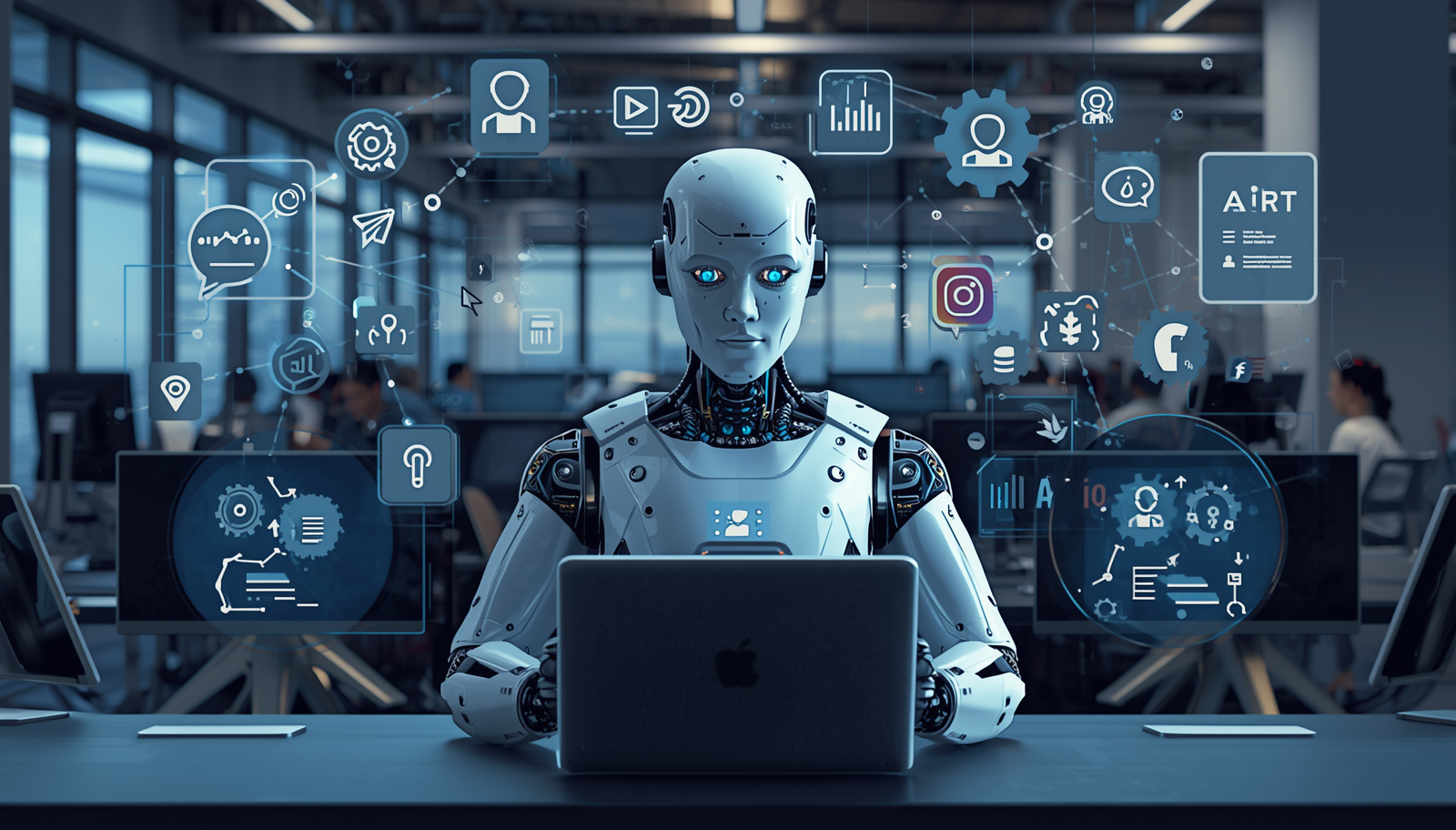
Influencer marketing continues to scale, but execution has become the limiting factor. As brands manage larger creator networks and higher content volume across multiple platforms, manual, rule-based systems quickly fail. Spreadsheets, static workflows, and human coordination cannot keep pace with the speed, data complexity, or accountability modern influencer programs require. Growth is no longer constrained by access to creators or budget; it’s constrained by operations.
This shift has made AI influencer marketing automation essential. Traditional automation may execute predefined tasks, but it cannot adapt, learn, or optimize as conditions change. AI adds intelligence to automation by identifying patterns, predicting outcomes, and improving decisions in real time. Without AI, influencer marketing automation remains reactive and increasingly fragile as programs scale in size and complexity.
The urgency is reinforced by market growth. According to Influencer Marketing Hub, the global influencer marketing industry reached $24 billion in 2024, reflecting sustained investment in creator-led strategies. As investment accelerates, the market is shifting toward execution systems that leverage AI to support discovery, attribution, analytics, and optimization. Industry discussions increasingly reference platforms like Logie as examples of this broader move toward intelligent, execution-first influencer marketing automation.

How AI Changes Influencer Marketing Automation
AI shifts influencer marketing automation from a simple task execution to intelligent, decision-driven systems. Traditional automation follows fixed rules, which include sending outreach, logging content, and generating reports. AI continuously analyzes performance data, learns from outcomes, and adjusts execution in real time. The result is automation that improves as programs scale, rather than breaking under complexity.
What changes when AI is embedded into automation:
- From reactive to predictive – AI anticipates creator performance and content impact instead of reporting results after campaigns end.
- From static rules to adaptive execution – workflows adjust based on live data rather than predefined conditions.
- From manual oversight to system-led decisions – AI flags anomalies, prioritizes actions, and optimizes execution automatically.
- From fragmented data to continuous insight – performance signals are processed in real time, shortening feedback loops.
This intelligence layer becomes critical as creator volume increases. Manual decision-making does not scale, and delayed insights lead to wasted spend and missed opportunities. AI absorbs this complexity by operating at the speed and volume modern programs require.
Industry conversations increasingly reference execution-oriented platforms such as Logie, where AI is embedded directly into automation workflows rather than added as a reporting layer. In these systems, automation doesn’t just move faster; it moves smarter.
In 2026, this shift defines modern influencer marketing automation, not just efficiency, but intelligent execution at scale.
1. Smarter Influencer Discovery and Vetting With AI
AI fundamentally improves influencer discovery by moving beyond surface-level metrics. Follower counts and basic engagement rates provide limited insight at scale. AI systems analyze patterns across audience behavior, historical performance, and content relevance to evaluate creators more accurately and consistently.
Instead of relying on static filters, AI assesses audience quality, engagement authenticity, and contextual fit. It identifies anomalies such as inflated engagement, misaligned audiences, or inconsistent performance that manual reviews often miss. This reduces false positives and ensures creators selected for campaigns are more likely to perform as expected.
AI also eliminates much of the manual research traditionally required in influencer vetting. Large creator pools may be evaluated simultaneously using objective scoring models, allowing teams to focus on strategy rather than screening profiles one by one. As a result, discovery becomes faster, more consistent, and easier to scale.
The key advantage is adaptability. Static filters apply the same rules to every creator, regardless of context. AI-based discovery adjusts its evaluations based on performance data and campaign requirements, making it more effective as programs grow in size and complexity.
2. Matching Creators to Campaigns More Effectively
AI improves campaign outcomes by matching creators to campaigns based on expected performance, not assumptions. Instead of assigning creators manually or relying on broad criteria, AI evaluates historical results, audience behavior, and content patterns to predict the fit between creators and campaigns before execution begins. This reduces wasted spend and improves consistency as programs scale.
What AI-driven matching enables:
- Performance-based creator allocation – using historical engagement and conversion data.
- Better creator-product fit – by aligning audience behavior with campaign goals.
- Fewer underperforming partnerships – identified before campaigns launch.
- Scalable enrollment – without manual coordination or guesswork.
The impact of relevance is measurable. Research shows that 61% of consumers trust influencer recommendations, making accurate alignment between creators and campaigns critical to performance.
As influencer programs grow, manual matching becomes a bottleneck. Execution-oriented platforms increasingly rely on AI to automate this allocation step, ensuring campaigns launch with creators most likely to deliver results.
In practice, AI-driven matching turns creator selection into a scalable, data-driven process, replacing intuition with predictive accuracy and enabling influencer marketing automation to perform consistently at volume.
3. Predicting Content Performance Before It Goes Live
AI gives brands the power to forecast content success before a post ever goes live. Instead of launching content and waiting to see how it performs, AI analyzes topic trends, historical engagement signals, and creator behaviors to predict which posts are most likely to resonate with audiences. This proactive approach improves decision-making and campaign outcomes early in the process.
How AI improves content forecasting:
- Spotting content patterns that drive results, based on past performance data.
- Forecasting engagement and conversion potential before publication.
- Improving briefs and creator selection with data-driven insights.
- Shifting optimization earlier in the campaign lifecycle, reducing wasted content.
The business value of predictive analytics in marketing is clear: according to Forrester research, organizations using AI marketing analytics report an average 23% increase in productivity and a 19% improvement in marketing ROI within the first year of implementation.
In influencer marketing automation, this capability changes execution quality. Intelligent forecasting helps teams prioritize content concepts, allocate creator resources more effectively, and avoid launching content that fails to move key metrics. As platforms that embed AI into prediction and execution, including systems like Logie demonstrate, forecasting content performance before it goes live transforms influencer programs from reactive to strategic.
4. Improving Attribution and Analytics With AI
AI significantly improves attribution and analytics by handling the volume, velocity, and fragmentation of influencer data in real time. Modern influencer programs generate signals across creators, platforms, content formats, and ecommerce systems simultaneously. AI processes these inputs continuously, allowing performance data to be analyzed as it’s created rather than reconciled after campaigns end.
What AI-enabled attribution and analytics deliver:
- Real-time processing of creator and commerce data, eliminating delayed or manual reporting.
- More accurate attribution across platforms and channels, connecting content directly to outcomes.
- Automatic anomaly detection and performance alerts, flagging underperforming or unusual activity early.
- Faster optimization using live data, enabling adjustments while campaigns are still active.
This capability changes how decisions are made. Instead of relying on retrospective reports, teams operate on current performance signals, reducing lag between insight and action. AI identifies patterns and deviations that are difficult to detect manually, improving both accuracy and response time as programs scale.
As a result, execution-oriented platforms increasingly rely on real-time data pipelines where AI supports attribution and performance analysis rather than static reporting. Industry discussions often reference systems, such as Logie, that embed AI directly into analytics workflows, enabling influencer marketing automation to remain precise, measurable, and scalable even as complexity increases.
From Rule-Based Automation to Intelligent Decision-Making
Traditional automation relies on static triggers: if a condition is met, an action runs. While effective at a small scale, this approach breaks down as influencer programs grow in complexity. Rule-based systems cannot interpret context, adapt to performance shifts, or prioritize actions when multiple signals conflict.
AI introduces intelligent decision-making into influencer marketing automation. Instead of following fixed rules, AI evaluates live performance data and recommends actions based on expected outcomes. This includes identifying when to scale high-performing creators, pause underperforming activity, or reallocate resources to maximize results across campaigns.
What intelligent automation enables:
- Moving beyond static triggers to context-aware execution.
- AI-driven recommendations to scale, pause, or rebalance creator activity.
- Reduced guesswork in large, multi-campaign influencer programs.
- Faster, more consistent decisions as creator volume increases.
Importantly, AI does not remove human judgment. Strategic decisions, creative direction, and relationship management remain human-led. Intelligent systems support teams by surfacing the right insights at the right time, allowing humans to focus on decisions that require context, nuance, and brand judgment.
Scaling Influencer Marketing Without Scaling Headcount
As influencer programs grow, operational complexity grows faster than teams can. Adding more creators typically means more coordination, more data, and more decisions, all of which strain manual processes. AI-enabled influencer marketing automation absorbs this complexity, allowing programs to scale without requiring proportional increases in headcount.
How AI enables scale without operational drag:
- Automating execution at volume, reducing the need for manual oversight as creator counts increase.
- Maintaining consistency across campaigns, even as content output accelerates.
- Preventing bottlenecks by handling coordination, prioritization, and real-time performance monitoring.
- Standardizing decision quality, ensuring execution doesn’t degrade as scale increases.
This shift changes the operating model. Instead of expanding teams to manage growth, brands rely on intelligent systems to handle repetitive execution and data interpretation. Humans remain focused on strategy, creative direction, and partner relationships, the areas where judgment and nuance matter most.
Execution-oriented platforms increasingly reflect this approach. Industry conversations often reference systems like Logie as examples of how AI and automation combine to support scale by design, not by staffing. In practice, scaling influencer marketing in 2026 is less about adding resources and more about deploying intelligence where complexity used to slow growth.
What AI Still Can’t Replace in Influencer Marketing
AI influencer marketing automation has transformed execution and scale, but it does not replace the human foundations that make influencer marketing effective. Influence is built on trust, creativity, and long-term alignment, areas where context, judgment, and nuance matter more than optimization.
What AI still can’t replace:
- Relationship building and trust – authentic creator relationships are formed through consistent human interaction, not automated logic.
- Creative direction and storytelling – AI may analyze patterns, but it cannot originate compelling narratives or emotional nuance.
- Brand voice and tone – maintaining consistency across creators requires strategic oversight and intent.
- Long-term partnership decisions – choosing which creators to grow with over time depends on qualitative judgment.
- Cultural and contextual awareness – timing, sensitivity, and relevance require human understanding.
- Strategic accountability – final responsibility for messaging and outcomes remains human-led.
The importance of trust is well-documented. According to Nielsen, 92% of consumers trust recommendations from people they know over any form of advertising, reinforcing why credibility and human connection remain central to influencer marketing.
In practice, AI influencer marketing automation works best as an amplifier, not a replacement. AI handles execution, data processing, and optimization at scale, while humans focus on relationships, creativity, and brand stewardship, the elements that ultimately create influence and drive long-term impact.
The Future of AI in Influencer Marketing Automation
AI influencer marketing automation is moving rapidly from reactive analysis to predictive execution. Instead of explaining what happened after campaigns end, AI systems increasingly forecast outcomes, guide decisions before spend is committed, and adjust execution in real time. This shift reduces inefficiency and improves performance consistency at scale.
Another major change is continuous optimization. Rather than learning campaign by campaign, AI models now update as data is generated, allowing influencer programs to improve continuously. Every post, conversion, and interaction feeds back into the system, sharpening predictions and execution without resetting between campaigns.
What defines the next phase of AI-driven influencer marketing:
- More predictive, less reactive execution models.
- Continuous optimization instead of isolated campaign learning.
- Deeper integration with ecommerce, orders, and revenue data.
- AI is becoming a foundational layer, not an experimental feature.
As these systems mature, AI becomes embedded into how influencer marketing operates rather than added as an enhancement. In 2026 and beyond, the most effective influencer marketing automation platforms will be built around intelligence by design, enabling scale, precision, and adaptability as default behaviors rather than optional upgrades.