

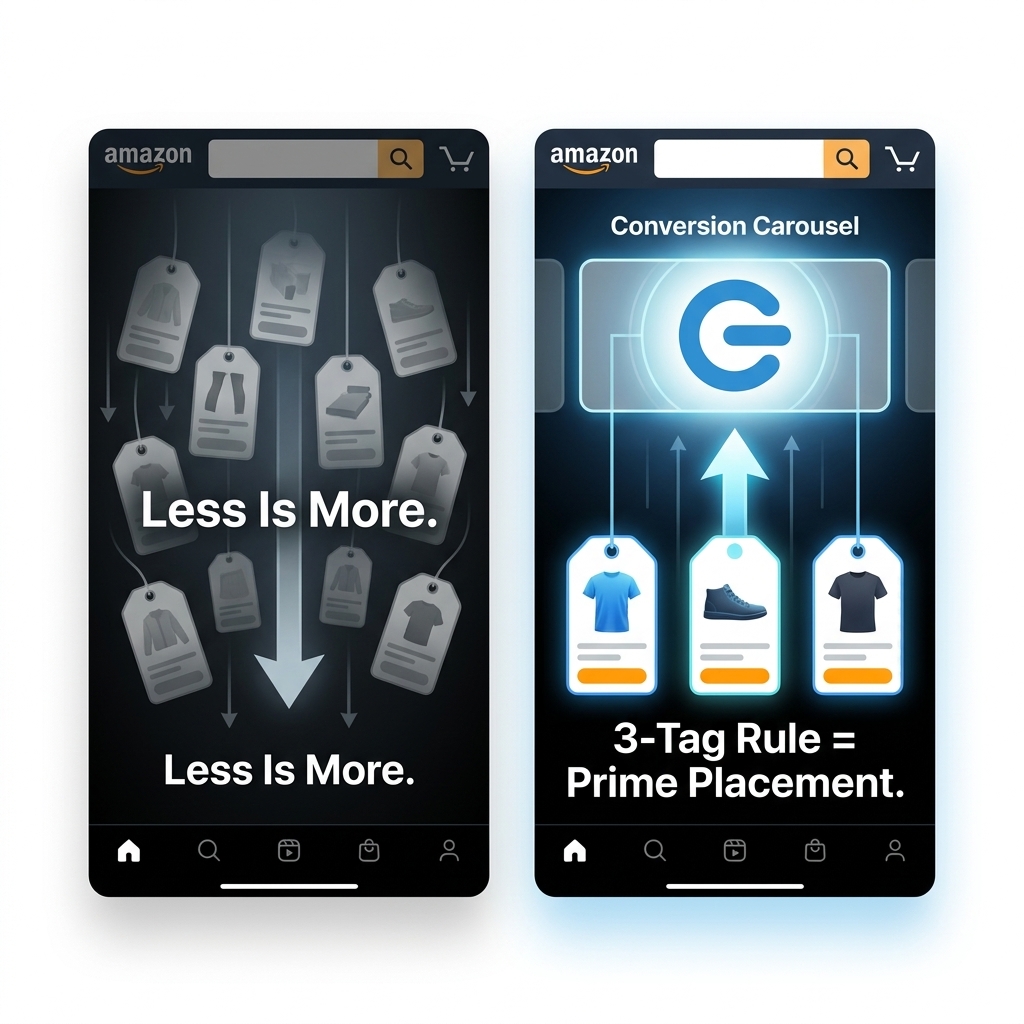
- Tagging more than three products in a shoppable Amazon video means you likely won’t show up in the upper conversion carousel, Amazon’s prime real estate for sales.
- Despite official guidance suggesting up to 10 tags, creators and Logie data confirm: three or fewer is the true sweet spot for placements (and income).
- Regularly review and revise your tagged videos for maximum visibility and avoid these costly, common pitfalls dragging your earnings down.
Why the 3-Tag Rule Matters (And What Most Creators Still Get Wrong)
On Amazon, it’s often the little technical tweaks that separate creators raking in solid passive income from those who feel invisible to the algorithm. One of the most overlooked (but lucrative) best practices in 2026 is the “3-tag rule” for shoppable videos, a guideline emerging not from Amazon’s documentation, but real Logie community wisdom and hard data.
Let’s dig into what the ‘upper conversion carousel’ really is, why Amazon’s advice doesn’t always match reality, and how you can land your videos where sales actually happen.
Decoding the Carousels: Why ‘Upper’ Placement Is Everything
Amazon’s product pages feature multiple video carousels: an upper conversion carousel and a lower one for A/B and emerging content. Ehud Segev, summarizing Logie’s analysis, revealed:

The upper carousel is what Amazon considers the conversion carousel …they keep rotating a lot of the videos in the lower carousel because they want to do A/B testing. Once a video starts converting, that’s when they push it to the top.
Ehud Segev
Put simply, if your video makes it to the upper carousel, it’s outperforming the crowd, drawing in clicks, driving conversions, and is likely to be showcased longer and more widely. If you don’t, you’re stuck in the test rotation below (or, worse, not visible at all).
The Data-Driven Truth: More Than Three Tags Will Sideline Your Video
While Amazon’s official guidelines might suggest tagging up to 10 products in a shoppable video, the Logie community and a year’s worth of peer-driven experiments tell a very different story.
If you tag more than 3 products, you won’t show up in the upper carousel, and that’s where the money is at.
Michelle Johnson
This insight, once a hunch, is now a near-universal reality. Creators across categories have repeatedly tested this: videos with 4+ tags are routinely excluded from the all-important upper slot. All the real-world tests point to three as the magic number, and honestly, sometimes choosing just one or two products works even better.
Why Does This Happen? The Platform Logic Behind the Limit
- Clarity for the Shopper: Over-tagged videos confuse the viewer and dilute relevance. Amazon’s algorithms prioritize concise, relevant tags for the seamless, “one-product, one-decision” buying journey.
- Algorithmic Placement Preference: Fewer tags make it easier for Amazon to slot your video right onto the specific product pages, giving you a much better shot at that coveted upper spot. When you add too many tags, your video can get lost in the shuffle.
- Testing, Not Theory: The Logie community beat the official docs here, peer testing and real-earnings evidence trumps static advice from Amazon’s help center.
Photos vs. Videos: How Tagging Strategy Differs (And Why It Matters)
It’s tempting to extrapolate these rules to all content types, but here’s where specificity matters. Photos and idea lists on Amazon do not follow the same carousel placement rules as shoppable videos.
- Shoppable Videos: Max 3 tags (ideally 1–2); placement on upper carousel is crucial for most categories.
- Shoppable Photos: Can tag more items; however, these rarely end up on product detail pages and tend to surface elsewhere (like search or after-checkout pages).
- Fashion & Niche Categories: Some categories (fashion, jewelry, shoes) don’t even have an upper carousel, so your tagging strategy/experimenting is even more important.
Anchoring your niche? Check out the audience retention advice in How to Build and Keep an Audience on Pinterest in 2026 for platform-wide tips.
Community-Proven Workflows: How Often Should You Review & Revise Tags?
One peer-to-peer insight: most veteran creators audit their videos for tag hygiene monthly at a minimum. If you have a large catalog, consider weekly sessions. Why?
- Amazon is constantly removing or shifting products (new ASINs, out-of-stocks), so untagged or “dead” tags accumulate fast.
- Refreshing the tag count on stagnant videos may revive placement and sales.
- Tools like Logie, Oink, and others can batch-identify videos stuck below the carousel line.
For a step-by-step guide to surviving audits and mysterious placement drops, see Surviving Amazon Influencer Audits & Shadowbans 2026.
Exceptions & Frontiers: What About Non-traditional Placements?
Some lower-value or new product categories (and content like Idea Lists or Collages) don’t always follow the “upper carousel” placement rules. Experimentation is key here. For new platforms, YouTube’s affiliate program offers greater transparency and may soon rival Amazon’s ecosystem. See Why YouTube Affiliate Is the Next Big Creator Opportunity for a strategic pivot.
Action Steps: Audit, Revise, and Dominate the Carousel
- Audit your catalog: Use Creator Hub, Logie, or your preferred tool to flag videos with 4+ product tags.
- Edit and reduce: Prioritize tagging only the most relevant 1–3 products per video. Remove extraneous tags.
- Monitor placement: Track your refresh results over the next two weeks. Note traction, views, and commissions spikes.
- Set reminders: Time-block weekly or monthly tag-checks, especially after product ASIN/availability changes.
- Network and share: Engage in community sessions and Logie groups. Sometimes the fastest algorithm clues come from real creators, not docs.
It’s not about maximizing your tag count. It’s about maximizing your chances at prime exposure and earnings. In a fast-moving year, let this three-tag rule be your competitive edge.
Final Thoughts: Less Really Is More – But Don’t Blindly Trust Official “Best Practices”
As Amazon influencer marketing continues to mature, real-world data is proving more powerful than static documentation. Reduce your tags, stay agile with regular content audits, and trust the insights other top-earning Logie creators share. The upper carousel is where conversions happen. Be strategic, not maximalist.
Ready to put the three-tag rule to the test? Update a few videos this week, and let us know what happens!