
Home Blog Page 2

AMAZON INFLUENCER PROGRAM

0

Ads, Policy & The Hidden Hierarchy

What creators need to know about uneven enforcement, paid promotion rules, private equity deals, and how to protect their business

TL;DR Quick Strategy

▶  Amazon’s ad and promotion policy is selectively enforced. Top creators often get privileges that regular creators simply cannot access.

▶  Large private equity and agency deals mean financial muscle and compliance teams sometimes trump talent and ethics.

▶  To stay safe and profitable, understand your terms, document every permission, and diversify across platforms. Never depend on Amazon alone.

A Tale of Two Rule Books

The Amazon Influencer Program once promised a level playing field where the best content won, and the rules were the same for everyone. That promise has quietly eroded. 

Today, a handful of top creators run ads to their livestreams, Storefronts, and videos without consequence, while most influencers, especially those newer to the game, risk account penalties for doing the exact same thing.
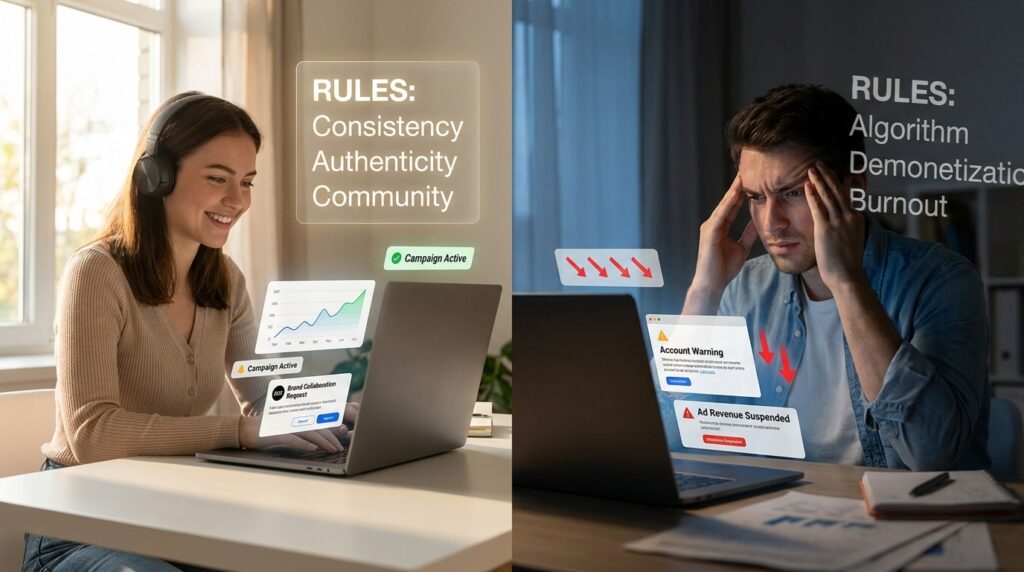
The result? Confusion, resentment, and a steady stream of public callouts across creator communities. 

When you see someone doing something Amazon supposedly prohibits, it’s natural to wonder: are they cheating, or do they simply have a deal you don’t know about?

THERE ARE DIFFERENT RULES FOR DIFFERENT PEOPLE IN THIS PROGRAM. YOU SEE THEM DOING IT BECAUSE THEY HAVE PERMISSION! … WHEN WE SEE SOMEONE DOING SOMETHING THAT AMAZON HAS SAID WE CAN’T DO, YOU KNOW, THERE’S THAT LITTLE PIECE THAT SAYS ‘WITHOUT PERMISSION, OR WITHOUT AUTHORIZATION.’ Ileane Smith, Amazon Influencer

Seasoned community members have watched top earners receive dedicated Amazon account managers, negotiated contract addenda, and pilot program invitations while everyone else is left second-guessing vague, ever-changing terms of service.

The Official Creator Ads Framework 

To be clear: Amazon does have an official, legitimate ad program for influencers. The Creator Ads program and its sub-feature, Creator Ads Boost, allow Amazon Influencer Program members to have their best content extended across social platforms like Facebook, Instagram, TikTok, Pinterest, Snapchat, and Reddit.

Here’s what the official policy actually says: Influencers can opt in or out of Creator Ads at any time. 

Amazon uses its own ad budget to amplify your content, and you earn commission income on resulting sales, grouped into your standard on-site commissions. 

Creator Ads Boost, meanwhile, is currently focused on Instagram Stories for members who have authenticated their Instagram handle to their Amazon Influencer Program account.

The critical distinction and the source of most community confusion is this: Amazon runs these ads on your behalf using Amazon’s budget. 

Creators themselves running paid ads to their own storefronts or content, using personal ad spend, is a completely separate (and far more legally murky) situation.

Key Distinction: Who’s Running the Ads?Official Creator Ads: Amazon boosts your content using Amazon’s budget. Opt-in, commission-based. This is allowed. Self-funded Storefront Ads: A creator personally running paid ads to their own storefront or livestream. This is where policy gets grey, and enforcement gets uneven. Third-Party Ad Boost Services: External agencies or private equity groups offering to buy ads on a creator’s behalf. This is where serious compliance risk lives.

Where Private Equity Enters the Picture

The drama extends well beyond influencer hierarchies. Some creators have described being approached by private equity funds and agencies offering to pour serious money, we’re talking six figures per month, into ad campaigns on their content, in exchange for a cut of any Amazon bonuses generated. It sounds lucrative. But the compliance question is where things unravel.

WE WERE APPROACHED BY A PRIVATE EQUITY FUND … RUNNING A GROUP WHO WOULD PUT UP TO 6 DIGITS A MONTH OF ADS ON OUR CONTENT … THEY WANTED A PERCENTAGE OF WHATEVER BONUS WE GOT FROM AMAZON. BUT WHEN IT CAME TO COMPLIANCE, NOBODY WOULD PUT IN WRITING THAT IT WAS AMAZON COMPLIANT … SO WE NEVER DID THE DEAL. Doug, Review Business Academy

That’s the tell. Any agency or fund genuinely operating within Amazon’s rules should have no problem confirming compliance in writing. 

When that confirmation never comes, it’s because they can’t give it. Creators with large legal teams or inside relationships sometimes proceed anyway, betting that their revenue footprint makes them too valuable for Amazon to penalize. For most creators, that bet is not worth making.

Understanding the Tiered Creator Ecosystem

Amazon’s Creator Stars program, launched in August 2024, makes the tiered nature of the program explicit. Creators earn points based on shipped revenue and link clicks, and are sorted into Bronze, Silver, Gold, and Platinum tiers. 

Each tier unlocks progressively better benefits: early access to deals, seasonal gift boxes, event invitations, and even the ability to co-design Amazon Private Brand products at the Platinum level.

This formal tier structure helps explain partially why some creators appear to operate under different rules. Higher-tier creators have more direct relationships with Amazon’s internal teams, more access to pilot programs, and more leverage to negotiate contract addenda. 

That access is real, and it is earned through performance. What it does not mean is that the rules themselves are different: it means those creators have negotiated specific written permissions that most creators have not.

The community frustration is valid. When those permissions are not publicly disclosed, and when other creators observe behavior that appears policy-violating, the natural assumption is that there’s favoritism at play. Sometimes there is. Sometimes, there’s simply a written agreement the observer doesn’t know about.

The Policy Landscape Is Tightening

Amazon has updated the Associates Program Operating Agreement multiple times between late 2024 and 2025, often via help page edits rather than loud announcements. 

Three major shifts stand out: stricter intellectual property enforcement (no more modified logos or screenshots from product pages), changes to commission calculations and category eligibility, and expanded ineligible product categories that can quietly eliminate a creator’s top earners overnight.

Enforcement is increasingly automated. Amazon’s policy now explicitly reserves the right to monitor, crawl, and investigate your content and to permanently withhold commissions if the platform considers you in breach. 

The shift from manual review to algorithmic enforcement means even well-intentioned creators can get flagged without warning, and appeals are slow.

The FTC adds another layer. Disclosure requirements for affiliate content are non-negotiable, and both Amazon and external regulators are paying closer attention.

Compliance has quietly become one of the most important competitive advantages a creator can build. Creators who treat it as an afterthought are increasingly the ones who lose accounts or commissions without understanding why.

What Smart Creators Are Doing Right Now

The creators who are weathering policy changes and community drama without losing their income share a few consistent habits:

•      Investigate before you copy. Before copying a strategy you see another creator using, research whether they’ve publicly acknowledged specific permissions. Ileane Smith’s point stands: if you see someone doing something Amazon says requires authorization, investigate before you imitate.

•      Demand written compliance confirmation. If an agency or fund approaches you with an ad-boost offer, require written confirmation that the arrangement is Amazon-compliant. If they can’t provide it, walk away. No six-figure promise is worth a permanent account ban.

•    Build loophole-free content systems. Build content workflows that do not depend on loopholes, pilot programs, or special deals you haven’t officially been granted. Evergreen, cross-platform content ages well. Exploits don’t.

•   Stay active in creator communities. The Logie community, along with other trusted creator networks, often surfaces policy changes and enforcement patterns faster than official Amazon communications do. Active community membership is not a nice-to-have; it’s an early warning system.

•      Treat platform diversification as non-negotiable. Amazon can change its commission structure, its category eligibility, or its enforcement posture at any time. Creators who treat Amazon as their only income source are one policy update away from a serious problem. Diversify early and continuously.

The Bottom Line

The Amazon Influencer Program is not a level playing field. It never fully was, and with the Creator Stars tier system and increasing back-channel negotiations, it is becoming less so over time. That is frustrating, but it is also manageable if you approach it with clear eyes.

The creators who thrive long-term are not the ones who find the most aggressive loopholes. They are the ones who build businesses resilient enough that no single platform update can collapse their income. 

They document everything, ask before they act, and compete not by copying insiders, but by being informed, consistent, and genuinely useful to their audiences.

When in doubt: document, ask, and protect your business. Policy knowledge is creator power. 

How Amazon’s Multi-User Storefront Access Powers Smart Creator Teams

0
creator
TL;DR: The Quick Strategy
  • Leverage multi-user access: Amazon lets you delegate admin, content management, and reporting, without losing account control.
  • Scale with safety: Real creators share how to onboard VAs, family, or interns securely using access tiers and clear communication.
  • Workflow is your edge: Those who build teams and systematize tasks go from part-time hustle to full-scale business with less burnout and more revenue.

The Collaboration Revolution: Delegation on Amazon Storefronts

Remember when ‘going solo’ as an Amazon creator felt heroic (and exhausting)? There’s a smarter, saner way forward.

Running an Amazon influencer storefront in 2026 isn’t a solo sport anymore; it’s project management, tech, and hustle all at once. Whether you’re scaling up with a VA, training your teen, or building an agency operation, multi-user access is Amazon’s answer to influencer burnout.

Why now? With platforms like Logie replacing tedious manual work, commissions evolving, and competition heating up, creators who systematize (not just optimize) their workflow will survive and thrive.

This in-depth guide, based on real community discussion, walks you through best practices, guardrails, and smart delegation for the modern storefront.

What Is Multi-User Storefront Access (and Why Should You Care)?

Thanks to Amazon’s multi-user storefronts, you can hand off tasks (like admin, content management, or just reports) to others without ever putting your earnings at risk. You stay in charge, but you’re no longer flying solo. Here’s how top creators describe the new freedom:

“you could change from part-time to full-time [with] help. it’s all about the time you put in. If you add somebody to your team, it’s beneficial for you all the way around.” – Altovise Pelzer

Instead of shouldering every task (uploads, descriptions, product research, analytics) you can finally plug trusted partners into the workflow.

Real-World Delegation: From VAs to Family to Interns

Here’s where creators are getting especially inventive…

  • Virtual Assistants (VAs): Kimberly Millionaire notes, “She had her own credentials. I could control what she can and cannot see… storefront-only access.” Separation of permissions means your VA can work, but not touch bank info or sensitive analytics.
  • Family & Partners: Husband-wife teams, parents, and teens are jumping in. Some parents even turn their kitchen tables into content bootcamps, letting teens earn a paycheck (sometimes their first) for uploading videos and learning admin basics.
  • College Interns: Tap business or marketing students for short-term help and real-world learning. Altovise: “If you know somebody that’s in college for business… have them do an internship with you. They’re getting the experience, you’re getting the help.”

Pro tip: Know your local regulations before engaging minors. Some states (and countries) require formal setups for teens doing paid work.

Safety & Control: Guardrails That Work

Is letting others into your storefront a security nightmare? Not if you use Amazon’s built-in controls and strong team management discipline.

  • Unique logins: Each user has their own access credentials. You keep control over who sees what. VA can’t transfer money or update settings.
  • Permission tiers: Limit team members to editing, reporting, or storefront-only work.
  • Audit trails: Amazon will notify the admin (you!) of major changes, especially if sensitive details (like payout accounts) are touched. As Kimberly notes: “If I changed your banking info, Amazon notifies you.”
  • Trust & communication: The community agrees: successful delegation is built on trust, clear boundaries, and ongoing dialogue. Start with small, low-risk tasks, and scale access as comfort grows.

For agency teams, this is a breakthrough. But even solo creators benefit; suddenly, going full-time or launching a new series is a reality, not a dream.

Related: See how these workflow upgrades fit into larger creator migration trends in Why Social Commerce Creators Are Moving Off Amazon, and How to Win in 2026.

Smart Delegation in Action: Community Strategies

Here’s how real influencers are getting leverage:

  • Andrew: “I’ve thought about offering my help to our community members for managing storefronts.”
  • Antoine Speller: “I got my sons as my VAs…this is a great opportunity to pump it up here.”
  • Altovise: “When my children did admin work, I was able to be that reference for them. They learned skills, and every job after, they were ahead.”

And if you’re scaling but tight on budget, using a college student as an intern not only offsets labor costs but also offers them resume-boosting experience.

What About Risks?

No tool is risk-free. You’re still responsible for supervising, training, and doing regular audits. It’s not a “set and forget,” but with collaboration tied to clear permissions, you’re protected from account breaches and have full visibility over every change.

For extra compliance and platform-specific best practices, see What Every Amazon & TikTok Creator Must Know About TOS Changes in 2025.

Logie: Powering the Modern Creator Team

Advanced tools like Logie make workflow handoffs seamless. Assign brand negotiations to your agency lead, bulk content uploads to your VA, and keep analytics private. Logie synchronizes team collaborations and campaign management, so you spend more time growing your business (not teaching workflows from scratch). See how smart teams are using Logie to orchestrate multi-platform creator scaling while controlling permissions, deadlines, and reporting.

Looking at broader moves toward SMS, full-funnel engagement, and data transparency? Check our analysis: Why Amazon Is Pushing Creators Toward SMS.

How to Build Your Creator Team Safely

  1. Map your workflow: Where do you waste time? Identify upload, organization, or reporting tasks that don’t require your direct touch.
  2. Start small: Appoint a trusted VA or intern with minimal access. Let them handle a batch of basic updates, monitor performance and communication habits.
  3. Educate & document: Record Loom videos or short guides to clarify your SOPs. Use Logie to automate training documentation where possible.
  4. Set review points: Weekly or biweekly check-ins catch problems and allow iterative trust-building.
  5. Level up: As your comfort grows, expand access, always protected by permissions and Amazon alerts.

Conclusion: From Solopreneur to Scalable Brand

Amazon’s multi-user storefront access is a game-changer for creators who want to grow without burning out. By smartly delegating, using built-in safety nets, and embracing tools like Logie you can turn your influence into a real, scalable business, where the focus stays on creativity and connection, not admin burden.

What’s your first step? Try bringing one trusted collaborator on board this week and let us know how it goes in the community!

creator

Is Amazon’s AI Helping or Quietly Hurting Your Discoverability?

0
TL;DR: The Quick Strategy
  • AI video titles affect discovery: Automated titles can boost visibility – but only if you feed the right context and keywords into your content.
  • Watch the pitfalls: Salesy, generic, or “off-brand” AI titles can hurt credibility and dampen long-term performance (and sometimes even trigger rejections!)
  • Take back control: Top creators succeed by tweaking scripts, balancing efficiency with authenticity, and double-checking every AI-suggested caption and title before posting.

 If you’ve spent any time in the Amazon Influencer Program lately, you’ve noticed the shift. AI-generated video titles. One-click captions. Auto-tagging that promises to save you hours. 

Amazon officially launched its Caption AI tool for creators in late 2025, a feature that generates a caption for your shoppable post with a single click, giving you a starting point before you hit publish. 

On paper, it sounds like a win. In practice? The creator community has a lot more to say about it.

The real question isn’t whether AI is useful. It’s whether you’re using it in a way that moves the needle or just making your content sound like everyone else’s.

The Hard Truth: AI Only Works With What You Give It

Here’s something a lot of creators miss when they complain about bad AI titles: the problem often starts before the AI even touches your content.

Altovise Pelzer put it plainly during a recent Logie community roundtable:

“IF YOU DON’T LIKE THE TITLES THAT THE AI HAS BEEN GIVING YOU, THEN IT’S SAYING SOMETHING ABOUT WHAT YOU’RE SAYING IN YOUR VIDEO. BECAUSE IT’S USING YOUR VOICE, IT’S USING WHAT YOU TALK ABOUT TO CREATE THESE TITLES.”

That’s worth sitting with for a second. Amazon’s AI is transcribing what you actually say and building titles from it. 

If your on-camera delivery is vague lots of “this thing,” “amazing product,” “you’re going to love it” don’t be surprised when the title that comes back is equally vague.

Amazon handles more than 4 billion product searches every month, making it effectively the world’s second-largest search engine. 

The algorithm Amazon’s A10 is constantly learning from relevancy and performance signals: keyword matches, click-through rates, conversions, sales velocity. Your video title is a signal. 

And if that signal is weak or generic, you’re invisible.

When AI Gets It Wrong

That said, scripting with intent isn’t a guarantee. Even well-crafted, specific videos can come back with titles that miss the mark and veteran creators are noticing.

Jeff, an established Amazon influencer, captured a frustration that’s becoming increasingly common:

“The Amazon AI titles are too salesy. They’re over-the-top positive, even when the video is just informational and not promotional. I don’t gush about the product.”

Altovise Pelzer goes further:

“The more terribly misrepresented titles I see, the less I trust everything else Amazon introduces with AI.”

This is a documented pattern. Research from the Logie creator community has found that AI-generated captions across Amazon’s platform tend to pull from Amazon’s own promotional phrasing language designed for sales, not nuance. 

Comparison reviews, honest critiques, or “here’s what I actually think” often get flattened into generic praise that doesn’t represent what the creator actually said.

The ripple effects are real:

  • Trust erosion. When a title oversells what’s genuinely an honest review, viewers feel the disconnect and won’t click next time.
  • Missed nuance. Negative experiences, head-to-head comparisons, and niche use cases the content that actually helps buyers decide get stripped out.
  • Brand name errors. AI mishandling brand names in titles can trigger content rejections, stalling your entire publishing workflow.
  • Sameness fatigue. When dozens of videos on the same product all sound identical, the carousel becomes wallpaper. Buyers scroll past without registering any of them.

The Visibility Problem Nobody’s Talking About

Even creators who love the speed of AI captioning are running into a harder issue: more content doesn’t automatically mean more visibility.

Sandy, a creator who participated in community feedback on Amazon’s AI photo caption rollout, shared something that resonated widely:

“The AI caption is actually pretty cool. I’m not sure how it helps us get more visibility. Because… there’s no visibility with my photos yet. I’ve uploaded probably a good, I don’t know, 50 photos? Zero views on every single one of them.”

This gets at something important. AI tools can help you publish faster. They cannot manufacture discoverability if the underlying content, keyword strategy, or platform signals aren’t there. 

The A10 algorithm rewards relevance and conversion and those come from what shoppers actually search for, not from what the AI guesses sounds good.

Research into influencer content and search discoverability is increasingly clear: if your content doesn’t contain the keywords your audience is actually typing into Amazon’s search bar, it won’t be surfaced in the moments that matter most. The tool matters less than the strategy behind it.

What Actually Works: Scripts, Strategy, and Ruthless Editing

Creators who are winning in this environment share a few habits in common.

Script with search terms in mind. 

Ehud Segev, CEO of Logie Inc known for his systematic approach to Amazon content, recommends being intentional about what you say before the camera even starts rolling:

“Do not use the brand name, unless it’s well-known. Instead, name the product type and core benefits.”

In practice, that means layering in descriptive, searchable language throughout your video not just at the top. Instead of saying “this Lantrax lamp is great,” you’d say something like: “This camping lantern is one of the lightest hiking lamps I’ve tested compact, rechargeable, and actually durable enough for extended trips.” 

Three keyword opportunities in one sentence. The AI and Amazon’s algorithm has something to work with.

Treat AI output as a first draft, never a final one. Nicole Bateman, a top Amazon seller, advises creators to use AI suggestions as a baseline and then inject personality:

“Make your captions uniquely ‘you’ mention exactly why you love the product, give a quick tip, or target a specific holiday problem the product solves.”

That last part is more strategic than it sounds. Seasonal and problem-specific language maps directly to how real shoppers search. “Rechargeable lantern for camping” and “best gift for outdoor dad” are both legitimate keyword angles. One AI-drafted caption with your personal edit can cover both.

Protect your honest take. If you’re being nuanced or critical, don’t let the AI rewrite your perspective as a sales pitch. Your credibility is a long-term asset. A title that accurately reflects “here’s what I liked and what I didn’t” will outperform a hype-driven headline over time because it sets expectations correctly and attracts viewers who actually want that kind of honest review.

Watch for compliance flags. Many brands now reject titles that include their name or that read as overt advertising claims. Check the current TOS guidelines before publishing and flag anything that looks like a rejection risk before it stalls your queue.

Track what’s actually working. Amazon’s algorithm measures click-through rate and conversion at the carousel level. That means the videos getting clicked on stand out and the ones that don’t eventually stop being shown. 

Run title variations, note what performs, and build on it. A/B testing titles isn’t just for ads. It’s for creators who want to keep showing up.

The Bigger Picture

The creator economy is moving fast. The global influencer marketing industry hit roughly $32.55 billion in 2025 up more than 35% year over year. 

Micro-influencers (10,000–100,000 followers) are seeing up to 60% higher engagement than larger accounts, precisely because their content feels personal and specific. That authenticity premium is exactly what generic AI output works against.

Tools like Logie are trying to bridge that gap giving creators the ability to generate and A/B test captions, track click behavior, and surface optimal keywords while keeping their own style intact. The goal isn’t to replace the human element. 

It’s to make the human element more effective.

But the underlying principle holds regardless of what tool you use: AI is only as good as the context and intent you bring to it. 

Feed it vague language, and it returns vague titles. Feed it specific, keyword-rich, honest content and it becomes a genuine asset.

The Bottom Line

AI tagging isn’t your enemy. Lazy use of it is.

Every title Amazon auto-generates for you is a starting point, not a finished product. Efficiency matters, but not at the cost of the trust and specificity that actually drives clicks, conversions, and repeat viewers.

The creators breaking through the noise right now aren’t the ones publishing the most. They’re the ones publishing the most intentionally with titles that match what buyers are actually searching for, that honestly represent the content inside, and that sound like a real person thought about them.

That’s still a competitive advantage. And no amount of automation is going to close that gap on your behalf.

Amazon Live in 2026: The Complete Influencer Guide to Livestreaming, Brand Deals, and Building Real Income

0
TL;DR: The Quick Strategy
  • Amazon livestreaming is making a major comeback, and brands are on the hunt for creators to star in on-page and cross-platform campaigns.
  • Successful creators are packaging livestreams, leveraging multistream tech, and repurposing clips for maximum ROI.
  • Jumping on robust workflows and focusing on open, honest brand deals is the edge you need. This is especially true now, in the new era of post-reporting.

Why Livestreaming Is Back and Bigger Than Before

Let’s start with what’s actually happening right now: brands that used to send a free product and hope for a mention are now reaching out and asking for full livestream packages. 

Some of them want you to go live directly on their Amazon storefront page. That’s a very different conversation and a much better-paid one.

Livestream commerce in the US hit around $50 billion in 2023 and is on track to reach $68 billion by 2026, accounting for over 5% of all e-commerce. Nearly 79% of online shoppers have already watched a live shopping stream, and 39% have bought something during one. 

Around 83% of live shoppers say a product demo makes it easier to commit to a purchase. People aren’t just watching, they’re buying.

Amazon’s own internal data backs this up. Audiences who see an Amazon Live campaign alongside at least one other ad product show a 17x higher purchase rate and a 55% higher branded search rate compared to those who didn’t see the live content. 

Nine out of ten Amazon Live viewers discover a product they didn’t already know about during a stream. That’s product discovery happening in real time, and brands have taken notice.

Creator Altovise Pelzer put it plainly:

“I’VE BEEN GETTING BRANDS REACHING OUT LOOKING FOR INFLUENCERS TO LIVESTREAM THEIR PRODUCTS. SOME OF THEM ARE EVEN LOOKING FOR STREAMERS THAT WILL LIVESTREAM ON THEIR ACTUAL PAGE, WHICH GIVES YOU ANOTHER OPPORTUNITY IF YOU KNOW HOW TO FINAGLE THAT AND DO SOME CONTRACTS.”

Two forces have pushed this momentum forward: the fallout from the Amazon March 9 Reporting Reset, which pushed brands to rethink how they measure creator performance, and the arrival of affordable multistreaming tools, RTMP setups, and synced graphic overlays that let a single creator broadcast to three or four platforms at once without a production crew. The playing field tilted, and the creators who saw it early moved fast.

One more signal worth noting: in February 2025, Amazon quietly shut down Amazon Inspire, its short-form social shopping feed. This tells you exactly where Amazon is placing its bets on intent-driven commerce, not passive scrolling. 

What’s Actually Changed in 2026

A lot of people still think of Amazon Live as a secondary feature. It isn’t anymore.

Your stream can now appear directly on product detail pages, in category feeds, and through Creator Hub placements. When you go live, you’re not just broadcasting to your followers; you’re potentially showing up right where someone is already deciding whether to buy.

The other major shift: your stream doesn’t disappear when you stop broadcasting. Livestream replays become permanent, shoppable content on Amazon. A stream you did two months ago can still be earning you commissions today if someone stumbles across it while browsing. 

That’s something TikTok Live and Instagram Live fundamentally can’t offer, and it changes the economics of how you invest your time.

Amazon has also been building out the Creator Hub with seriously new analytics panels, upgraded brand-match tools through Creator Connections, and better storefront customization. 

A lot of this came in response to TikTok Shop and Walmart Creator eating into creator loyalty. Amazon is competing hard for creators who drive real sales, and the infrastructure improvements show it.

The Creator Stars Tier System 

In August 2024, Amazon introduced Creator Stars, a tiered rewards program that’s now central to how the platform ranks and surfaces creators. There are four levels: Bronze, Silver, Gold, and Platinum.

You move up by earning points: 1 point per $100 in shipped revenue, and 1 point per 1,000 clicks. You need at least 100 link clicks or $1 in shipped revenue in the previous quarter just to stay eligible.

Here’s what each tier unlocks:

Bronze Content placement across Amazon, access to Creator Connections campaigns, and the Amazon Private Brands Handbook.

Silver Early deals from Amazon Private Brands, free Kindle Vella stories, and better access to major shopping events like Prime Day.

Gold and Platinum Premium placement, priority during major shopping events, and direct access to Amazon’s managed brand partnership programs.

Your tier determines whether your content gets seen, whether Creator Connections campaigns find you, and whether Amazon’s team has you on their radar when booking creators for major events. This is the system that separates casual creators from those building a real business.

How the Money Actually Works

Commission Rates by Category

Amazon pays between 1% and 20% commission depending on the product category. As of 2026, the top-paying categories are:

  • Amazon Games up to 20%
  • Luxury Beauty around 10%, with a new performance bonus stacking an additional 2% for creators who drive over $50,000 in quarterly sales (already rolled out to around 3,200 qualifying creators in Q1 2026)
  • Digital music and handmade items are around 5%
  • Most home and consumer goods 3–4%

Two Earning Streams You Need to Know About

A lot of new creators miss the fact that there are two separate income streams running simultaneously.

  • Off-site earnings come from traffic you send to Amazon from your own social channels. These run on a 24-hour cookie window. If someone clicks your link and buys within 24 hours, you earn.
  • On-site earnings come when Amazon surfaces your videos and photos to shoppers already browsing the platform. These are tracked under a separate Store ID, and they don’t require you to do anything once the content is up. For creators who post consistently, on-site earnings quietly become a passive income layer that compounds over months.

Amazon also runs commission boosts around Prime Day and other major shopping events. In 2025, beauty, kitchen, home essentials, and jewelry all saw temporary 3–6% lifts. 

If you’re not timing content releases around these windows, you’re leaving real money on the table.

What Creators at Different Levels Are Actually Earning

Here’s where it gets concrete, based on 2026 industry data:

  • Nano-influencers (under 10K followers) median monthly storefront earnings now sit around $1,340, with the top 25% earning $2,100 or more. That’s a 34% jump from 2025, mostly driven by TikTok-to-Amazon referral traffic growing 58% over the same period.
  • Micro-influencers (10K–100K followers) median monthly affiliate commissions are up 22% year-over-year, averaging around $312 per month in pure commissions. Before brand deal fees, seasonal boosts, and on-site earnings are factored in.
  • Macro-influencers (50K–1M followers) averaging $6,750 per campaign, inclusive of commissions and brand fees, 35% higher than 2025. Home improvement and personal finance niches are leading that growth.
  • Mega-influencers (1M+ followers) top earners are commanding $85,000 to $120,000 per contract when bundling Amazon Live appearances with exclusive storefront collections and Prime Day content. The top 500 Amazon-affiliated mega-influencers collectively drove over $2.3 billion in GMV in 2025.

The takeaway is to notice that creators at every level are seeing income grow, and that the growth is being driven by the same factors: better content, smarter category selection, and consistent activity rather than raw follower count.

Getting Into the Program

The Amazon Influencer Program accepts creators from YouTube, Instagram, Facebook, and TikTok. Instagram and Facebook applicants need business accounts. 

There’s no official minimum follower count, but you’ll need to show an active, engaged presence, especially if you’re on the smaller side.

Amazon cares more about engagement quality than follower count. An engagement rate above 5% is considered strong for micro-influencers. YouTube and Facebook applications get near-instant decisions; Instagram and TikTok can take up to five days.

The most common rejection reasons are low engagement, inconsistent posting, and content that lacks a clear product focus. You can reapply after addressing these, and many creators make it through on the second attempt.

Once you’re in, move quickly. Upload content within your first week. Amazon has shown a pattern of faster indexing for creators who post early. Even a simple comparison video or product review counts. Your first few pieces of content immediately start building your Creator Stars metrics, so there’s no reason to ease in slowly.

Quick tip for beginners: Don’t get stuck on follower count. Amazon has approved accounts with fewer than 1,000 followers when the engagement was genuinely strong. From day one, lean into high-commission categories, beauty, luxury goods, and games rather than trying to cover everything.

The Brand Deal Opportunity and How to Package It

The brand outreach Altovise described isn’t reserved for big accounts. DTC brands in particular are increasingly approaching micro and mid-tier creators specifically because they’re more niche, more affordable, and often more trusted by their audiences than mega-influencers who seem to promote everything.

Creator Ileane Smith described the leverage this creates:

“THE NUMBER ONE IS TO LEVERAGE AND WIN BRAND DEALS… IF YOU CAN INCLUDE, ‘I’M GONNA POST IT ON INSTAGRAM, I’M GONNA POST IT ON TIKTOK, AND I’M GOING TO FEATURE IT IN A LIVESTREAM’… NOW YOU START TO STAND OUT. BECAUSE MOST PEOPLE ARE NOT GONNA DO LIVE STREAMS, RIGHT?”

That’s the gap. Most creators aren’t going live. The ones who are and who show up with a structured offering rather than a vague willingness are the ones getting the calls.

What a Strong Package Looks Like

You don’t need to have everything figured out from day one, but here’s how to structure your offering as you grow:

  • Entry-level: A single sponsored live stream with a product carousel, a branded promo code, and a short post-stream clip delivered to the brand. Clean, simple, easy for a brand to say yes to.
  • Mid-tier bundle: Monthly slots across two or three streams, branded overlays, dedicated affiliate links, live Q&A, and a performance report at the end of the month. This is where you start building recurring brand relationships rather than one-off gigs.
  • Premium: Full cross-platform activation, Amazon Live plus simultaneous multistreaming to the brand’s own storefront page, pre-promotion on Instagram and TikTok, repurposed Reels after the fact, and a commission share on ongoing sales. This is a media partnership, not a sponsored post.
  • That last option, hosting a live stream on a brand’s own Amazon storefront, is one of the most underpriced offerings in the creator market right now. Brands will pay a serious premium for a creator who can run the entire broadcast on their digital shelf, effectively acting as a live shopping host. If you have even basic production experience, this belongs in your media kit.

Getting the Contracts Right

Every deal should clearly cover: deliverables (how many streams, how long, which platforms), usage rights for all recorded content and clips, how performance will be reported, any exclusivity terms and their duration, and payment structure.

A hybrid model, a modest flat fee plus a commission percentage, works well for both parties. The brand pays less upfront but stays aligned with outcomes. 

You get a guaranteed floor with upside if the stream performs. It builds trust faster than flat-fee-only arrangements and tends to lead to renewals.

Creator Connections 

Creator Connections is Amazon’s internal brand marketplace, and it deserves far more attention than most creators give it. 

It lives inside your influencer dashboard and lets you browse and accept paid campaigns that brands have already posted, often for products you’ve already filmed content about.

If you’ve been publishing consistently, Creator Connections effectively turns that back catalog into a recurring revenue source. Build a daily habit around checking it.

The Tech Setup

You don’t need a studio. But there’s a real difference between a shaky phone stream and a properly produced broadcast, and brands notice. You don’t have to spend thousands; you just have to be intentional.

Starting Out: The Native App

The Amazon Live Creator App is free on iOS and Android and is completely workable for getting started. You add your featured products, write a title, hit go live, and it handles the rest. Built-in analytics track your performance and Creator Stars progress. For your first several streams, this is all you need.

Going Further: OBS Studio and RTMP

Once you’re comfortable on camera and want to level up to better camera, overlays, multi-camera switching, or streaming to multiple platforms at once, move to desktop broadcast software. Amazon officially recommends OBS Studio, which is free and open source.

The setup is straightforward. In the Amazon Live Creator App, after adding your products, switch your video source to “External Camera” and tap “Get URL and Stream Key.” Copy those two details into OBS Studio under Stream Settings, start the stream in OBS, then go back to the Creator App and hit “Preview” followed by “Go Live.” Amazon recommends 720p resolution for OBS streams. Pushing 4K will trigger an error.

StreamYard users follow the same approach: add Amazon as a Custom RTMP destination in your StreamYard dashboard using the URL and stream key, then add additional destinations, such as YouTube, Facebook, TikTok, and a brand’s storefront for simultaneous multistreaming. One broadcast, multiple audiences, one effort.

For beginners: Use the phone app for your first three to five streams. Get comfortable with the chat, the pacing, and the general rhythm of going live. When you’re ready to add overlays or go multiplatform, the OBS setup will feel like a natural upgrade rather than a technical headache you’re solving at the same time as being on camera.

Getting People to Show Up

Live viewership numbers are a KPI that brands look at. A stream with 200 live viewers lands differently in a pitch than a replay with 2,000. Pre-promotion is how you build that.

The basic playbook: an Instagram Story countdown in the 24 hours before, a TikTok teaser clip showing what you’ll be covering, and an email if you have a list. The goal is that your audience knows the stream is happening before it starts, not that they stumble across the replay afterward.

Repurposing: Making One Stream Pay You Five Times

Most creators treat a livestream as a single event. The ones building a stable income treat it as a content production session.

A well-executed hour on Amazon Live can turn into:

  • Storefront shoppable videos clip your clearest product moments, upload them as standalone videos. They’re eligible for on-site earnings whenever Amazon surfaces them on product pages. The replay itself also stays live on your storefront.
  • TikTok and Instagram Reels are your highest-energy moments, trimmed to 30–60 seconds, with your affiliate link in bio. TikTok-to-Amazon storefront referral traffic grew 58% in 2025, and a good clip can drive commissions for weeks off a single post.
  • Amazon Posts still frames or short clips uploaded to Amazon’s feed, which surface on product detail pages and in category browse. Free and zero friction if you’re already editing clips.
  • An email newsletter, a “here’s what I covered this week” with your storefront link, is one of the highest-converting things you can send. People on that list have already decided they trust your recommendations.

Think of it as a flywheel. The stream generates the raw material. Each repurposed asset earns independently. The archive compounds over time. That’s the difference between income that ebbs and flows with your posting schedule and income that keeps arriving even when you take a week off.

Amazon Live vs. Social Livestreaming

A lot of creators treat Amazon Live and TikTok Live as interchangeable. They’re not, and understanding the difference changes how you spend your time.

TikTok Live and Instagram Live are genuinely good for building community and generating awareness. 

The energy is high, the discovery algorithms are aggressive, and younger audiences engage reactively. But purchase intent is lower, shoppable integration is still maturing in the US, and the content essentially evaporates when the stream ends. There’s no meaningful replay monetization.

Amazon Live is different in one fundamental way: your audience is already on Amazon, already in a buying mindset, already logged in with a saved payment method. They’re not browsing for entertainment; they’re browsing to buy. 

The stream appears on product detail pages. Two clicks and something is in a cart. Replays compound rather than decay. Attribution is clean. 

Brands can actually see what drove the sale.

The right approach isn’t to pick one. Social platforms build the audience and warm up the traffic. Amazon Live converts it. Use both, but don’t confuse growing your following on social with building a proven sales track record on Amazon. They’re different jobs, and brands care far more about the second one.

What’s Coming: AR, Seasonal Strategy, and the Bigger Picture

Amazon has been rolling out AR and VR features for live shopping, virtual try-ons, and 3D product interactions. Still early-stage for most creators, but the direction is clear. 

Fashion, beauty, and home decor creators in particular should be paying attention. Being an early adopter of immersive features is exactly the kind of differentiation that makes a creator stand out when a brand is deciding who to book.

The seasonal calendar is now a real planning tool for serious Amazon influencers. Amazon runs commission boosts in key categories ahead of Prime Day in July, and the Q4 gifting window from October through December is the highest-earning period for most creators. 

Plan your content calendar around these moments. Batch your video production in advance. Build pre-stream hype on social so your live audience is already primed. 

Creators who treat Prime Day and Q4 as their professional peak seasons, not just opportunities they react to in the moment, earn measurably more during those periods.

The Bottom Line

The creators doing well on Amazon Live in 2026 aren’t necessarily the biggest ones. They’re the most consistent, the most prepared, and the ones who understand that going live is a skill that compounds the better you get at it.

A few things hold true across every level of experience:

Every stream is a portfolio piece. Brands watch before they reach out. Your public broadcasts are your audition reel, whether you intend them to be or not.

Transparency beats spin. In a post-reset world where reporting is murky, the creator who can clearly articulate what they measure and who doesn’t oversell their metrics wins more long-term partnerships than the one who inflates numbers and burns bridges.

Don’t go all-in on one platform. Use TikTok Shop, Instagram affiliate programs, YouTube, and Amazon in combination. Diversification isn’t paranoia; it’s what protects your income when one platform tweaks an algorithm or adjusts commission rates.

Lead with what you’ve actually done. Brands care about conversions, average order value, and click-through rates. Follower counts are a starting point, not a closing argument.

Whether you’re setting up your first storefront this week or you’ve been doing this for years and want to build something more structured out of it, the path forward is the same: show up, go live, build habits around repurposing and analytics, and take the brand relationships you build seriously. 

The brands are already looking, and in 2026, the creators who are ready when they come calling are the ones who’ll own this next wave.

Amazon Storefronts 2.0: The Must-Know 2026 Strategy for Influencers 

0

Amazon continues to reshape the creator economy beneath our feet. For established influencers and emerging social commerce creators, the latest storefront updates are more than incremental feature drops; they signal a structural shift in how audiences are built, how products are discovered, and how creator revenue scales in 2026.

Recent changes, including commission recalibrations, expanded team management tools, and a stronger push toward off-site traffic, mean your storefront is no longer just a digital business card. It is now the central engine of discovery and conversion.

If you missed our recent creator roundtable, this deep dive breaks down the key storefront innovations, their practical pros and cons, and the community insight you won’t find in Amazon’s emails.


Archiving: Helpful Upgrade or Hidden Time Cost?

Let’s start with one of the most discussed updates: the new archiving feature for Amazon influencer storefronts.

As Altovise Pelzer, a Logie and Amazon creator, puts it:

“You can archive holiday products… if they only sell during a specific time of year… You can archive winter products.”

Seasonality has always shaped commerce, but for creators managing hundreds or even thousands of product videos and idea lists, curating can quickly become overwhelming.

How creators are using it

New creators or those with smaller storefronts will benefit the most. A consistent weekly or monthly routine for archiving seasonal or outdated content can significantly improve storefront clarity and performance.

If you’re just starting out, setting a regular schedule to archive and unarchive seasonal or outdated lists makes the process manageable. For veteran creators with large storefronts, however, the feature is still not fully seamless; archiving hundreds of products remains a manual, time-consuming process.


Community insight

At the time of writing, the archiving option appears mainly on idea lists and image posts, not yet on videos, despite initial confusion.

As influencer Antoine Speller confirmed:

“When you click on your idea list… click on those three dots, there’s an archive.”

However, bulk video archiving is still not available, meaning larger storefronts continue to rely on manual cleanup.

Important: Archived content is removed from storefront visibility, but shared links to archived lists remain active. This makes archiving a powerful tool for keeping storefronts organized while preserving external campaigns, blog embeds, or seasonal promotions.


Multi-User Access: Scaling Teams Without Losing Control

One of the most requested features, influencer storefront user roles, is finally here! You can now assign team members, VAs, or collaborators with different permission levels.

This enables a new level of operational scaling:

  • Delegating link creation and updates
  • Assigning seasonal content management
  • Bringing in partners or family members without exposing sensitive data
  • Turning a side hustle into a structured business workflow

As Kimberly Millionaire explained in our session:

“She had her own credentials. I could control what she can and cannot see… You can give [users] full control, reports only, or storefront-only access.”


Community safety tip

Don’t rush delegation without structure. Build trust first, define responsibilities clearly, and use Amazon’s permission tiers intentionally.

If sensitive changes occur (like payment details), Amazon will notify you, allowing you to intervene quickly if needed.

This move to team workflow isn’t just about scale; it’s about sustainability. As Altovise summarized:

“If you can have help, if you can have support, and be able to add somebody to your team, first of all, it’s beneficial for you all the way around. But that also means you could change from this being part-time to this being full-time.”


Sorting and Filtering: Turning Storefronts Into Real Shopping Destinations

Amazon storefronts are evolving to be more “destination-worthy,” not unlike a curated shop on your own site or a TikTok collection. This year’s advanced sorting and filtering is a direct response to influencer feedback:

  • Followers can search, sort, and discover content by category, seasonal relevance, or recency
  • You can more easily showcase bestsellers or high-converting content
  • The storefront itself is now promoted as a landing page, a home base, not just an assortment of random posts

The takeaway

If you’re actively driving off-site traffic, from your socials, SMS (see our analysis on why Amazon is pushing creators towards SMS), or blog, lean into these tools and communicate to your followers that shopping your storefront is slick, sortable, and tailored to their needs.

Further Reading: Why Social Commerce Creators Are Moving Off Amazon, and How to Win in 2026


AI Tagging: Discovery Power or Algorithm Risk?

Amazon’s new AI-powered tag suggestions for video titles and captions can supercharge discoverability, but only if used strategically. Community feedback is mixed:

  • AI-generated titles tend to be overly generic or salesy
  • Using branded prompts can trigger rejection of submissions for some products
  • Titles are now directly influencing Amazon search results

As Ehud Segev, Logie CEO, noted:

“…video titles will be ranked, and I wouldn’t be surprised if, you know, some of the videos will show up when people were searching for a certain thing, and other videos will not show up.”

Our advice (echoing webinar insights)

  • Always include the product type or search term in your title (shaving kit, camping lantern, etc.), not just the brand (unless it’s a household-name-level brand)
  • Review every AI-suggested caption optimize for personality and authenticity, not just clickbait
  • Monitor analytics to see which posts drive traffic and conversions. Don’t be afraid to revert to your own voice; generic AI content won’t build long-term trust

Take a look at our detailed guide on platform compliance and best practices in What Every Amazon & TikTok Creator Must Know About TOS Changes in 2025.


What should creators do?

  • Always include the product type or category in titles
  • Avoid relying fully on AI-generated captions
  • Maintain a consistent, recognizable creator voice
  • Track analytics to see what actually converts

AI can assist, but it should not replace intentional optimization.


Logie’s Role: Making It Easier to Keep Up and Win

As the creator landscape grows more complex, tools like Logie become your unfair advantage. Logie integrates the newest storefront workflows, archiving, link generation, campaign tracking, and now multi-user support, so you spend less time on manual busywork and more time building community.

Logie helps streamline:

  • Storefront updates and management workflows
  • Link generation and campaign tracking
  • Brand collaboration processes
  • Use of new Amazon features without manual overhead

Instead of spending time managing complexity, creators can focus on what actually drives growth: content, audience, and conversion.


Marketplace Shifts, What Else to Watch in 2026

Amazon is still a core monetization engine, but it is no longer the only one.

TikTok Shop, Walmart, Pinterest collaborations, and emerging affiliate ecosystems are reshaping creator incentives across the board.

The creators who win in 2026 will not be platform-dependent; they will be platform-adaptive.


How to Get Ahead Immediately

If you want to stay competitive in this new storefront era, focus on execution, not just awareness.

1. Audit your storefront

Identify outdated content, seasonal gaps, and underperforming listings. Use archiving strategically to clean up your storefront.

2. Start delegating

Even small-scale help (VA or collaborator access) can dramatically improve consistency and speed of updates.

3. Align your traffic sources

Make sure your social bios, SMS, emails, and content funnels clearly direct users to your optimized storefront.

4. Rethink your titles

Balance AI assistance with human judgment. Optimize for search intent, not just engagement.

Want to dive deeper into creator migration trends? Read Why Social Commerce Creators Are Moving Off Amazon, and How to Win in 2026.


Conclusion: Adaptation Is Now the Strategy

Amazon’s shift toward a fully integrated creator storefront ecosystem is accelerating in 2026. The winners will not be those who simply post more, but those who adapt faster, structure better, and operationalize smarter.

With the right systems, delegation, and tools in place, the storefront is no longer just a catalog.

It becomes your business engine.

Ready to make your storefront work smarter, not just harder?

Are You Ready for the Blog Renaissance? Why Smart Creators Are Returning to Owned Platforms

0
TL;DR: The Quick Strategy
  • With platform earnings shrinking and unpredictable algorithm changes, creators are returning to blogs, landing pages, and owned websites to secure their future.
  • Blogs give content creators true ownership, brand leverage, and the power to repurpose multi-channel content – no more dependency on social feeds or commissions alone.
  • Real examples and actionable tactics from the Logie community show how to refresh your site for today’s marketplace and drive revenue from direct audiences.

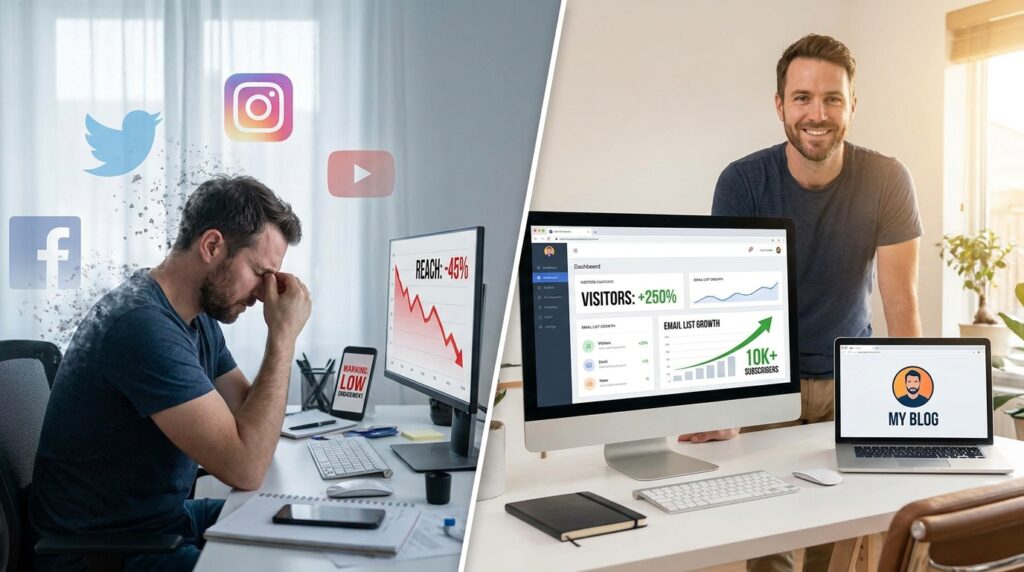
Platform commissions are shrinking, algorithms are deliberately killing organic reach, and creators who built everything on rented ground are paying for it. 

In 2026, the smartest move in the creator economy isn’t chasing the next platform; it’s building something you actually own. 

Blogs, owned websites, and email lists are back at the center of every serious creator’s business strategy, and the data backs it up completely.

Let’s stop pretending the last few years didn’t happen.

A lot of creators made real money doing things that felt almost too easy: drop an Amazon storefront link, post a TikTok, wake up to commissions. 

Build a following on Instagram for free. Let the algorithm do the heavy lifting. Why would anyone bother maintaining a website when the platforms were basically doing the work for you?

That version of the creator economy is over.

In 2026, the platforms that once felt like goldmines have quietly restructured their relationship with creators. 

Commission rates have been trimmed. Enforcement has gone automated and ruthless. Organic reach, the ability to actually get your content seen by the people who followed you, has collapsed to numbers that would have seemed dystopian just five years ago. 

And the creators who built their entire income on any single platform are now living with the consequences of that dependency.

Meanwhile, the ones who kept their blogs alive, kept growing their email lists, kept building on the ground they actually owned? They’re having their best year yet.

This is the blog renaissance. And this time, it’s driven by data, not nostalgia.

The Platform Squeeze Is Real. Here Are the Numbers

Organic Reach Has Essentially Died

If you’ve noticed your posts getting fewer eyes lately, it’s not your content. It’s structural, and it’s intentional.

In 2026, organic reach on major social platforms has collapsed to historically low levels. Instagram now delivers your posts to roughly 5–7.6% of your followers per post. 

Facebook is worse in organic reach, there sits between 2.6% and 5.9%, with some studies putting the average Facebook Page post reach as low as 1.65%. 

These aren’t temporary algorithm blips. This is a permanent, deliberate shift by platforms designed to push businesses toward paid advertising.

The practical reality is stark: a creator with 10,000 Instagram followers can expect maybe 350–760 people to see any given organic post. 

That’s a fraction of one, not an audience. A creator with 10,000 email subscribers, on the other hand, reaches nearly all of them with average open rates of 32–42% across industries, depending on how you measure it.

Meta has made its intentions explicit. The strategic takeaway, as one analysis put it, is that 

“organic social, in the minds of Meta at least, isn’t meant to function as a free web traffic engine.” 

They want users scrolling on-platform, not clicking out. Your posts are fuel for their engagement engine, not a reliable distribution channel for your business.

Amazon and TikTok Have Changed the Rules

The commission squeeze has been steady and significant. Categories that paid 8% on Amazon in 2019, furniture, home goods, and outdoor products, were cut to as low as 3% by 2025. 

Amazon updated its Associates Program Operating Agreement in October 2025, tightening compliance requirements, enforcement, and IP rules, often through quiet help-page revisions rather than loud announcements.

On TikTok, stricter commercial content disclosure rules arrived in 2025 with a punishing enforcement model: a 24-hour fix-or-penalize window, and over 85% of content removed for violations now identified automatically by AI. 

Even experienced creators who thought they were playing by the rules found themselves caught out by changes that shifted under their feet.

The message from both platforms is the same: they are optimizing for their own business, not yours.

“The Blogs Are Gonna Come Back Into Play”

Altovise Pelzer, one of the leading voices in the Logie community, saw this shift before most people were willing to admit it. She put it plainly:

“This will be the time where the blogs are gonna come back into play!… This will be the time when your landing page will be beneficial for you, if you are using it the proper way.”

She was describing what she was already watching happen inside the community creators who had kept their own platforms alive, suddenly holding assets that others had to rebuild from scratch.

“People stopped doing the blog because we didn’t need to,”* she continued. *”We were making so much on-site. Well, now that the on-site has changed, blogging is going to be back in high demand.”

The data she was sensing in real time is now confirmed across the industry. A growing share of the creator economy’s expansion in 2026 is happening inside community-led, owned platforms, not on social networks. 

For many creators, owned communities and websites have moved from side project to core business. 

And creators who refreshed their blogs as Amazon on-site commissions began declining saw higher earnings and better brand deals than those who waited for the platforms to course-correct.

The 2026 Creator Economy Is Rewarding Ownership

The numbers describing the creator economy in 2026 are large and growing. Estimates range from $234 billion to $313 billion globally, projected to reach $528 billion by 2030 and potentially $1.49 trillion by 2034. 

But the more important story isn’t the size of the market. It’s where the growth is actually happening.

The creator businesses that are thriving in 2026 share a consistent profile: they have diversified income streams that they own. 

Recurring, community-based revenue now sits at the center of the strongest creator businesses, while sponsorships and affiliate income play increasingly peripheral roles. 

Memberships have moved from one monetization option among many to the primary revenue foundation for the most resilient creator businesses. The ordering is instructive; it has flipped from a few years ago.

The brand side confirms this, too. U.S. creator economy ad spend is set to reach $43.9 billion in 2026, up from $37.1 billion this year. 

But the biggest spending growth, a 56% increase, is coming from paid amplification of creator content *beyond social media*. 

Brands are specifically investing more in creators who can prove multi-platform reach: a website with real traffic, an email list, a YouTube channel, not just a TikTok profile.

This is what leverage looks like in 2026. And it lives on owned platforms.

Why Email Is the Anchor of Every Serious Creator Business

The comparison between email and social media in 2026 is not even close.

Email marketing delivers $36–$45 in return for every $1 spent. Social media returns roughly $2.50 per dollar. 

Email drives conversion rates of 4.24%, while social media sits at 0.59%, a 7x performance gap. 

According to HubSpot’s 2026 State of Marketing Report, website/blog/SEO is the single highest-ROI marketing channel, with email marketing ranking first for B2C brands specifically.

42% of marketers say email is their most effective channel. Social media and paid search each sit at 16%.

Social media is great for discovery, for reaching people who don’t know you yet. But your followers are rented. 

The platform owns that relationship, decides how many of them see your content, can change its rules overnight, or, as TikTok users in the US experienced firsthand at the start of 2025, can disappear entirely for a period. 

Your email list is an asset you own outright. No algorithm can reduce its reach. No policy change can make it inaccessible. When you have 10,000 engaged email subscribers, that list compounds in value every year you keep it alive.

The businesses and creators that perform best in digital marketing in 2026, as one analysis put it, are “using social media to build the audience that email then owns, nurtures, and converts.” 

Social gets you found. Email is where revenue happens.

The Blog Is the Hub. Everything Else Is Spokes.

Blogging didn’t disappear; it matured. And the numbers show it’s still a central pillar of the affiliate marketing world: between 64% and 80% of affiliates rely on SEO and blogging as their main traffic sources. 

Around 80% of brands and 84% of publishers still run affiliate programs. Customers read 3–4 blog posts about a product before making a purchase, because they want real information, not a 60-second video that got pushed to them by an algorithm.

What content formats are driving the most ROI for creators in 2026? According to HubSpot’s State of Marketing Report, blog posts ranked among the top five highest-ROI content formats, with small businesses 23% more likely than average to see ROI from blog content. 

Organic search still drives 53% of all website traffic across industries, and that traffic is free, compounds over time, and doesn’t disappear when a platform changes its rules.

A blog also does something no social post can do: it converts intent. People who find you through search are in a decision-making mindset. 

They’re looking for real answers. That intent produces higher conversion rates than the casual social scroll, and it produces an audience that trusts you before they’ve even clicked your affiliate link.

The creators winning in 2026 are running blogs like digital businesses: SEO-driven content, affiliate marketing, email capture, and multiple revenue streams that aren’t dependent on any single platform’s goodwill. 

A well-built affiliate blog, once established, can generate $1,000–$5,000+ per month by the end of its first year. By year two, the income compounds. Platforms change; a well-optimized owned site doesn’t.

Why Brands Pay More for Multi-Channel Creators

Picture two creators pitching the same $2,500 review campaign.

Creator A has a strong TikTok following, but their commissions have been squeezed, and their organic reach is inconsistent. They’re one algorithm update away from a significant income dip.

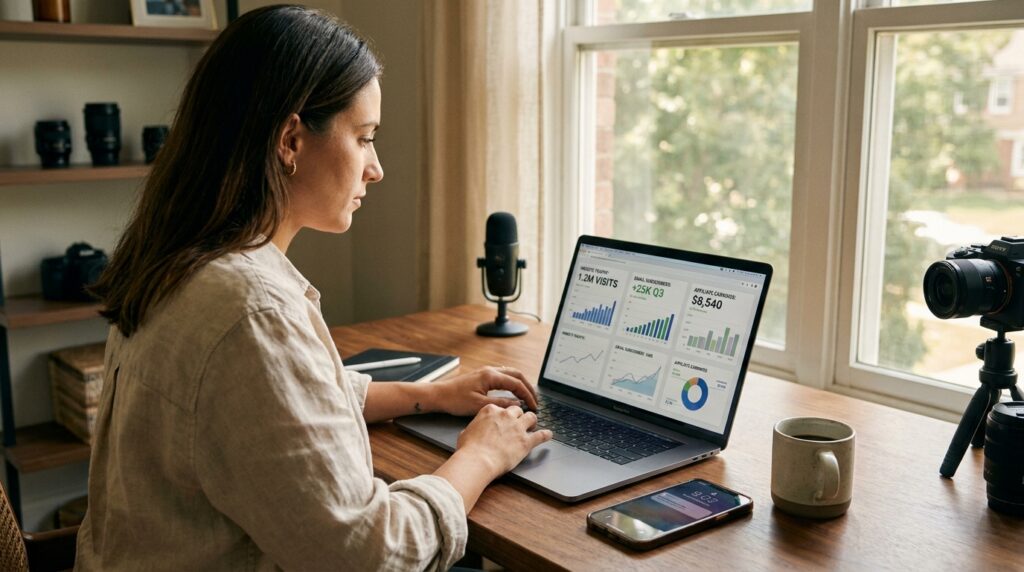
Creator B says: “I’ll feature your product in a dedicated blog review that will rank in search for months, a custom newsletter segment to my 8,000 subscribers, and a homepage placement on my site with verified monthly traffic. Here’s the analytics dashboard.”

Creator B gets the deal. Every time.

Brands in 2026 aren’t just buying a post. They’re partnering with media companies. The brand side of the creator economy has matured to the point where 92% of marketers plan to work with both macro and micro creators specifically because a single-channel approach doesn’t cut it anymore. 

The creators consistently winning the biggest brand deals and the ones able to command higher rates are those who can demonstrate a multi-touchpoint footprint: blog traffic, email list, YouTube subscribers, and social presence, working together.

Owned platforms aren’t just good for your independence. They are your negotiating leverage.

How to Refresh and Relaunch Your Blog: A Real 2026 Action Plan

This is about building a home base that works alongside everything else you’re already doing.

Step 1: Audit what you already have.

Log back into the WordPress, Wix, or Squarespace you’ve been ignoring. Remove dead links, outdated widgets, and anything that makes the site feel abandoned. 

Update your About page and bio. A neglected site can be refreshed in a few hours, and what you revive is now an owned asset that no platform can take from you.

Step 2: Post search-driven, multi-channel content.

Your best-performing videos and storefronts belong on your blog. Embed them, but go further and write the context and your personal take around them. 

This is how you build SEO authority and reader trust simultaneously. Google rewards pages that genuinely answer questions. 

Keep long-form posts in the 1,500–3,000 word range, targeting buyer-intent keywords like “best,” “review,” and comparison searches. These attract high-intent readers who are already close to a purchase decision.

Step 3: Build your capture infrastructure.

Add a newsletter sign-up. Add direct buy buttons. Install Genius Link or a comparable smart affiliate tracker so that old content continues earning even when product links expire. Every page should have a clear reason for a visitor to stay connected with you.

Step 4: Diversify monetization on the blog itself.

The most profitable creator blogs in 2026 combine affiliate marketing, display ads, digital products, sponsored content, and email marketing rather than relying on a single stream. 

Affiliate + ads together create the most balanced foundation. Layer in digital products, guides, templates, and courses as your audience grows.

Step 5: Treat your blog like a hub, not a task.

Schedule regular posts that deal with roundups, product reviews, seasonal gift guides, and behind-the-scenes pieces. Aim for at least one substantive post per week. 

Blog content compounds: a well-optimized post from six months ago continues driving traffic today. A TikTok from six months ago is functionally gone.

Step 6: Use your social platforms as distribution engines, not the final destination.

Every new blog post feeds your social channels: Instagram Stories, Facebook community posts, YouTube Community tab updates, and email newsletters. Your blog is the root. Social media and email are how people find their way to it.

Your Next 48-Hour Checklist

If you want to start today, here’s exactly where to begin:

  • Log into your blog and spend 30 minutes cleaning it up, updating your About page, removing dead links, and adding a current photo
  • Write or schedule one piece of content: a product roundup, a comparison guide, a fresh video embed, or a personal take on how algorithm and commission changes have affected your business (your audience is living this too, they want to hear from you)
  • Add an email sign-up form to your homepage and at least one key blog post
  • Install a smart affiliate tracker so your old content keeps working even when products change
  • Promote your refreshed blog across all your social channels and to your existing email list. Every connection you already have is a potential subscriber

The Bottom Line

The creator economy in 2026 is done playing small, waiting for platform payouts or chasing algorithmic whims. 

The creators who are building durable businesses, the ones winning the brand deals, growing their income despite commission cuts, weathering platform policy changes without panic, are the ones who invested in things they actually own.

A blog is an asset. An email list is an asset. A social following is a rented relationship that the platform can reprice or repossess at any time.

The ground has shifted. The creators who recognized that shift early, who kept their own platforms alive even when it felt unnecessary, are now sitting on leverage everyone else has to scramble to rebuild.

Your blog is that foundation. It’s time to build on it.


How to Repurpose Amazon Videos on YouTube, TikTok & Facebook to Maximize Affiliate Income

0
TL;DR: The Quick Strategy
  • Don’t just leave videos on Amazon, repurpose them strategically across YouTube, TikTok, Facebook, and beyond!
  • Automate uploading, use deep links for accurate credit, and customize intros/outros to boost engagement and revenue everywhere.
  • Logie community members are seeing viral growth – sometimes 10x their original reach – by owning their distribution.

A year ago, Amazon video creators could count on consistent traffic inside the platform. Today, relying on a single channel is risky business. 

YouTube recently dropped its Shopping eligibility threshold to 500 subscribers, and TikTok and Facebook are aggressively rewarding shoppable content. There’s never been a more urgent or lucrative time to maximize every video asset you produce.

This is your peer-driven guide to multiplying the impact and income of every Amazon video you’ve ever made, inspired by the real strategies of the Logie community and backed by the latest shifts reshaping social commerce.

Why Repurposing Is No Longer Optional for Creators

The creator economy is now built on agility, and the numbers back it up. The global creator economy was valued at roughly $253 billion in 2025 and is projected to reach as high as $480 billion by 2027. 

Yet beneath that headline sits a sobering reality: more than half of all creators still earn under $15,000 a year, while a small fraction, fewer than 5%, capture the lion’s share of revenue. 

The difference between those two groups often comes down to one thing: whether they treat their content as a multi-channel asset or a one-and-done upload.

The platforms themselves are sending a clear message. Major social channels are changing reporting, commissions, and rules at a record pace. 

If you missed the foundational context on these shifts, catch up with *Amazon’s March 9 Reporting Reset and What Every Amazon & TikTok Creator Must Know About TOS Changes in 2025*.

Here’s what this moment actually means for you as a creator:

Monetization is shifting off-site. Creators can no longer rely solely on Amazon’s internal audience for passive income. Platform instability, algorithmic shifts, commission resets, and eligibility changes demand that you bring your own traffic. The creators who are thriving right now are the ones who understood early that they were in the audience business, not just the content business.

Platforms crave fresh content. Social channels reward regular, algorithm-friendly uploads, short-form, long-form, and everything in between. Short-form video alone now accounts for roughly 30% of platform market share, with over 80% of mobile video traffic driven by clips under 60 seconds. If you’re not showing up in that format, you’re essentially invisible to a huge slice of potential buyers.

Your existing video library is a goldmine. With the right tools, you can multiply your reach without recording a single new review. One creator in the Uscreen ecosystem reportedly generates $40,000 a month simply by letting her live streams auto-upload to a video-on-demand library, no extra recording, no extra editing. That’s not a content strategy. That’s leverage.

Community Spotlight: What Strategic Repurposing Actually Looks Like

 “I STARTED A YOUTUBE CHANNEL, A BRAND NEW ONE, FOR JUST MY REVIEWS. I SAID, I’MMA DO IT… I STARTED OUT IN FEBRUARY, WITH 25 SUBSCRIBERS… TO DATE, I THINK I HAVE…75 FOLLOWERS? AND… IT’S JUMPING UP, IT’S ALMOST AT… I THINK IT’S ALMOST GETTING CLOSE TO 100,000 VIEWS.” ALTOVISE PELZER

Altovise’s story isn’t an outlier. Dozens of Logie creators are seeing their existing Amazon shoppable videos perform powerfully on YouTube and beyond. What makes this possible is a system. Here’s the tactical playbook:

1. Automate Your Video Migration

The biggest barrier most creators face is inertia. There’s a backlog of solid content sitting on Amazon that nobody outside the platform has ever seen. The solution isn’t to work harder; it’s to set up automation and let it work for you.

Batch uploads: Tools like the built-in YouTube/Logie automations allow you to move your Amazon videos to YouTube without manually handling each file. Set it up once, and your back catalog starts working for you overnight.

Schedule smart: Time your uploads for when your new audiences are most active. Weeknights and weekends typically drive the highest engagement on social platforms, but use your analytics to confirm what works for your niche. The algorithm rewards consistency as much as content.

Think of it as a pipeline, not a task. The creators gaining the most ground right now are running a workflow that moves content downstream automatically while they focus on what actually requires their attention.

2. Leverage Deep Links Get Paid Everywhere

Here’s a problem that many creators don’t discover until it’s too late: if you’re posting Amazon affiliate links and getting international views, you may be leaving most of your commissions on the table. 

Because Amazon Associates tags are country-specific, clicks from viewers outside your home market often don’t register, and the commission disappears even though you earned the traffic. With 60–80% of YouTube views typically coming from international audiences, a viral video can generate thousands of clicks that never translate to earnings.

Deep linking tools route each viewer to their regional Amazon storefront with your affiliate tag intact, recovering income that standard links simply don’t capture.

Why this matters beyond geography: Generic Amazon links also lose attribution when products go out of stock or listings change. A dead link isn’t just a missed sale; it’s a broken experience that costs you trust with your audience.

As Doug in the Logie community puts it: 

“Dead products? Easily change your link to point to your storefront, so you still collect money through YouTube.”

Build link audits into your routine. Block 30 minutes a week to check your highest-traffic videos for dead links. Redirect them to updated products, your storefront, or comparable alternatives. This single habit has meaningfully increased monthly affiliate earnings for creators who practice it consistently.

3. Make Videos Native to Each Platform

Uploading the same file everywhere is a starting point, not a strategy. The creators who see real traction on social platforms are the ones who take a few extra minutes to adapt their content to each channel’s culture and format expectations.

Add intros and outros: A short branded intro and a verbal call to action at the end (“Subscribe for more reviews!”) signals to your audience and the algorithm that you’re a real channel worth following. It doesn’t need to be elaborate. Fifteen seconds of personality and direction can dramatically increase both watch time and subscriber conversion.

Split long content into Shorts and carousels: Use timestamps, product chapters, and highlight reels to create bite-sized clips for TikTok, YouTube Shorts, and Instagram Reels. A single 20-minute Amazon haul video can yield five or six standalone Shorts, each one targeting a different search term or audience segment. That’s not one piece of content, that’s a week’s worth of posts.

Show more personality: As Sheryl from the Logie community advises: 

“YouTube allows far more personality, and calls to action don’t just upload the bland Amazon ones.”

This is the part that separates the channels that grow from the ones that stagnate. Social audiences aren’t looking for product listings; they’re looking for a person they trust. Your Amazon videos may be built for conversion, but your social content needs to be built for connection first.

4. Turn Social Followers into Searchable Traffic

Growing a social following is only half the equation. The other half is making sure people can *find* you in the first place and that discovery compounds over time.

SEO is your long game: Title your YouTube uploads and Facebook posts with high-intent keywords (“Best 2026 air fryer review,” “honest kitchen gadget unboxing”). 

YouTube videos appear in roughly 55% of keyword searches on Google, which means optimized titles aren’t just helping you inside the platform; they’re driving search traffic from outside it. Always add relevant hashtags (#ShoppableVideo, #SocialCommerce) for discoverability.

Pin a post introducing yourself: As Altovise suggests, pin a short bio video or introductory message at the top of your YouTube, TikTok, and Facebook pages. New visitors decide in seconds whether to follow you. Give them a reason and a context for what you do.

Leverage Stories and groups: Share teasers in Instagram and Facebook Stories, and surface your videos in relevant communities (always check platform terms of service for compliance). These touchpoints keep your content circulating in front of warm audiences who haven’t subscribed yet.

Results: Real Community Wins

Creators in the Logie community are putting it into practice and seeing results that compound over time:

  • Altovise went from 25 to nearly 100,000 total views on YouTube by automating uploads from her backlog of Amazon reviews, and every video is linked for ongoing commissions.
  • Others are using smart links and automation to drive thousands of affiliate clicks per month off-site without starting from scratch or creating new content.
  •  Some creators have built new weekly routines: post every Amazon video to YouTube, then schedule a weekly highlight reel for Facebook and Instagram. Rinse and repeat.

The consistency of these results points to something important: this isn’t about going viral. It’s about building a system that generates steady, compounding returns from work you’ve already done.

Pro Tips: Platform-Specific Adjustments

YouTube is your anchor platform for long-term discoverability. Mix horizontal full reviews with vertical Shorts; use timestamps to create Chapters and upload “playlist” recaps of your Amazon livestreams. 

Collaborate with other creators and explore YouTube’s expanding shopping features as eligibility continues to open up (see Why YouTube Affiliate Is the Next Big Creator Opportunity). 

YouTube affiliate marketing also offers a structural advantage worth noting: unlike paid ads, organic YouTube traffic doesn’t stop when you stop spending, it compounds.

TikTok rewards speed and authenticity above all else. Quick edits, trending audio, and a strong visual hook within the first three seconds are what determine whether a video gets pushed or buried. Keep your CTAs tight and your energy high.

Facebook remains underrated for shoppable content. Repost full reviews in relevant shopping groups, on your own page, and in Stories. Experiment with Facebook’s evolving direct product link features; the platform is actively investing in social commerce infrastructure and rewarding creators who use it.

The Bigger Picture

The most successful creators in this space have stopped thinking of themselves as content producers and started thinking of themselves as media businesses, where every video is an asset that can be deployed across multiple channels, each generating its own revenue stream.

The data support this pivot. Creator-led campaigns consistently outperform traditional ads in engagement and return on investment, which is why brands and platforms alike are pouring resources into the creator economy. 

Influencer marketing spend was projected to exceed $30 billion globally in the mid-2020s, and mergers and acquisitions in the creator tools space were up 73% in just the first half of 2025. 

The infrastructure being built around creators is real, and the creators who build multi-platform habits now will be the ones best positioned to take advantage of it.

As one industry observer put it: 

“Diversification is about hedging your bets and building resilience for the long haul.” That’s exactly right. Your content library and smart linking strategy aren’t just income generators; they’re insurance.

Your Action Items This Week

  1. Pick your best-performing Amazon video and upload it as a YouTube Short or Facebook post today.
  2. Make sure your links are deep-linked for proper tracking and international attribution.
  3. Pin a short intro video on each channel you use to convert new visitors into followers.
  4. Schedule a weekly repurposing block for one hour and let automation do the heavy lifting.
  5. Evaluate your results after two weeks, then scale what’s working.

Don’t let platform volatility decide your earning power. Repurpose. Deep link. Diversify and watch your reach compound.
Amazon Commission Cuts Winning Strategies for Creators in 2026

0

This spring, Amazon Influencer Program members woke up to a harsh new reality. Massive drops in on-site commission rates, with categories like Outdoors falling from nearly 8% to below 3%. For many creators, this wasn’t just a small adjustment, it was a direct hit to one of their most reliable income streams.

If you make a living reviewing gear, kitchenware, or health products, this shift has likely forced a rethink of how you monetize, and how stable that income really is.But Amazon isn’t alone. Target has shut down its creator program. YouTube continues rolling out new shopping and affiliate features. Even long-standing retailers are reassessing how they structure creator payouts.

In short: disruption is no longer occasional, it’s constant.

The New Rule: Off-Site Traffic Is Everything

Seasoned Logie creators have seen seismic shifts before, and their conclusion is consistent, relying only on in-platform traffic is no longer enough.

As Altovise Pelzer puts it:

“The difference is, if you talk to those who have been in the program for quite some time. We’ve already been saying, focus on off-site. Find ways to focus on off-site. What are you doing off-site? How are you bringing people to the platform?”

For years, the Amazon Influencer Program rewarded creators for simply uploading videos to product pages. But recent changes including the March 9 Reporting Reset, have made one thing clear, depending solely on on-site traffic and fixed commission structures leaves you exposed to unpredictable platform shifts.

Why Did Amazon Make These Changes?

  • Shift to Incentivize Off-Site Traffic
    Amazon wants creators to drive new eyeballs onto the platform, not just sell to the customers already there.
  • Historical Over-Access
    For years, creators benefited from easy, platform-driven “passive” on-site income with minimal need for external promotion. As a result, many neglected audience building, email list growth, and direct brand relationships. That model is now being tested as platforms tighten payouts and shift toward off-site growth expectations.
  • Retail Macrotrends
    Across the industry, layoffs, program shutdowns, and new affiliate experiments are reshaping how creator partnerships are structured. Platforms and retailers alike are restructuring how they work with creators, shifting away from predictable commission models toward more experimental and performance-driven systems. For more context, don’t miss  What Every Amazon & TikTok Creator Must Know About TOS Changes in 2025.

Community Insights: What Top Creators Are Doing Right Now

1. Aggressive Cross-Posting & Repurposing

Upload your Amazon videos to YouTube using deep links like GeniusLink and PostHat, as well as Instagram, Facebook, and TikTok. Several creators in the Logie community reported:

Uploading 500+ Amazon review videos to dedicated YouTube channels
Rapid increase in views even on channels with less than 100 subscribers, as Altovise shared:

“I started out in February, with 25 subscribers…to date, I think I have…75 followers…almost at 100,000 views.”

YouTube Shopping now requires just 500 subs for some affiliate features. See detailed playbooks in Why YouTube Affiliate Is the Next Big Creator Opportunity.

2. Pre-Promotion & Community Building

Don’t just go live on Amazon and hope for the best. Announce your livestreams days in advance across Stories (Instagram, Facebook), business pages, and your personal networks. Results show hundreds of cross-platform views versus low double digits for “silent” launches.

“I used to share my livestreams on the same day, but I noticed a big difference when I started promoting them in advance.”  Altovise Pelzer

Cheryl adds
“After the show, download and upload to YouTube with timestamps. Make a shoppable list linking to the live show and each product.”

This approach turns livestreams into long-term SEO assets rather than one-time events.

3. Off-Site List Building & Web Assets

Revive Your Blog:
Blogs and owned landing pages are making a clear comeback as creators look for more stable, long-term traffic sources outside of platform dependency.

One creator in the community noted this shift directly:

“This will be the time where blogs come back into play… your landing page will be beneficial if you’re using it the proper way.”

Creators with active blogs or deal pages are now consistently outperforming those relying only on in-platform traffic. These assets continue generating search-driven traffic and conversions long after content is published.

Not sure where to start? See our guidance on content strategy in Amazon’s March 9 Reporting Reset.

At the same time, building an email list is becoming increasingly important. As social reach becomes more unpredictable, owned audience channels like email and SMS provide long-term stability and direct access to your audience.

The New Monetization Mix: Data, Deep Links, and Smart Brand Collabs

Check for dead links and out-of-stock (OOS) products in your YouTube and blog posts. Tools like GeniusLink let you re-route links to your storefront or newer, relevant products instantly, so you don’t lose attribution.

Resist oversaturated brand offers. Flooded markets lead to lower returns. Instead, analyze how many videos are already live and focus on more strategic product niches.

Pitched a brand? Advocate for your value using real performance data, like multi-channel reach and past campaign results. As Stephanie put it:

“Don’t say no, say, ‘here’s my production fee.”

Don’t sleep on LinkedIn. As brands look for business-facing influencers, this often-overlooked platform can become a strong lever when integrated into your off-site mix.


Mindset: “Don’t Freaking Quit” (DFQ)

Change often brings frustration, uncertainty, and moments of panic. The Logie community rallying cry is simple: DFQ.

“Don’t freaking quit. Because it’s still an opportunity. There are still people that are making good money. There are still people that haven’t seen such a big drop.”

The real advantage now comes from consistency and structure. Off-site traffic, owned audience lists, and repurposed content create a moat that protects your margins and helps future-proof your brand.

Not every tactic will work immediately, but the strategies outlined above are designed for iteration, not instant results. Creators who stay adaptable and consistent will continue moving forward while others wait for the old systems to return.

What’s Your Next Move?

  • Audit your active revenue streams. What’s at most risk? Where is there untapped off-site upside?
  • Clean your blog or landing page and post new shoppable content.
  • Repurpose one Amazon video to YouTube, using a deep link. Track clicks for the next 7 days.
  • Promote your next livestream or deal in Instagram and Facebook Stories two days before you go live.
  • Experiment – then double down on the platform delivering your best new traffic.

Further Reading & Tactical Guides

Remember: Every quarter brings a new wave of algorithm changes, policy rewrites, and tough pivots. But for those who learn, adapt, and DFQ, the creator economy remains one of the most dynamic, resilient fields today. 

Pinterest x Amazon: What Creators Need to Know About the Real-World Results, Workarounds, and Wins

0
TL;DR: The Quick Strategy
  • Amazon’s Pinterest integration opens new traffic and earnings potential – but comes with quirks and manual steps influencers need to know.
  • Early adopter creators report more impressions and some bounties, but also frustration with clunky product tagging, missing titles, and inconsistent reporting.
  • Maximize results by combining platform-native tools, double-checking attribution, and crowd-sourcing workarounds from the Logie community – and don’t forget to audit your FTC disclosures!

Pinterest x Amazon: A Creator’s Honest View in 2026

When Amazon rolled out its highly anticipated Pinterest integration, the promise was clear: frictionless reach, broader shoppability, and a “set-it-and-forget-it” revenue channel. But three months in, the reality is more nuanced.

Is the Pinterest x Amazon bridge a game-changer or just another manual headache? We sat down with early adopters from the Logie community to separate the hype from the hard data.

How the Integration Works (and Where it Stumbles)

Amazon’s Pinterest connection enables you to tag products in Pinterest Pins using Amazon ASINs or links, either through desktop workflows or, in some cases, automatically pulling in content from other connected platforms (like Instagram). This should, in theory, route Pinterest traffic straight to your Amazon storefront, content, or affiliate links for trackable shopping outcomes.

But as seasoned host Ileane Smith detailed, the experience has often been anything but seamless:

“Even though there was no titles on any of the things that it pulled in over from my Instagram, I did get more impressions on those than I did on the pins that I was doing manually.”
 Ileane Smith 

Impressions seem to skyrocket with auto-imported content, but the workflow introduces a new set of friction points for busy creators.


Top Challenges (and Community Workarounds)

  • Missing Titles & Metadata: As pins are pulled from Instagram, Pinterest can omit crucial details, forcing you to go back, add meaningful titles, and fix destination links if you want attribution to Amazon (not just Instagram awareness).
  • Manual Tagging Isn’t Fool-Proof: Whether you use ASINs or direct links, sometimes searches in Pinterest’s Tag Product field don’t surface the right item. Expect to have your Amazon tab open and ready for copy-paste operations.
  • Limited Attribution Clarity: Many creators report uncertainty over what bounties or commissions are actually credited to specific Pinterest-origin traffic. Using UTM parameters or logbook tracking can help, but expect a degree of gray area.
  • Auto-Pulled Content Requires Heavy Editing: As Ileane shared, “I had turned [auto-import] off a long time ago… but when I tried it again, Pinterest pulled in a whole bunch of stuff. Problem: No Pin title, and you have to decide if you want to drive people to Instagram or Amazon. It’s more work, and now I’ve got to clean up each pin.”

Winning Tactics: How Top Creators Make the Integration Pay Off

Despite the hurdles, ambitious creators have found clever paths to results:

  • Batch-and-Edit for Efficiency: Upload pins in batches, then quickly edit titles, descriptions, and tagged products for clarity and compliance in one dashboard session.
  • Leverage Logs, Trackers, and Analytics: Ijeoma, one of our community’s sharpest voices, layered in custom tracking links (like PostTap or UTM codes) to precisely monitor click-throughs and attribute pay-per-click bounties: “I was able, in a couple of days, to track back… a click, from Pinterest to Amazon that resulted in a payment for the pay-per-click.”
  • Strategic Content Selection: Start with posts that reflect seasonal trends (“outdoor furniture” or “Mother’s Day gifts”) or pins Amazon is actively promoting as ads. As Ileane noted, “Amazon wants to find the people they’re going to put advertising dollars behind.” Positioning your content for likely promotion increases the odds of outsized traffic and platform attention.
  • Double Down on FTC Compliance: There’s confusion around where to place disclosures when sharing pins that contain affiliate Amazon links – especially when the image is separated from the caption. The group consensus: always ensure “ad” or “#earnedcommission” or similar language is as close as possible to the link appearing in your pin description, not just on the image itself. Platforms like Pinterest will add this automatically in some cases, but don’t rely solely on the automation.

Expert Tips: Make Pinterest Integration Work for You

  • Don’t skip manual review, even of auto-pulled content. Traffic gains mean little if the pin sends users to the wrong destination or is missing vital context.
  • Avoid ‘Set and Forget.’ Pinterest’s long-tail effect is real: engagement and clicks can take months to peak, so revisit your pins often to swap sold-out items, refresh seasonal ideas, and keep analytics fresh.
  • Still frustrated? Look to omni-channel selling. The smartest creators blend Amazon, Pinterest, and other channels (including YouTube Shopping, see our YouTube Shopping guide for 2026) for diversified reach and resilient earnings.

Community Intelligence: What the Frontline Creators Are Doing

  • MeganMH | My Retail Therapy: Saw bounties rack up from media lists repurposed across international storefronts, Pinterest, and Facebook, with traffic spikes suggesting cross-platform posting amplifies results, even when reporting attribution is imperfect.
  • Ileane Smith: Noticed more impressions on imported pins, but highlighted the tradeoff in editing and the risk of routing users to the wrong endpoint.
  • Ijeoma: Used custom tracker links (and noted it can be challenging to connect the dots, but the chain does work, especially for sponsored/paid-per-click pins).

Want a holistic view of why creators are adding non-Amazon channels to their arsenal? Don’t miss our social commerce trend report for 2026.

How to Decide: Should You Invest More in Pinterest x Amazon?

If you want untapped reach, new bounties, and seasonal burst traffic, the integration can deliver if you’re ready to put in manual oversight, track your links, and embrace a test-and-learn approach. For set-it-and-forget-it creators, the experience remains too fiddly in 2026 but is evolving fast.

If you want to squeeze maximum value from every channel, it’s time to at least experiment with the above tactics while keeping your expectations grounded. Use the Logie community to share results, pitfalls, and breakthroughs as the integration matures.

Further Reading from the Logie Newsroom:

Your move: run your own Pinterest experiment – and let the Logie community know what really works. The smartest creators aren’t just waiting for perfect features; they’re trailblazing the growth channels of tomorrow with hustle, creativity, and peer-to-peer learning.

Amazon Influencer Reporting Shifts: The Real Story Behind Data Delays, Dashboard Changes, and Your Next Moves

0
TL;DR: The quick version. Scroll down for step-by-step fixes and community hacks.
  • Amazon’s new reporting format caused blank dashboards and syncing issues for thousands of creators, but your data is still being collected and will reappear soon.
  • Logie is already adapting: expect a new, clearer, more actionable dashboard experience designed to match Amazon’s current data structure and drive better strategic decisions.
  • Right now, use alternative Amazon reports (like the ‘Products’ tab) and the Logie community for accurate views, plus tactical advice to keep earning and avoid analytics paralysis.

Let’s break down what really changed, why it matters, and most importantly, how you can keep earning while the dust settles.

What’s Really Happening with Amazon Influencer Reporting?

If your Amazon Influencer dashboard recently went blank, kept showing ‘resyncing,’ or suddenly offered far less clarity than you’ve come to depend on, you’re not alone. In early 2026, Amazon implemented substantial changes to its data structures and the way stats are delivered. This shift impacted not only the daily habits of creators but also shook up the entire data-driven side of the influencer economy.

Why the Change? Understanding Amazon’s New Approach

For years, Amazon’s influencer reporting tools offered a straightforward, sometimes clunky but reliable, view of clicks, sales, commissions, and granular product performance. But as first confirmed in Logie’s private creator sessions, a platform-wide change in how Amazon compiles and delivers report data is now the norm.

As Ehud Segev explained, “Since Amazon made the change, Logie made some changes. Right now, your data is syncing. However, it’s not showing on your dashboard yet. You shouldn’t worry about it too much for the next few days.”  Your metrics are still being gathered, just not immediately shown in the ways you expect.

What Changed?

  • Amazon updated its data pipeline, which broke compatibility with external dashboards (like Logie’s) that previously pulled, parsed, and visualized this info automatically.
  • As a result, the main dashboards became blank or showed ‘resyncing,’ even as data still flowed on the backend.

And if you think you’re alone, you’re not: creators everywhere (and nearly every analytics tool) have been thrown for a loop by this update.

How Logie Is Adapting (and Why Your Data Will Be Better, Not Worse)

Here’s what’s happening behind the scenes: Logie’s platform has already reengineered its data sync and dashboard modules to match Amazon’s new structures. This means:

  • You’ll soon see updated, more accurate stats, mirroring Amazon’s own presentation, plus key improvements for insight and action.
  • Logie will visualize your category performance, best sellers, and trends in ways that make revenue-boosting decisions easier.
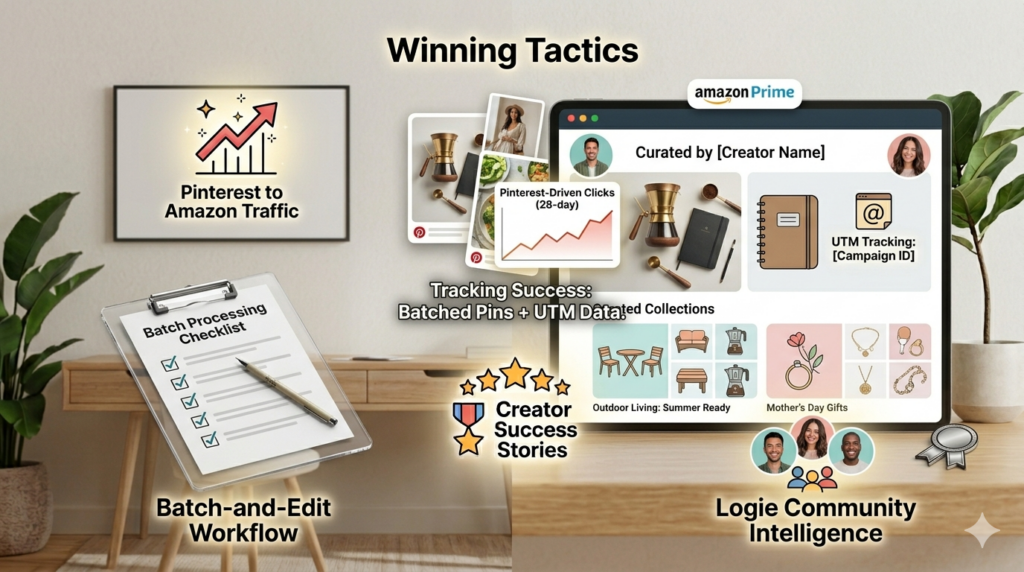
  • Historical data is being retained wherever possible, and you won’t lose out on sales tracking or payout info.

Don’t stress if you’re staring at a blank dashboard right now. We know it’s unsettling, but it’s temporary! As Ehud emphasized in the last session, “It’s just taking us time to adjust and provide a dashboard that will show you the data that Amazon is showing us.”

Your Next Steps: Reliable Reports, Quick Fixes, and Community Intelligence

1. Get Immediate Product Stats with a Manual Workflow

As shared by veteran influencer Ileane Smith, you can still get up-to-date stats directly from Amazon’s native interface. On desktop, from the Offsite Earnings page:

  1. Navigate to the Reports (hamburger menu, right-hand side, then select Products).
  2. Adjust the date range (e.g., last 30 days) to see more than the default period.
  3. Sort reports by commissions, clicks, or conversions for a real-world snapshot.

This isn’t as detailed as a custom dashboard, but it gives you true current earnings and activity per promoted item. As Ileane demonstrated, this is the fastest fallback for essential data while Logie’s enhancements roll out.

2. Use Logie’s Dashboard for Actionable Insights Once Updates Land

When Logie’s next release drops, expect sharper, more visual reporting:

  • Category Hotspots: See at-a-glance what niches drive your sales. If pet products move the needle, you’ll know instantly and can double down.
  • Granular Content ROI: Track which content types, lists, and curated offers convert best, not just which items, but how your strategy fuels results.
  • Pivot Guidance: Data presentation is being tuned to help adjust tactics mid-campaign, without waiting for month-end.

Curious what high-performing social commerce creators are doing as Amazon tightens third-party access? Read this guide on creators’ off-Amazon moves for even more context and backup strategies.

3. Debunking Myths: Your Questions, Answered

Q1: Has my old data been lost?
No. Both Amazon and Logie preserve sales and click data. Some short-term visualization gaps may persist, but your long-term record is intact.

Q2: Is this a sign that Logie (or Amazon’s influencer program) is being deprecated?
Definitely not! This is an upgrade to ensure reporting keeps pace with compliance and privacy shifts. Amazon’s investment in influencer marketing is only growing, with adjustment periods as a natural byproduct.

Q3: Will my payout or commission tracking be disrupted?
While the display is lagging, payouts will remain accurate and on schedule. Always refer to your raw Amazon reports for real-time payments if concerned.

Pro Tips: Making the Most of Today’s Data Reality

  • Bookmark critical reporting links in your browser so you can quickly check earnings, clicks, and conversions.
  • Troubleshoot with the Logie Facebook group: Real creators share hacks, like using off-site ideas lists or curated curation strategies, to maximize performance metrics even while dashboards resync.
  • Stay agile. The creators who thrive in times of reporting change are those who adapt to new tools and tactics quickly, just like those featured in our deep dive on winning after Halo sales changes.

Alternative & Omnichannel Moves

Feeling squeezed by Amazon’s analytics transition? Consider reinforcing your brand presence and earnings via YouTube Shopping and other owned platforms. Our guide on dominating YouTube Shopping covers strategies for auto-tagging, multi-language reach, and building resilient affiliate earnings.

The Community Speaks: How Creators Are Adapting

  • Ileane Smith: Advocated using Amazon’s ‘Products’ report tab manually until third-party dashboards catch up, and highlighted that checking new product placements in ideas lists can uncover hidden earnings, even when dashboard data is lagged.
  • Franchesca & Lisa: Raised issues with syncing and shared step-by-step experiences on finding workarounds and best practices for tracking sales during the data transition.

This mix of agility and grit is what defines today’s top Logie creators, and it’s why our community stays at the leading edge whenever platforms evolve.

What to Expect Next (and How to Prepare)

The data delays are temporary. The strategy tweaks will be permanent. Amazon’s new format forced an ecosystem upgrade, and Logie’s revamped dashboards will give you more insight once the dust settles. Your best move?

  • Check your Amazon ‘Products’ tab today to bridge the gap.
  • Document your sales and campaigns to avoid surprises.
  • Join the Logie Facebook group for early feature launches, beta invites, and urgent workarounds from top creators and staff.

For those building multi-platform authority and income, now’s the time to leverage alternate channels, strengthen your data fundamentals, and flex your creative problem-solving muscles. A resilient influencer business isn’t built on analytics alone. It’s built on community, creativity, and your ability to adapt.


Further Reading from the Logie Newsroom:

Stay updated, because the future of social selling is data-smart and community-driven.

dashboard

About Logie

Logie streamlines influencer discovery, product distribution, and content performance to drive measurable sales for eCommerce brands. We also equip content creators with the smart tools, brand partnerships, and commission opportunities they need to turn content into income.

Recent Posts