

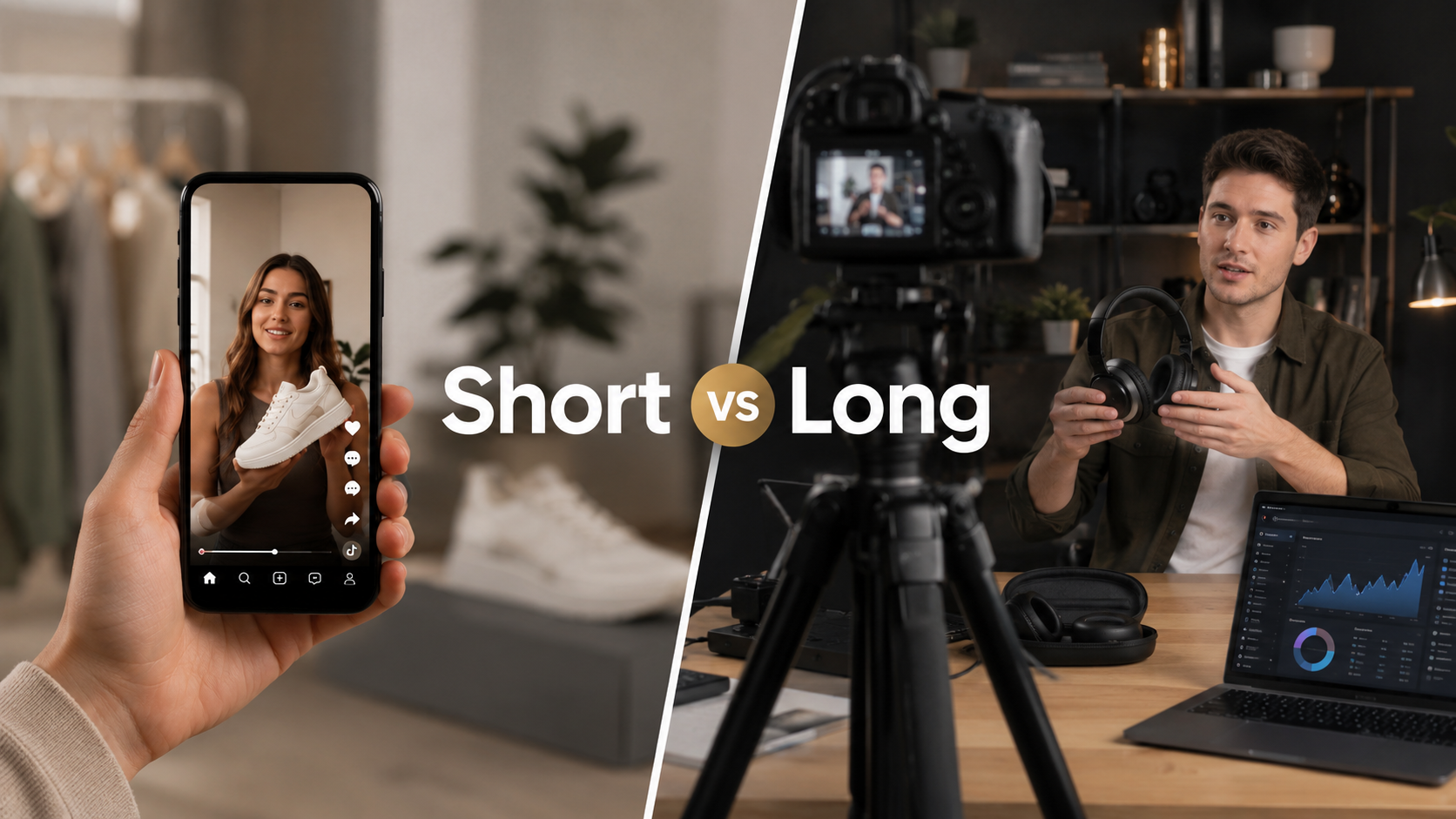
- Short, vertical videos – under 60 seconds – are now outperforming longer, horizontal content on Amazon’s platform, thanks to better carousel placement and audience engagement.
- Creators optimizing for vertical framing and brevity are seeing the most traction as Amazon experiments with new video displays and shoppers’ attention spans shrink.
- This trend isn’t just Amazon: understanding and leveraging short-form, mobile-friendly video now helps everywhere you promote – get the tactics below.
If you’ve spent any time in Amazon creator circles this year, you’ve probably seen two opposite pieces of advice circulating at the same time.
One camp says shorter and more vertical is winning. Another says longer videos with deep watch time are what’s moving the needle. Both are framed as data-backed. Both can’t be fully right at the same time, at least not for the same goal.
This piece pulls apart what’s verifiable, what’s still community theory, and what you should do about your video strategy this quarter, on Amazon and beyond.

The Two Competing Theories
Theory one: short and vertical wins. The argument here is that Amazon is testing new carousel formats that favor vertically shot clips under 60 seconds, and that shopper attention spans have shrunk to the point where anything longer simply doesn’t get watched.
Creator Altovise Pelzer, a recurring voice in Amazon influencer communities, has been quoted describing her own top-performing videos as the shorter verticals: when her team shortened their vertical content, those clips started outperforming the rest of her catalog.
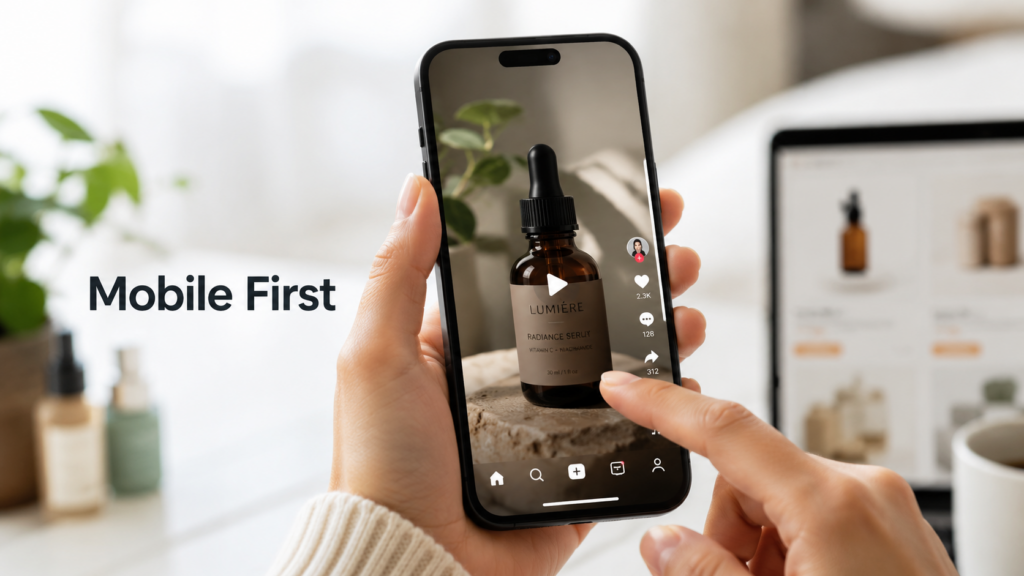
The logic is straightforward: shoppers are scrolling on phones, vertical fills the screen naturally, and a tight 30-to-60-second clip respects how little patience anyone has left.
Theory two: watch time wins, and watch time favors longer videos. This argument, also circulating in Amazon creator communities this year, flips the short-form logic on its head.
It claims Amazon’s carousel algorithm ranks based on absolute watch time, total seconds watched, not completion percentage, and that this metric rewards 2- to 5-minute videos because they offer more time for a viewer to accumulate watch seconds.
Under this theory, a two-minute video watched for 90 seconds will outrank a 15-second video watched in full, and Amazon’s own onboarding advice to keep clips short is actively working against creators.
Both theories are plausible-sounding. Both are short on independently verifiable evidence. Neither comes with a citation to anything Amazon has published about how its organic carousel ranking actually works, and that absence matters more than either theory’s internal logic.
What’s Confirmed, Versus What’s Community Theory
It’s worth separating fact from interpretation here, because the two get blended together constantly in creator content.
Amazon supports vertical video formats on its advertising platform. In 2024, Amazon Ads added vertical video creatives to Sponsored Brands campaigns, specifically for ads that drive traffic to a brand’s Store page.
That’s a paid placement, not the organic influencer carousel that most creators are trying to rank in, and it’s worth not conflating the two when you’re deciding what to actually film.
Mobile video specs matter for product detail page conversion. Independent agency data from sellers managing hundreds of Amazon brands shows that listings with a video in the main image carousel convert measurably better than listings without one, and that vertical or square cropping rather than uploading 16:9 widescreen matters because most shoppers are on mobile and a video built for square or vertical crop survives the mobile carousel better.
That same data points to a 15-to-30-second range as the sweet spot for that specific placement, with watch-through collapsing past 30 seconds, which directly contradicts the “longer is better” theory, at least for that one slot.

Amazon shut down Amazon Inspire, its dedicated short-form video shopping feed, in February 2025, after a little over two years of operation.
If you’ve seen older advice telling you to optimize specifically for Inspire, that platform no longer exists, which is one more reason to be skeptical of any short-vertical-specific Amazon advice that hasn’t been updated since.
Data Coach Claire’s survey showed that Amazon’s organic influencer carousel algorithm weighs absolute watch time as “six times” more predictive than conversion rate.
Amazon itself has not publicly disclosed how it ranks influencer videos for carousel placement.
One independent Amazon-seller resource states this plainly: there’s no confirmed organic ranking boost tied to video format, length, or orientation. The correlation that does exist runs through conversion rate, not through some separately disclosed length or orientation preference.
Both “theories” are really creator-level pattern recognition dressed up as platform mechanics. That doesn’t make them worthless.
A creator noticing her short verticals outperform her long-form catalog is a real signal about her audience and her execution. But it’s a signal about her content, not necessarily proof of how Amazon’s black-box algorithm universally weighs format.
“Stephanie shared, I’m looking at my videos by top views right now, my verticals are getting seen most… I think part of the reason some of the verticals may start getting more views, too, is… when we were doing the verticals, we were doing them shorter… Attention span, that was just something that attracted them more.” Altovise Pelzer
Treat both claims as hypotheses worth testing on your own catalog, not settled facts to build your entire strategy around.
What the Broader Short-Form Video Data Supports
Step outside the Amazon-specific debate, and the data on short-form, vertical video as a general content strategy is much more solid, because it comes from cross-platform research rather than a single community’s internal metrics.
- Attention spans genuinely have compressed. Recent industry research puts the average attention span on any screen at around 47 seconds, with some 2026 estimates trending closer to 43 seconds. Separately, a 2025 survey found that 52% of respondents admitted they skipped videos longer than 60 seconds, even when the topic interested them. That’s a real behavioral pattern, not a guess.
- Vertical format itself does carry a measurable completion advantage on mobile. Industry tracking puts vertical 9:16 video completion rates at roughly 76% on mobile, compared with about 54% for horizontal video, a meaningful gap. Platform by platform, TikTok leads in completion at around 78%, YouTube Shorts at about 73%, and Instagram Reels at around 65%.
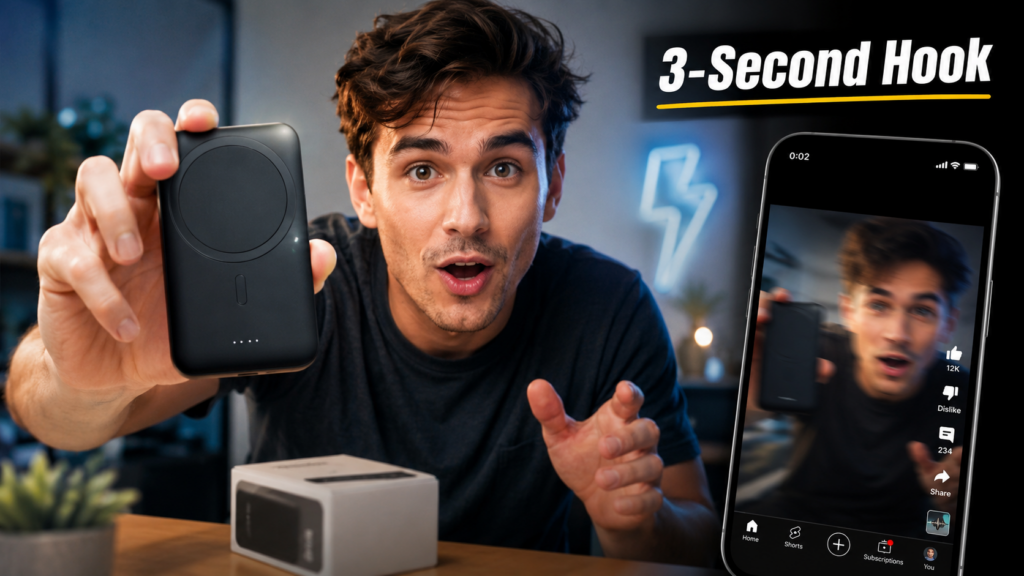
- The “hook” window matters enormously, too. One analysis found that more than 70% of TikTok viewers decide whether to stay or leave within the first three seconds of a video, and videos that hold 70-85% of viewers through that opening window get roughly 2.2 times as many total views as videos with weaker opening retention. Front-loading your value isn’t a nice-to-have anymore; it’s the single highest-leverage three seconds of the whole video.
There’s a commercial behavior layer too, and this part is genuinely encouraging for creators doing affiliate or shoppable content.
Industry survey data shows 79% of consumers now prefer video over text when researching a product before buying, and 84% say a brand’s video specifically convinced them to make a purchase.
That’s the underlying reason platforms, Amazon included, keep investing in video real estate on product pages: it converts.
The Amazon-specific “watch time vs. short-form” carousel debate is not yet solid enough to bet your entire video library on one side.
The smartest move is to let cross-platform behavioral data people skip past 60 seconds; hooks matter enormously; vertical completes perform better on mobile; inform your production choices; and treat Amazon-specific ranking claims as something to test on your own storefront rather than as gospel.
Practical Tactics That Hold Up Regardless of Which Theory Is Right
A few tactics show up as sound advice, no matter which side of the length debate you land on, because they’re really about execution quality, not duration:
- Front-load the answer. Whether your video ends up being 30 seconds or three minutes, the first few seconds need to deliver the single most useful thing a shopper wants to know. Skip the channel intro, skip “today I’m reviewing,” skip the slow pan across the packaging. Lead with the product doing the thing it’s meant to do.
- Shoot vertical or square, not widescreen, if mobile is your primary audience. This holds up across every source I found, including paid Sponsored Brands specs, independent seller agency data, and general short-form research. Even sources that argue for longer total runtime still recommend a frame that survives a vertical or square crop on a phone screen.
- Burn in captions, don’t rely on platform auto-captions. A large majority of mobile shoppers watch with sound off. If your message depends on audio, you’re losing most of your audience before they ever hear your point.
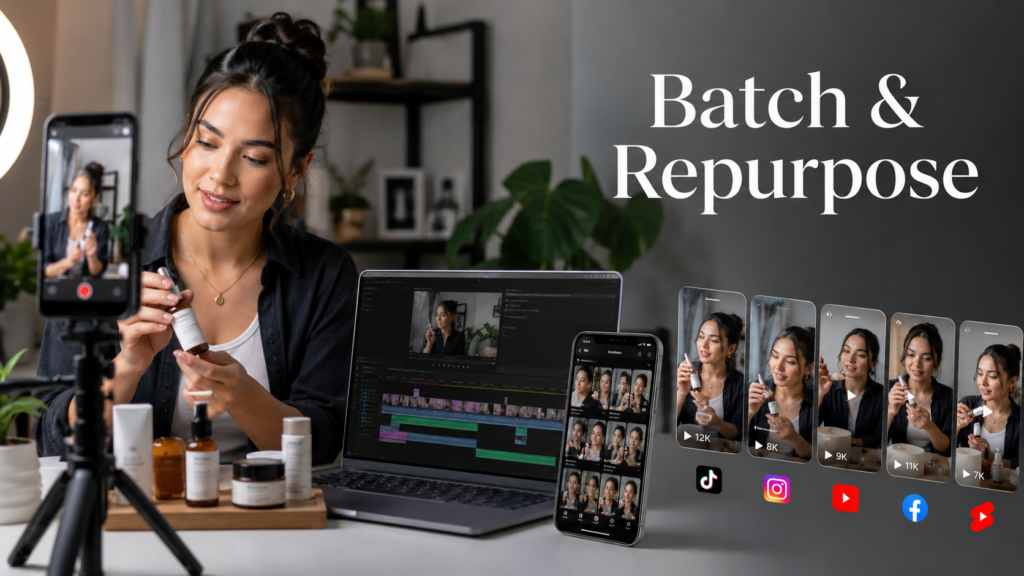
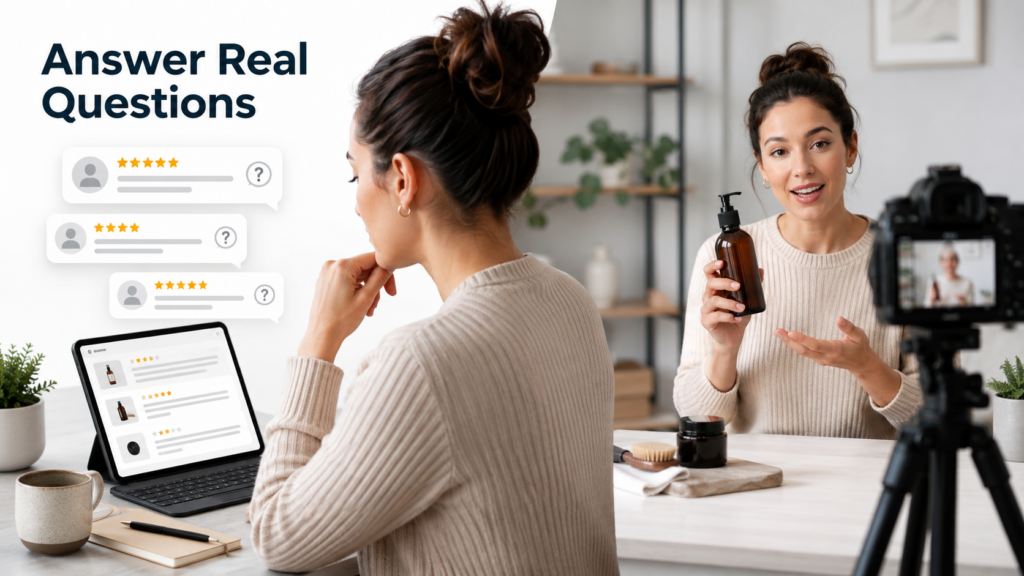
- Pull real questions from the Amazon review section before you film. This is one of the more genuinely useful tactics circulating in Amazon creator communities right now, regardless of which length theory you subscribe to. The Q&A and review sections on any product page are a free, documented list of exactly what buyers are uncertain about. Answering three or four of those questions directly gives a video substance instead of padding, whether you’re filling 45 seconds or 2.5 minutes. Batch your filming. Across multiple sources, the most consistent operational advice for creators isn’t about length or orientation at all; it’s about output consistency. Creators who build a backlog of videos during dedicated filming blocks report steadier income than those who film reactively, one video at a time, right before they need it.
- Repurpose aggressively. A vertical or square clip built for Amazon’s mobile carousel survives almost unedited as a TikTok, Reel, or YouTube Short.
That’s true under either theory of Amazon’s internal ranking, and it’s the single best argument for shooting vertical by default: even in the worst case where it doesn’t move your Amazon placement at all, it still gives you a second life on every other platform you publish to.
Where This Leaves You as a Creator or Brand
If you’re optimizing specifically for Amazon’s organic influencer carousel, the most defensible approach right now is to treat length and orientation as hypotheses to test on your own catalog rather than as settled rules to follow blindly.
Pull your last ten to fifteen videos. Look at which ones are sitting in better carousel positions and check their length and orientation against their actual view-duration data inside Creator Hub, not against either theory in the abstract.
Your own numbers, on your own products, in your own niche, will tell you more than any creator survey.
If you’re optimizing for cross-platform reach, the case for vertical, short-form, fast-hook content is much stronger and much better evidenced.
Build for that by default, then layer in length and depth where your specific Amazon data tells you it’s earning its keep.
And if you’re producing brand-side video for a product detail page rather than personal creator content, the clearest, most independently corroborated guidance available right now points to a tight 15-to-30 second carousel video, vertical or square cropped, captioned, demonstrating rather than narrating, with watch-through rates measurably collapsing past the 30-second mark on that specific placement.

That’s a narrower and more specific claim than either of the community theories above, but it’s also the one with the most actual measurement behind it., more specific claim than either of the community theories above, but it’s also the one with the most empirical evidence
The honest summary: vertical video is unambiguously worth shooting; the cross-platform attention-span and completion-rate data justify that on their own.
Whether short specifically beats long for Amazon’s organic carousel, or the reverse, remains an open, contested question within the creator community, and anyone telling you they have the definitive answer is currently working from a sample size of one survey or one creator’s personal results.
Build your production habits around the parts that are actually proven, and run your own length tests for the parts that aren’t.